Russia's Bomber Shelters: Key Lessons for Drone Fleet Protection
Russia is building massive protective shelters for its strategic bombers, reversing decades of exposed-aircraft doctrine. The move offers drone fleet operators a clear case study in how to safeguard high-value unmanned assets against emerging threats.

For decades, Russia kept its prized strategic bombers exposed on open ramps, a deliberate doctrine rooted in Cold War thinking that valued quick scramble and visual deterrence over hardened protection. That doctrine is now changing. According to a recent report from The War Zone, Russia is building large, protective shelters for its heavy bombers at a base that would be a high-priority target in any major conflict. The shift signals a sober acknowledgment that modern surveillance and precision strike capabilities have made static, exposed aircraft untenable.
For the drone industry—particularly fleet operators managing multiple airframes, repair shops maintaining valuable assets, and buyers navigating the pre-owned market—this strategic pivot offers a useful mirror. The logic that drives a bomber force to invest in hardened infrastructure applies equally, if not more acutely, to unmanned aircraft systems (UAS). Drones are smaller, often more fragile, and increasingly targeted by electronic warfare and kinetic counter-UAS systems. Russia’s move is a reminder that protecting your fleet is not just about insurance or redundancy; it is about physical infrastructure, operational discipline, and long-term asset value.
The strategic value of protective shelters for high-value aircraft

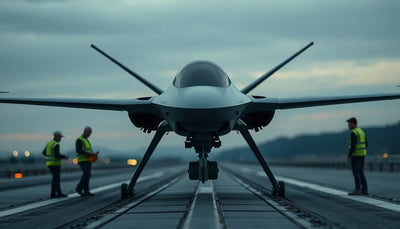
The bombers in question are Russia’s long-range strike backbone—Tu-95s, Tu-160s, and Tu-22M3s. These aircraft are expensive, scarce, and irreplaceable in the short term. Leaving them fully exposed on the tarmac simplifies the targeting problem for adversaries. The new shelters, described in the report as large, hardened structures, are designed to absorb or deflect blast effects, conceal aircraft from satellite and drone reconnaissance, and complicate damage assessment.
Fleet readiness
Keep DJI hardware available without overbuying new units.
Use defense and fleet news as a planning signal for repair support, inspected pre-owned aircraft, and replacement timing.
This is directly analogous to a drone operator’s decision to invest in secure storage. For a commercial fleet manager running multiple Matrice or Agras platforms for precision agriculture or infrastructure inspection, the cost of a single drone can run into five figures. Open storage in a trailer or a simple tent leaves the fleet vulnerable to weather, theft, vandalism, and—in conflict zones—direct attack. Shelters that obscure visual and thermal signatures, provide climate control, and offer structural protection extend airframe life and reduce unscheduled repairs.
The report notes that this is a break in decades of Russian air force tradition. That break was forced by the reality of contested airspace and persistent ISR (intelligence, surveillance, reconnaissance) coverage. For drone operators, the lesson is that operational doctrine must evolve alongside threats. What worked in a permissive environment will not work in a contested one. Whether you fly in restricted airspace near sensitive sites, over farmland in a region with active counter-UAS deployments, or in support of disaster relief in conflict zones, rethinking storage and protection is a necessary step.
Implications for drone fleet operators and repair workflows

When drones are stored in exposed conditions, they accumulate wear that drives up repair frequency and parts consumption. Ultraviolet radiation degrades plastics and composite airframes. Sand, dust, and humidity infiltrate motors, gimbals, and avionics. Temperature extremes shorten battery life and affect sensor calibration. For repair shops and fleet operations that rely on professional DJI repair services, the volume of incoming units for routine maintenance can drop significantly when operators adopt proper sheltering.
The Russian bomber shelters are designed to protect against kinetic attack, but any covered, climate-controlled storage is a step forward. For commercial operators, a simple insulated hangar or modified shipping container with dehumidification pays for itself in reduced parts consumption and fewer emergency repairs. This is especially relevant for those operating in harsh environments—construction sites, agricultural fields near coasts, or mining operations in arid regions.
Additionally, secure storage preserves the resale value of airframes. A drone that has spent its life in a protected environment will have fewer corrosion marks, less UV fading, and lower cumulative flight-hour wear. This matters for the pre-owned DJI drones market. Buyers looking for inspected pre-owned equipment increasingly inquire about storage history. An operator who can document indoor, climate-controlled storage can command a higher price when trading in or selling secondary units.
What this means for drone buyers

If you are a drone buyer—whether a first-time purchaser looking for a single Mavic or a fleet manager scaling up a mixed fleet—the Russian bomber shelter development reinforces two key points. First, the protection of the asset should be a line item in your procurement budget, not an afterthought. Second, the provenance of a used drone matters far more than its listed flight hours. A pre-owned airframe that has been stored in a secure, controlled environment will likely have fewer latent issues than one that sat on an open truck bed or in a non-climate-controlled storage shed.
When evaluating a drone trade-in guide or shopping for pre-owned DJI drones, ask the seller about the storage conditions throughout the drone's life. Did it live in a hangar, a vehicle, or an outdoor charging station? Were exposure periods continuous or occasional? For commercial-grade drones such as the Matrice 300/350 or Mavic 3 Enterprise, proper storage is directly linked to gimbal health, motor bearing condition, and battery cycle consistency.
For those planning to fly in areas with active counter-UAS threats—such as near military installations, border zones, or high-profile events—consider investing in temporary shelters that provide both concealment and physical protection. The Russian air force is spending billions on concrete and rebar. Your investment might be a pop-up hangar with IR-suppressant fabric, but the principle is the same: if it is worth flying, it is worth protecting.
One operator-facing takeaway: after reading this, review your current storage setup for your drone fleet. Ask whether it would survive a weather event, a theft attempt, or a deliberate targeting scenario. If the answer is no, consider reallocating a portion of your next drone budget toward protective infrastructure. The cost of one lost airframe often exceeds the cost of a solid shelter.
Market trends and operator strategy in a contested environment

The Russian bomber shelter story is, at its core, a market trend signal. It indicates that even the largest military powers are re-evaluating asset survivability in an era of pervasive surveillance and precision weapons. For the drone industry, this trend drives demand in several areas. First, infrastructure for drone storage and protection: shelters, secure lockers, and concealment systems. Second, ruggedized airframes and components that can withstand brief exposures without immediate failure. Third, the repair and spare parts market, as operators shift from reactive repairs to proactive maintenance cycles.
Fleet operators who invest in protective shelters will see lower total cost of ownership over the life of their drones. That makes pre-owned airframes more attractive because they carry less hidden wear. It also makes OEM spare parts—such as genuine motors, fan modules, and sensor dampers—last longer in storage. Repair shops that offer climate-controlled assessment and storage consulting are adding a valuable service differentiator.
For the pre-owned DJI market specifically, this trend suggests that well-documented storage conditions will become a premium differentiator. Buyers will increasingly pay more for an inspected pre-owned drone that comes with a storage log. Sellers who provide that documentation can expect faster sales and better margins. The lesson from Russia’s bomber shelters is not just about concrete and steel; it is about the operational discipline of protecting high-value assets. Drone operators who adopt that discipline will see it reflected in their bottom line, whether through fewer repairs, better trade-in values, or improved mission readiness.
Why is Russia building shelters for its strategic bombers now?
According to the report, the shelters represent a break from decades of air force doctrine that prioritized rapid scramble and visual presence over hardened protection. The shift is driven by the recognition that modern satellite reconnaissance and precision strike weapons can target exposed aircraft effectively, making cover and concealment essential for survivability.
How does this relate to commercial drone operations?
Commercial drone fleets face similar pressures from weather, theft, and in some regions, deliberate attack or electronic warfare. Investing in secure, climate-controlled storage reduces maintenance costs, preserves resale value, and improves mission reliability. The principle of protecting high-value assets crosses over directly from military aviation to drone fleet management.
What should a drone buyer look for in storage history?
Buyers should ask whether a pre-owned drone was stored indoors in a climate-controlled environment, away from UV exposure and extreme temperatures. Documentation of storage conditions, along with flight hour logs and repair records, increases confidence in the airframe's remaining useful life and can justify a higher purchase price.