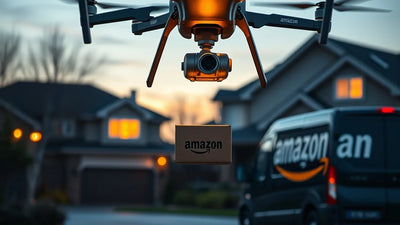
Draganfly and F4DI Win U.S. War Department Contract for Next-Gen Multi-Layered C-UAS System
On May 20, 2026, Draganfly and F4DI secured a U.S. War Department contract to develop a modular, multi-layered counter-UAS system combining tethered aerial surveillance and advanced defeat capabilities. This signals a massive shift in military drone defense spending and creates immediate ripple effects for commercial operators navigating FAA Part 107 waivers, BVLOS routes, and the rapidly evolving second-hand drone market.

Редакционные заметки
- Эта статья объединяет данные внешних отчетов с собственным анализом Reboot Hub для покупателей БПЛА, операторов парка, клиентов сервисных центров и наблюдателей за рынком подержанных DJI.
- Факты из источников отделены от интерпретации. Если в отчете недостаточно данных, в статье указывается на это ограничение, а позиция Reboot Hub подается как аналитическая гипотеза.
- Reboot Hub размещает коммерческие ссылки на продукты и услуги по ремонту БПЛА; эти ссылки служат ресурсом для читателей и не определяют выводы статьи.
The U.S. Department of War has selected Draganfly Inc. (NASDAQ: DPRO; CSE: DPRO; FSE: 3U8), in partnership with F4 Defense International (F4DI), to develop a next-generation integrated, multi-layered, modular, and rapid-deployable Counter-Unmanned Aircraft System (C-UAS). Announced on May 20, 2026, from Tampa, Florida, this contract represents one of the most significant advancements in military drone defense technology in recent years, directly addressing the fastest-growing threat in modern warfare: hostile drones.
This development is not merely a defense procurement story. It is a strategic inflection point for the entire drone ecosystem—from battlefield tactics to commercial airspace management and the global second-hand drone market. As the Pentagon accelerates its shift toward layered, AI-driven countermeasures, the ripple effects will be felt by commercial operators flying under FAA Part 107, defense contractors developing electronic warfare suites, and even drone pilots looking to sell or upgrade their existing fleets.

The Anatomy of a Multi-Layered C-UAS System
According to the official announcement, the Draganfly-F4DI system is built around three core capabilities: tethered aerial intelligence, advanced targeting, and coordinated ground-and-air defeat mechanisms. Unlike traditional point-defense systems that rely on a single sensor or effector, this architecture is designed to detect, track, identify, and neutralize drone threats across multiple domains simultaneously.
Fleet readiness
Keep DJI hardware available without overbuying new units.
Use this news as a planning signal for inspected DJI aircraft, repair support, and trade-in timing.
The tethered aerial component is particularly noteworthy. Draganfly’s expertise in tethered drone systems—which provide persistent, high-altitude surveillance without the battery limitations of free-flying UAVs—will serve as the system’s elevated sensor node. This tethered platform can remain airborne for hours or even days, feeding real-time data to ground-based command centers. The tether itself also provides a secure, jam-resistant data link and continuous power, eliminating the need for frequent landings to swap batteries.

F4DI brings specialized expertise in advanced targeting and defeat mechanisms. Their contribution likely includes directed energy weapons (lasers), kinetic interceptors, and electronic warfare jammers that can disrupt drone command-and-control links. The “multi-layered” descriptor means that the system can engage threats at multiple ranges: long-range detection and soft-kill jamming, mid-range hard-kill interception, and short-range point defense.
This modular, rapid-deployable design means the system can be airlifted to forward operating bases, set up in under an hour, and scaled according to the threat environment. For the U.S. War Department, this flexibility is critical in an era of contested logistics and rapidly evolving drone swarm tactics.

What This Means for Commercial Drone Operators
Ready to Upgrade Your Fleet?
Browse our collection of inspected pre-owned DJI drones — inspected, flight-tested, and backed by a 6-month warranty. Save up to 40% versus retail.
While this contract is squarely in the defense domain, its implications for commercial drone operators are profound. The technologies being developed for C-UAS—advanced detection sensors, AI-driven threat classification, and automated response protocols—will inevitably migrate into civilian airspace management systems. We are already seeing the FAA incorporate C-UAS data into its Low Altitude Authorization and Notification Capability (LAANC) system for restricted airspace.
For commercial operators flying BVLOS routes or conducting precision agriculture surveys with RTK-enabled drones, the proliferation of C-UAS systems means increased scrutiny of all drone operations near sensitive infrastructure. Airports, power plants, stadiums, and government buildings are all likely to deploy similar detection and classification systems. Operators who fail to comply with airspace restrictions or who fly without proper waivers may find themselves automatically tracked, identified, and reported to authorities.
This creates both a challenge and an opportunity. On the challenge side, operators will need to invest in Remote ID-compliant drones and ensure their flight planning software integrates with emerging C-UAS networks. On the opportunity side, the same sensor fusion and AI classification technologies being developed for military C-UAS can be adapted for commercial uses like wildlife monitoring, infrastructure inspection, and crop health analysis.
For the second-hand drone market, this contract signals a long-term trend: military-grade C-UAS technology will drive demand for older drone models that are easier to detect and track, while pushing prices down for legacy systems that lack modern transponders or ADS-B Out capabilities. Conversely, drones equipped with advanced encryption, frequency hopping, and anti-jamming features will command premium prices on the used market.
Ready to Upgrade Your Fleet?
Browse our collection of inspected pre-owned DJI drones — inspected, flight-tested, and backed by a 6-month warranty. Save up to 40% versus retail.
Strategic Context: Why the War Department is Investing Now
The timing of this contract is no coincidence. Drone warfare has evolved dramatically since the early days of improvised quadcopters dropping grenades in Ukraine. Today, we are seeing coordinated drone swarms, AI-powered autonomous targeting, and low-cost FPV drones being used effectively against armored vehicles and fortified positions. The U.S. War Department has identified C-UAS as a critical capability gap that must be closed urgently.
According to Department of Defense budget documents, C-UAS spending is projected to exceed $7 billion annually by 2028, up from approximately $3.5 billion in 2025. This contract with Draganfly and F4DI is part of a broader push to field operational systems within 12-18 months, rather than the traditional multi-year acquisition cycle.
The modular, rapid-deployable requirement is driven by lessons learned in recent conflicts. Fixed-site C-UAS systems are vulnerable to saturation attacks. A layered, mobile architecture that can be quickly repositioned and reconfigured offers greater survivability and operational flexibility. The tethered drone component provides persistent elevated surveillance that is immune to the battery endurance limitations that plague conventional drones.
For investors, this contract validates Draganfly’s pivot from a pure commercial drone manufacturer to a defense-focused systems integrator. The company’s stock (NASDAQ: DPRO) has seen increased volatility in recent months as defense contracts have become a larger portion of its revenue mix. F4DI, a smaller but highly specialized firm, gains significant credibility and a path to scale through this partnership.
Implications for the Second-Hand and Refurbished Drone Market
As defense contractors ramp up production of C-UAS systems, the commercial drone market will experience cascading effects. First, demand for new drones with advanced security features—encrypted communications, tamper-resistant firmware, and hardware-based authentication—will increase. This will drive up prices for new models and accelerate depreciation for older drones that lack these features.
Second, the military’s focus on C-UAS will increase the supply of used drones entering the market. As defense units upgrade their fleets to include tethered systems and hardened electronics, they will offload older conventional drones. This creates a buyer’s market for commercial operators who need affordable platforms for non-critical missions like aerial photography, inspection, and surveying.
At Reboot Hub, we are already seeing this trend. Our inventory of pre-owned DJI drones has expanded as military and government clients upgrade their fleets. These drones undergo rigorous inspection, flight testing, and firmware updates before being offered to commercial operators at 30-40% below retail prices. For pilots flying Part 107 operations, these pre-owned units offer a cost-effective entry point without sacrificing reliability.
The used drone market is also seeing increased demand for older DJI models like the Phantom 4 Pro and Mavic 2 Pro, which are highly capable for mapping and inspection work but lack the advanced tracking features that make them targets for C-UAS systems. In other words, older drones are actually safer to fly near sensitive infrastructure because they are easier to detect and less likely to be mistaken for hostile threats.
Technical Breakdown: How the System Works
The Draganfly-F4DI C-UAS system operates on a detect-identify-defeat architecture. The tethered drone serves as the primary detection node, using electro-optical/infrared (EO/IR) cameras and radar to identify drone threats at ranges exceeding 10 kilometers. Advanced AI algorithms classify threats based on size, flight pattern, speed, and communication signatures.
Once a threat is identified, the system assigns a response based on the threat level and engagement zone. For low-risk threats like recreational drones straying into restricted airspace, the system may deploy electronic warfare jamming to force the drone to land or return to its operator. For high-risk threats like armed drones or swarms, the system can engage with directed energy weapons or kinetic interceptors.
The modular design allows the system to be configured for different operational environments. A base defense configuration might include one tethered drone, three jamming stations, and two laser interceptors. A mobile patrol configuration might be mounted on a JLTV or MRAP vehicle, with the tethered drone deployed from a mast and the defeat mechanisms integrated into the vehicle’s weapon station.
Data from the system is fed into a common operating picture that can be shared with other C-UAS systems, air defense networks, and even civilian air traffic control. This interoperability is a key requirement from the War Department, which wants to avoid the stove-piped systems that have plagued previous C-UAS efforts.
What This Means for Drone Pilots and Commercial Operators
For everyday drone pilots, the most immediate impact will be increased awareness of C-UAS systems in their operating areas. As these systems are deployed at military bases, airports, and critical infrastructure sites, pilots must be vigilant about NOTAMs and airspace restrictions. Flying within 3 nautical miles of a military installation without prior authorization could result in automated tracking and reporting to the FAA, leading to enforcement actions including civil penalties up to $27,500 per violation.
Commercial operators flying under Part 107 should review their airspace authorization procedures and ensure they have current waivers for any operations near sensitive sites. The FAA is likely to require additional coordination for BVLOS flights in areas where C-UAS systems are active. Operators should also consider equipping their drones with Remote ID modules to ensure compliance with detection and identification requirements.
For those looking to upgrade their fleets, now is an excellent time to enter the professional DJI repair services market. As older drones are retired from military service, they require maintenance and refurbishment before being sold to commercial operators. Reboot Hub’s repair center specializes in certifying pre-owned DJI drones, ensuring they meet OEM specifications and are ready for commercial use.
Frequently Asked Questions
How does the Draganfly-F4DI C-UAS system differ from existing systems?
The key differentiators are its multi-layered architecture, modular design, and rapid-deployable capability. Unlike fixed-site systems that require permanent installation, this system can be airlifted and set up in under an hour. Its tethered drone component provides persistent surveillance without battery limitations, and its defeat mechanisms span electronic warfare, directed energy, and kinetic interceptors. This layered approach allows it to engage threats at multiple ranges and adapt to evolving swarm tactics.
Will this contract affect the commercial drone market?
Yes, in several ways. First, it signals increased government investment in C-UAS technology, which will drive demand for drones with advanced security features. Second, it will increase the supply of used drones entering the market as military units upgrade their fleets. Third, the AI and sensor fusion technologies developed for this system will eventually migrate into civilian airspace management, affecting how commercial operators plan and execute flights near sensitive infrastructure.
What should commercial drone operators do to prepare for increased C-UAS deployment?
Operators should ensure their drones are Remote ID-compliant and that they have current airspace authorization for all planned flight areas. They should also monitor NOTAMs for C-UAS system deployments and avoid flying within restricted zones without explicit permission. For those operating near military installations or critical infrastructure, it may be prudent to invest in drones with ADS-B Out capabilities and encrypted communication links. Finally, operators should consider purchasing pre-owned DJI drones from Reboot Hub to access affordable, reliable platforms that are fully compliant with current regulations.
About Reboot Hub: Reboot Hub is the leading marketplace for inspected pre-owned and refurbished drones, specializing in DJI products. We inspect, flight-test, and certify every drone in our inventory, offering a 6-month warranty and up to 40% savings versus retail. Our professional repair services use genuine OEM parts to keep your fleet operational. Visit reboot-hub.com to browse our inventory or book a repair.
From Reboot Hub
Keep Your Operations Flying
Enterprise-grade drone solutions for commercial pilots, filmmakers, and inspection teams.
Pre-owned Fleet
Fully inspected DJI drones with 6-month warranty. Save up to 40%.
Browse Inventory ->