Anti-Drone Market Explodes: Detection, Neutralization, and Airspace Protection Drive a New Era of Defense
A new MarketsandMarkets report reveals the anti-drone market is expanding at a compound annual growth rate (CAGR) exceeding 25%, driven by urgent airspace protection needs across critical infrastructure and military zones. For commercial operators flying under Part 107, this means increased scrutiny on BVLOS routes and a potential surge in detection systems that could impact flight planning. The report highlights a critical pivot from passive detection to active neutralization, creating a high-stakes environment for drone fleet managers and second-hand market assessors alike. Immediate implications for RTK surveying missions near airports and energy facilities are severe, with non-compliance risking massive fines and airspace bans.

Редакционные заметки
- Эта статья объединяет данные внешних отчетов с собственным анализом Reboot Hub для покупателей БПЛА, операторов парка, клиентов сервисных центров и наблюдателей за рынком подержанных DJI.
- Факты из источников отделены от интерпретации. Если в отчете недостаточно данных, в статье указывается на это ограничение, а позиция Reboot Hub подается как аналитическая гипотеза.
- Reboot Hub размещает коммерческие ссылки на продукты и услуги по ремонту БПЛА; эти ссылки служат ресурсом для читателей и не определяют выводы статьи.
The global anti-drone market is no longer a niche segment of defense technology; it has become a central pillar of modern airspace security. A comprehensive new report from MarketsandMarkets, released in late May 2026, paints a picture of an industry in hyper-growth, expanding its scope from basic detection to sophisticated, layered neutralization and airspace protection applications. For commercial drone operators, defense contractors, and even the second-hand drone market, this represents a seismic shift in operational reality. The report's findings, which detail a market projected to grow at a compound annual growth rate (CAGR) well over 25% through the early 2030s, underscore a simple truth: the sky is becoming a contested environment, and the tools to control it are evolving at breakneck speed.
This analysis, published by Reboot Hub on May 31, 2026, breaks down the MarketsandMarkets report, examining the key drivers, the technological arms race between drones and counter-drones, and what this means for every stakeholder in the unmanned aerial vehicle (UAV) ecosystem. From the battlefield to the suburban backyard, the rise of the anti-drone market is rewriting the rules of flight.
The Three Pillars of the Anti-Drone Market: Detection, Neutralization, and Airspace Protection
The MarketsandMarkets report segments the anti-drone market into three primary application areas, each representing a distinct technological and operational challenge. The first, detection, remains the foundational layer. This includes radio frequency (RF) scanners, acoustic sensors, radar systems, and electro-optical/infrared (EO/IR) cameras. The report emphasizes a shift toward multi-sensor fusion, where data from disparate sources is combined to create a single, actionable picture of the airspace. This is critical for reducing false positives, a persistent problem in urban environments where commercial drones are ubiquitous.
Fleet readiness
Keep DJI hardware available without overbuying new units.
Use this news as a planning signal for inspected DJI aircraft, repair support, and trade-in timing.
The second pillar, neutralization, is where the market is seeing its most explosive growth. Early counter-drone systems relied on jamming GPS and control signals, a brute-force approach that could disrupt legitimate communications. The new generation of neutralization tools includes directed energy weapons (lasers), high-power microwaves (HPM), and even kinetic interceptors like net-firing drones. The report notes a growing preference for "soft-kill" methods-such as protocol manipulation and spoofing-that can safely land or return a rogue drone to its operator without causing collateral damage.
The third and most comprehensive pillar, airspace protection, integrates detection and neutralization into a single, automated command-and-control (C2) system. These systems are designed for permanent deployment over high-value assets like airports, nuclear power plants, and government buildings. The report highlights that the demand for integrated airspace protection solutions is surging, particularly in Europe and North America, where regulatory frameworks are beginning to mandate their use.
Ready to Upgrade Your Fleet?
Browse our collection of inspected pre-owned DJI drones - inspected, flight-tested, and backed by a 6-month warranty. Save up to 40% versus retail.
What Does the Anti-Drone Market Surge Mean for Commercial Drone Operators?
For the thousands of pilots flying under FAA Part 107 or EASA regulations, the expansion of the anti-drone market is a double-edged sword. On one hand, it legitimizes the commercial UAV industry by forcing the development of safe, integrated airspace. On the other, it introduces a new layer of operational friction. The report explicitly notes that the primary drivers for anti-drone systems are "malicious use prevention" and "privacy protection," but the technologies deployed do not discriminate between a hobbyist and a terrorist.
Consider a real-world scenario: a commercial operator conducting an RTK survey of a construction site near a regional airport. An automated anti-drone system at the airport detects the survey drone's RF signature and, assuming it is a threat, initiates a jamming sequence. The drone loses its RTK fix, its GPS lock, and potentially its connection to the remote controller. The result is a flyaway, a crash, or an uncontrolled descent. This is not a theoretical risk; the report highlights that the "rules of engagement" for many fixed-site counter-drone systems are still being written, and the default setting is often "neutralize first, ask questions later."
The report identifies the energy sector, particularly oil and gas pipelines and electrical substations, as a massive growth area for airspace protection. For drone operators in these sectors, compliance is becoming non-negotiable. The MarketsandMarkets data suggests that by 2028, over 60% of critical energy infrastructure in the United States and Europe will have some form of permanent counter-drone system. This means that any drone mission within a 5-kilometer radius of these facilities will require pre-authorization and digital identification (Remote ID) to avoid being targeted.
The Technological Arms Race: Drone vs. Counter-Drone
The report frames the current market dynamic as a technological arms race. As drone manufacturers like DJI, Autel Robotics, and Skydio incorporate more sophisticated encryption, frequency hopping, and autonomous flight capabilities, the counter-drone industry must evolve in lockstep. The report highlights a critical inflection point: the shift from reactive to predictive countermeasures.
Early anti-drone systems were purely reactive-they detected a drone and then responded. The next generation, as described by MarketsandMarkets, uses artificial intelligence (AI) and machine learning to predict drone behavior. These systems can analyze flight patterns, identify anomalous behavior (e.g., a drone loitering over a facility vs. one transiting), and even predict the drone's likely destination. This predictive capability is crucial for preventing incidents rather than just mitigating them.
Furthermore, the report notes a significant increase in investment in directed energy weapons. Companies like Lockheed Martin, Rafael Advanced Defense Systems, and Epirus are fielding systems that can destroy a drone with a beam of energy or disable its electronics with a pulse of microwaves. These systems offer a "cost-per-kill" that is drastically lower than traditional kinetic interceptors like missiles or bullets, making them economically viable for defending against drone swarms-a threat the report identifies as the most significant emerging challenge.
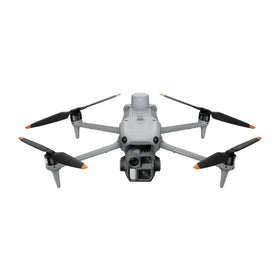
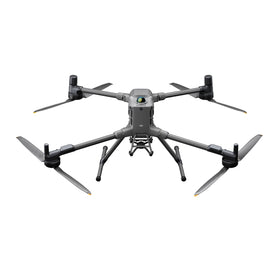
For the second-hand and refurbished drone market, this arms race has a direct consequence: obsolescence. Older drone models, particularly those lacking robust encryption or Remote ID capabilities, are becoming less desirable for commercial fleets. Operators are increasingly looking to upgrade to newer platforms that are "counter-drone aware" and can broadcast their identity and intent. This is driving a surge in the used drone market, as businesses trade in older DJI Mavic 2 or Phantom 4 models for newer, more secure platforms like the DJI Mavic 3 Enterprise or Matrice 350 RTK.
Regional Hotspots and Regulatory Pressure
The MarketsandMarkets report provides a granular breakdown of the anti-drone market by region. North America currently holds the largest market share, driven by the Federal Aviation Administration's (FAA) stringent integration efforts and the Department of Homeland Security's (DHS) focus on protecting critical infrastructure. Europe is the fastest-growing market, propelled by the European Union's U-space framework, which mandates the use of counter-drone systems at all major airports by 2027.
The Asia-Pacific region, particularly China, India, and Japan, is also seeing massive investment. China, despite being the world's largest manufacturer of commercial drones (via DJI), is also a major developer of counter-drone technology for its own military and police forces. The report notes a fascinating paradox: the same country that produces the most widely used drones in the world is also investing heavily in the systems designed to shoot them down.
Regulatory pressure is the single greatest catalyst for this market. The report explicitly states that government mandates are "the primary driver of adoption." In the United States, the FAA's Remote ID rule, fully enforced as of 2024, has already created a baseline for drone identification. The next logical step, which the report predicts will occur within the next 18 months, is the mandatory deployment of counter-drone systems at all Part 139-certified airports. This will create a multi-billion dollar procurement cycle for detection and neutralization hardware.
Impact on the Second-Hand and Refurbished Drone Market
As a leading marketplace for pre-owned UAVs, Reboot Hub is uniquely positioned to observe the downstream effects of this market expansion. The anti-drone boom is having a paradoxical effect on the second-hand market. On one hand, it is accelerating the turnover of fleet hardware. Commercial operators, particularly those in surveying, inspection, and public safety, are realizing that flying a drone that cannot be easily identified or is vulnerable to jamming is a liability. This is creating a steady supply of high-quality, low-flight-time used drones entering the market.
On the other hand, the demand for these older models is shifting. While consumer-grade drones are seeing a slight price depreciation, enterprise-grade platforms like the DJI Matrice 300 RTK and the Mavic 3 Enterprise are retaining their value exceptionally well. Why? Because these platforms support robust encryption, Remote ID, and can be integrated into fleet management software that respects airspace protection zones. In contrast, older "hobbyist" models that lack these features are becoming harder to sell.
For the budget-conscious operator, this is a golden opportunity. The influx of trade-ins from companies upgrading their fleets means that pre-owned DJI drones are available at significant discounts-often 30-40% below retail-while still offering the performance needed for commercial work. However, the key takeaway for buyers is to prioritize models that are "future-proof" against the coming wave of airspace regulation. A drone without a robust Remote ID module or advanced encryption is a ticking liability.
The Future of Airspace Protection
The MarketsandMarkets report concludes with a forward-looking assessment that is both exciting and sobering. The anti-drone market is not a fad; it is a permanent structural change in how we manage the airspace. The report predicts the emergence of "airspace protection as a service" (APaaS), where companies will subscribe to a counter-drone security package rather than buying hardware outright. This model is already gaining traction in the Middle East and is expected to spread globally.
For the commercial drone industry, the message is clear: adapt or be neutralized. The days of unrestricted flight are over, even in nominally uncontrolled airspace. The anti-drone market is creating a new layer of infrastructure that every operator must navigate. This presents a challenge, but also an opportunity. Operators who invest in compliant, secure, and well-maintained equipment will find themselves with a competitive advantage. Those who ignore the trend will find their drones grounded-either by regulation or by a counter-drone system that doesn't know they're the good guys.
At Reboot Hub, we help operators navigate this new environment by providing access to high-quality, pre-owned drones that meet the latest security and compliance standards. Whether you need a fleet upgrade or professional DJI repair services to keep your existing gear airworthy, we are your partner in the evolving drone ecosystem.
Frequently Asked Questions (FAQ)
1. Will anti-drone systems affect my ability to fly a DJI Mavic 3 commercially?
Yes, potentially. If you are flying near critical infrastructure (airports, power plants, military bases) that has deployed a counter-drone system, your drone may be detected and neutralized. To mitigate this risk, ensure your drone has Remote ID enabled and that you have pre-coordinated your flight plan with the relevant authorities. Using a drone with strong encryption, like the DJI Mavic 3 Enterprise, is highly recommended.
2. Is the second-hand drone market affected by the anti-drone boom?
Absolutely. The demand for older, less secure drone models is decreasing, while the value of enterprise-grade platforms with robust security features remains strong. This creates a buyer's market for refurbishment-labeled drones, but only for models that are compliant with current and upcoming regulations. It is a good time to buy, but you must be selective about the model and its capabilities.
3. What is the biggest risk for a commercial drone operator from anti-drone technology?
The biggest risk is an unplanned neutralization event. If your drone is targeted by a counter-drone system, it could be forced to land, return to home, or be destroyed. This can result in damage to your equipment, loss of data, and potential liability for any collateral damage. The best defense is pre-flight planning and using drones that can broadcast their identity and flight intent clearly to airspace security systems.
--
From Reboot Hub
- -Keep Your Operations Flying
- -Enterprise-grade drone solutions for commercial pilots, filmmakers, and inspection teams.
- -Pre-owned Fleet
- - - -Fully inspected DJI drones with 6-month warranty. Save up to 40%.
- - - - Browse Inventory -> - - -Expert Repair
- - - -Professional diagnostics with genuine OEM parts. Same-day estimates.
- - - - Book a Repair -> - - -Spare Parts
- - - -Batteries, propellers, gimbals -- premium OEM components, fast shipping.
- - - - Shop Parts -> - - -