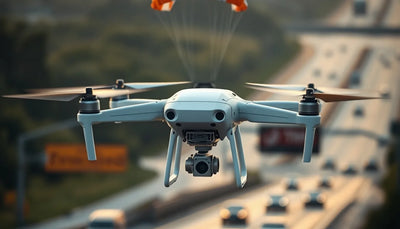
New US tariffs hit Chinese drones while parts dependence continues
New US tariffs now target Chinese-made drones, but American drone manufacturers still depend on imported parts. The move creates fresh cost and supply questions for commercial operators, fleet buyers, and repair customers watching the pre-owned DJI market.

Quick answer
New US tariffs are targeting Chinese-made drones, but American drone manufacturers still depend on imported parts, creating supply chain and cost uncertainty for commercial operators.
- New tariffs target Chinese drones as a US market shift.
- US drone makers still need imported parts for production.
- Commercial operators face potential cost and supply pressure.
- Pre-owned DJI inventory may become more attractive to buyers.
Verified facts
Market context
Turn market news into a buy, repair, or trade-in decision.
Compare pre-owned availability, resale timing, and repair economics before the market moves again.

What the available evidence confirms
| Factor | Reported detail | Market implication |
|---|---|---|
| Tariff target | Chinese-made drones | Higher landed cost risk for imported units |
| US maker position | Still need Chinese or imported parts | Production cost and supply uncertainty |
| Operator impact | Fleet and repair planning affected | Renewed interest in existing and pre-owned inventory |
Reboot Hub analysis: New US tariffs are now targeting Chinese-made drones, but the commercial picture is more complicated than a simple import restriction. According to a recent industry report from san.com, American drone manufacturers still depend on imported parts even as the tariff pressure increases. That tension between policy intent and production reality is likely to shape procurement, repair, and resale decisions for commercial drone operators in the months ahead.
The development matters because drone fleets are no longer a niche tool. Inspection teams, surveying firms, public safety units, agricultural operators, and logistics providers all plan around hardware cost, spare part availability, and long-term serviceability. A tariff change that raises the landed cost of new imported units while leaving parts supply uncertain can shift how buyers think about new equipment versus maintaining or acquiring existing inventory.
What the tariff report actually says
The central finding from san.com is that new tariffs target Chinese drones, but US makers still need their parts. That is the core tension: the policy aims at finished Chinese drone products, while the domestic manufacturing base has not fully separated itself from imported components. The report does not describe a clean decoupling, and it does not suggest that American manufacturers can immediately replace every imported part with a domestic alternative.
For commercial buyers, this means the tariff impact may not be limited to one brand or one product category. If US manufacturers face higher input costs or longer lead times for components, those costs can flow into pricing, availability, and service timelines. Operators should treat this as a supply chain event rather than a simple import tax headline. The practical question is not only what a new drone costs today, but what it will cost to keep flying in six or twelve months.
Why parts dependence changes the commercial calculation
Parts dependence is the quiet variable in any tariff story. A drone is not a single durable purchase; it is a platform that requires batteries, motors, gimbals, sensors, landing gear, and electronic modules over its service life. If imported components become more expensive or harder to source, the total cost of ownership rises even for operators who already own their aircraft.
This is where the pre-owned DJI market becomes relevant. When new imported hardware faces tariff pressure and domestic production still depends on imported parts, existing inspected pre-owned DJI drones can look more attractive to cost-conscious operators. A well-maintained used unit already in the country avoids the immediate landed-cost increase of a new import. Fleet managers who need to expand capacity without absorbing fresh tariff exposure may look more seriously at domestic pre-owned inventory and genuine OEM spare parts as a buffer.
Repair economics also shift. Operators who might have replaced a damaged aircraft may instead choose professional repair using genuine OEM spare parts. That approach preserves the value of the existing fleet and avoids triggering a new equipment purchase at a higher post-tariff price. The san.com report does not provide specific repair pricing data, but the logic follows directly from the parts dependence it describes.
What this means for drone owners and the market
The immediate takeaway for drone owners is that procurement timing and service planning now carry more weight. A buyer who was waiting for a new imported unit may face a different price or availability picture than expected. A fleet operator with aging aircraft should evaluate whether repair and parts sourcing is more predictable than new equipment ordering. The report does not specify tariff rates or effective dates, so operators should avoid assuming a uniform impact across all models or suppliers.
Reboot Hub analysis: The pre-owned DJI market is likely to feel the effect through demand rather than through a direct regulatory change. As new import costs rise, buyers often shift toward inspected pre-owned units already available domestically. For operators evaluating that path, the genuine DJI spare parts guide offers a useful reference for understanding how OEM-pulled parts support long-term serviceability. The key commercial behavior change is to plan maintenance and expansion around parts availability, not just sticker price.
For repair customers, the message is to avoid treating a damaged drone as automatically disposable. If parts remain available and a professional repair restores the aircraft to reliable service, that may be the more cost-effective route in a tariff-affected market. The san.com report does not claim that parts will disappear, but it does highlight that domestic production still leans on imported components, which is reason enough to build service lead time into operational planning. For owners evaluating service and lifecycle risk, Genuine DJI spare parts guide explains the relevant repair, parts, resale, or operational path.
How operators should respond now
Reboot Hub analysis: Operators should start by reviewing their current fleet condition and parts inventory. The most practical response to tariff uncertainty is not panic buying, but a clearer view of which aircraft are serviceable, which components are likely to need replacement, and whether domestic pre-owned units can fill near-term capacity needs. A fleet manager who knows the repair status of each aircraft is in a better position than one reacting to price changes model by model.
Second, buyers should compare the true cost of new imported equipment against inspected pre-owned DJI drones and professional repair. The tariff report does not provide enough detail to calculate exact savings, but it does justify asking the question. If a used unit meets operational requirements and is supported by genuine OEM spare parts, it may reduce exposure to future import cost increases.
Third, procurement teams should watch for follow-up reporting on parts supply. The san.com report identifies a structural dependence, but it does not resolve how quickly US manufacturers can adjust. That uncertainty is itself a planning factor. Operators with multi-year fleet plans should build flexibility into their replacement schedules rather than assuming today's pricing will hold.
FAQ
Frequently asked questions
Are the new tariffs only on finished Chinese drones?
According to the san.com report, the tariffs target Chinese drones, but American manufacturers still depend on imported parts. The report does not provide a complete list of affected components, so operators should treat the parts supply impact as an open question.
Will pre-owned DJI drones become more expensive?
The report does not state that pre-owned DJI drones will change price directly. However, if new imported units become more costly, demand for inspected pre-owned drones already in the domestic market may increase, which can affect availability and pricing over time.
Should fleet operators repair instead of replace right now?
Repair becomes a stronger option when new equipment pricing is uncertain and parts remain available. Operators should evaluate professional repair with genuine OEM spare parts as a way to extend current fleet life without immediately absorbing new import costs.
Which sources support this update?
The article distinguishes reported information from analysis and does not present an unverified source as official confirmation.
What remains subject to change?
Retail pricing, availability, product bundles and regulatory timelines can change. Readers should verify the latest terms with the named retailer, manufacturer or regulator before acting.
How should buyers or operators use this analysis?
Use the verified facts as a starting point, then compare mission fit, lifecycle support, maintenance needs and current procurement terms before making a purchase or fleet decision.
Surse consultate
- san.com via Google News - primary source
La momentul publicării, nu era disponibilă documentație oficială suplimentară.
Redacția Reboot Hub oferă analize privind achiziția, reparația, revânzarea și operarea pentru proprietarii de drone. Dacă observați o eroare, contactați-ne pentru revizuirea corecției conform politicii noastre editoriale.