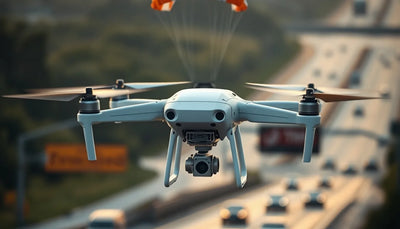
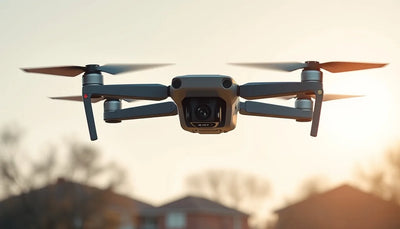
Sabah's Drone Sector Faces a Narrow Window to Build Local Capacity
Sabah risks missing Malaysia's expanding commercial drone opportunity if local operators and support infrastructure do not develop quickly, according to a Jesselton Times analysis. The gap matters for fleet planning, repair access, and resale value across the region.

Quick answer
A Jesselton Times analysis argues Sabah must act quickly to capture Malaysia's growing commercial drone opportunity or risk being left behind as the national market expands.
- Sabah's commercial drone ecosystem is underdeveloped relative to Malaysia's broader market momentum.
- Local operators may face limited access to repair, spare parts, and specialized support services.
- Fleet buyers and pre-owned DJI drone owners in the region could see resale and maintenance friction if local capacity lags.
- The report frames the moment as a narrow window for building regional drone infrastructure and expertise.
Evidence: Defense.gov official source
Market context
Turn market news into a buy, repair, or trade-in decision.
Compare pre-owned availability, resale timing, and repair economics before the market moves again.

A new analysis from the Jesselton Times argues that Sabah, one of Malaysia's largest states by land area, is at risk of being left behind as the country's commercial drone sector accelerates. The report, titled "Sabah Must Not Miss Malaysia's Drone Moment," frames the current period as a critical inflection point for regional operators, agricultural users, logistics providers, and public agencies that depend on aerial data collection.
The central claim is straightforward: Malaysia's commercial drone market is expanding, and Sabah's geography, agriculture-heavy economy, and dispersed infrastructure make it a natural fit for drone applications. Yet the report suggests that without deliberate investment in local capacity, training, maintenance networks, and regulatory coordination, the state could watch much of that value accrue elsewhere. For commercial operators and fleet managers, the warning carries practical weight. A market that grows without local support infrastructure creates friction for everyone who flies, repairs, or resells equipment in the region.
Why Sabah's geography makes the drone opportunity unusually large
The Jesselton Times report highlights Sabah's size and terrain as core reasons the state should be a priority for drone deployment. Sabah covers a large, mountainous area with significant rural and coastal zones where road access can be slow, seasonal, or unreliable. In that context, drones offer a way to move data, inspect assets, monitor crops, and survey land without depending on ground transport.
For commercial operators, this is not an abstract policy point. Regions with difficult logistics tend to generate higher demand for drone-based inspection, mapping, and delivery trials. But they also expose the weak points in a fleet operation: a drone that needs a replacement part or a repair assessment may have to be shipped out of state, adding days or weeks of downtime. The report's emphasis on building local capacity speaks directly to that operational reality. Reboot Hub analysis suggests that fleet managers evaluating Sabah-based work should factor support access into their cost models, not just aircraft price and payload.
The risk of a support gap as the market expands
One of the sharper warnings in the Jesselton Times piece is that market growth does not automatically create local repair, parts, and training infrastructure. Demand can outpace the service layer, leaving operators with aircraft they cannot maintain quickly or economically. The report implies that Sabah's current drone ecosystem remains thin relative to what a maturing market would require.
That has direct implications for anyone buying or operating commercial drones in the region. A pre-owned DJI drone, for example, may be attractively priced, but its total cost of ownership depends heavily on access to genuine OEM spare parts and qualified repair work. If those services are concentrated in Peninsular Malaysia or Singapore, Sabah-based operators absorb longer turnaround times and higher logistics costs. The same logic applies to enterprise fleets used in agriculture, construction, or public safety. A drone that sits grounded for two weeks waiting on a part is not a savings; it is a liability.
What this means for drone owners and the market
The Jesselton Times analysis does not announce a specific government program or private investment. It is a call to action aimed at policymakers, industry groups, and regional stakeholders. But for drone owners and buyers, the underlying message is practical: the value of a drone depends on the ecosystem around it. A market with growing demand and weak local support can create a mismatch that affects resale values, repair costs, and fleet uptime.
For operators already flying in Sabah or planning to expand there, the report suggests a few concrete adjustments. First, evaluate support logistics before adding aircraft. Second, consider whether the local talent pool can handle maintenance, data processing, and regulatory compliance. Third, build redundancy into fleet planning if parts and repair services are not yet available locally. For buyers in the pre-owned DJI market, the regional support question should carry as much weight as the airframe's condition. A well-maintained aircraft with limited local service options can still become a costly asset if it needs work. Readers evaluating maintenance and parts options can consult the Drone Wiki for reference material on repair and ownership considerations. For owners evaluating service and lifecycle risk, Drone Wiki explains the relevant repair, parts, resale, or operational path.
What a regional drone hub would actually require
The Jesselton Times report stops short of prescribing a detailed roadmap, but the commercial logic is clear. A functional regional drone ecosystem needs more than pilots. It needs certified maintenance capacity, a reliable flow of OEM parts, training programs that produce competent technicians, and regulatory processes that do not force operators to route every decision through distant offices. Without those layers, even strong demand can stall.
For fleet operators, this is a useful lens for assessing any emerging market, not just Sabah. The question is not whether drones can fly somewhere; it is whether they can be kept flying affordably. A region with strong agricultural demand but no local repair bench will push operators toward overstocking spare parts, buying duplicate aircraft, or accepting longer downtime. Each of those responses changes the economics of drone ownership. The report's warning is ultimately about that economics layer, not just the headline growth numbers.
FAQ
Frequently asked questions
What did the Jesselton Times report actually say?
The report argues that Sabah must act quickly to build local drone capacity or risk missing out on Malaysia's broader commercial drone expansion. It frames the current period as a narrow window for regional development.
Why does this matter for drone buyers in Sabah?
Buyers in Sabah may face higher total ownership costs if local repair, parts, and training infrastructure remain limited. Support logistics should be evaluated alongside aircraft price and condition.
How should fleet managers respond to the report?
Fleet managers should assess local maintenance access, parts availability, and technician capacity before expanding operations in Sabah. Building redundancy into fleet planning can reduce downtime risk while the support ecosystem matures.
Which sources support this update?
The visible evidence links identify Defense.gov official source; each source is used only for the claim it directly supports.
What remains subject to change?
Retail pricing, availability, product bundles and regulatory timelines can change. Readers should verify the latest terms with the named retailer, manufacturer or regulator before acting.
How should buyers or operators use this analysis?
Use the verified facts as a starting point, then compare mission fit, lifecycle support, maintenance needs and current procurement terms before making a purchase or fleet decision.
Surse consultate
- Jesselton Times via Google News - primary source
- Defense.gov official source - official government source
Redacția Reboot Hub oferă analize privind achiziția, reparația, revânzarea și operarea pentru proprietarii de drone. Dacă observați o eroare, contactați-ne pentru revizuirea corecției conform politicii noastre editoriale.