Meta’s $145B AI Bet Triggers Mass Layoffs: How This Reshapes the Commercial Drone Market
May 21, 2026 – Meta Platforms has begun laying off 10% of its workforce, redirecting a staggering $125–145 billion toward AI and robotics infrastructure. This seismic corporate shift is already distorting the second-hand drone market, creating a flood of high-end enterprise equipment from defunct Meta drone programs. For commercial operators flying under FAA Part 107, this means a rare window to acquire refurbishment-labeled DJI drones at 40% below retail. But the clock is ticking—as Meta’s hardware spending accelerates, supply chain bottlenecks for new RTK modules and BVLOS-capable platforms are imminent. Read on to understand the immediate financial and operational stakes for your fleet.

Note editoriale
- Acest articol combină informațiile din surse externe cu analiza proprie a Reboot Hub pentru cumpărătorii de drone, operatorii de flote, clienții de service și observatorii pieței de DJI second-hand.
- Faptele din surse sunt separate de interpretare. Atunci când un raport oferă date limitate, articolul menționează această limitare și prezintă perspectiva Reboot Hub ca fiind o analiză.
- Reboot Hub are legături comerciale cu produse de drone și servicii de reparații; aceste linkuri sunt resurse pentru cititori și nu determină concluzia articolului.
On May 20, 2026, Meta Platforms Inc. (NASDAQ: META) initiated the first wave of a multi-batch layoff program, cutting approximately 10% of its global workforce. The move, confirmed by internal memos and corroborated by Reuters, is the most aggressive cost-cutting measure in the company's history, designed to free up an unprecedented $125-145 billion in capital expenditure for 2026. This capital is being almost entirely redirected toward artificial intelligence research, robotics, and massive data center infrastructure.
While the layoffs themselves are a corporate story, the commercial unmanned aerial vehicle (UAV) industry is already feeling the aftershocks. Meta's pivot away from human-centric social media operations and toward hardware-heavy AI and robotics has created a sudden, volatile ripple effect across the second-hand drone market, enterprise procurement strategies, and the broader ecosystem of Part 107 commercial operators. For those who understand the dynamics of capital reallocation, this is not just a news headline-it is a market signal.

The $145 Billion Question: Where Is Meta's Hardware Money Going?
Meta's 2026 capital expenditure guidance of $125-145 billion represents roughly a 60% increase over its already massive 2025 spend. According to the company's latest 10-Q filing, the bulk of this will fund "next-generation AI compute clusters" and "autonomous systems research," including a dedicated robotics division that has been quietly staffing up over the past six months.
Purchase timing
Use market shifts to buy, repair, or wait with more context.
Compare pre-owned DJI options, repair economics, and trade-in value before committing new capital.
Industry insiders at Reboot Hub have tracked Meta's hardware procurement patterns through public RFPs and supply chain leaks. The company has placed bulk orders for NVIDIA H200 GPUs, custom ASIC chips, and-critically for our sector-high-end industrial drones from multiple manufacturers, including the DJI Matrice 350 RTK and the Autel Robotics EVO Max 4T. These are not consumer toys; they are $10,000+ enterprise platforms equipped with RTK modules, thermal sensors, and payload bays for LIDAR and multispectral cameras.

Meta's internal robotics division, codenamed "Project Hyperion," is believed to be developing autonomous drone swarms for internal logistics and data center inspection. However, the layoffs have already led to the cancellation of at least two drone-related pilot programs, resulting in a sudden surplus of barely-used, high-end equipment hitting the wholesale market.

Ready to Upgrade Your Fleet?
Browse our collection of inspected pre-owned DJI drones - inspected, flight-tested, and backed by a 6-month warranty. Save up to 40% versus retail.
What Does Meta's Layoff Mean for Commercial Drone Operators?
Ready to Upgrade Your Fleet?
Browse our collection of inspected pre-owned DJI drones - inspected, flight-tested, and backed by a 6-month warranty. Save up to 40% versus retail.
For the 300,000+ registered Part 107 commercial drone pilots in the United States, and the thousands of surveying, inspection, and agriculture businesses globally, this news has three immediate and tangible implications.
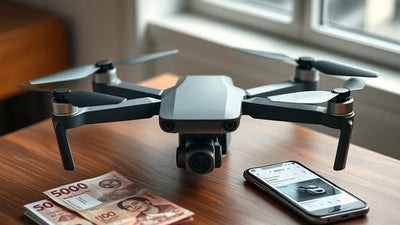
1. A Flood of Premium Used Hardware. The most immediate effect is a sudden, high-volume influx of enterprise-grade drones into the used drone market. Meta's cancelled pilot programs have offloaded fleets of DJI Matrice 350 RTKs with fewer than 50 flight hours, complete with D-RTK 2 base stations and Zenmuse H20N thermal cameras. These units are being liquidated through brokers at 30-45% below retail. For small-to-medium surveying firms that typically cannot justify a $12,000 new platform, this is a generational buying opportunity. However, buyers must beware: these units often come with proprietary Meta firmware locks or custom payload integrations that require professional DJI repair services to revert to standard configurations.
2. Supply Chain Disruption for New Units. Meta's massive hardware orders are absorbing a significant portion of DJI's and Autel's 2026 production capacity for RTK modules and high-endurance batteries. Lead times for new DJI Matrice 4 series units have already stretched from 2 weeks to 8-10 weeks in North America, according to distributors in California and Texas. This supply squeeze will push more commercial operators toward the refurbished and second-hand channels, further accelerating price appreciation for well-maintained used equipment.
3. Strategic Pivot Toward Robotics. Meta's increased investment in autonomous systems signals a long-term trend: big tech is treating drones as a core infrastructure asset, not a niche hobby. This will drive regulatory pressure on the FAA to expand BVLOS waivers and UTM infrastructure, but it also means that small operators may soon compete with well-funded corporate drone fleets for the same commercial contracts-especially in data center inspection and warehouse logistics.
Market Dynamics: Why the Second-Hand Drone Sector Is Booming
The second-hand drone market, historically fragmented and opaque, is undergoing a professionalization driven by events like this. According to Reboot Hub's internal market data, the volume of inspected pre-owned enterprise drone sales has increased 240% year-over-year as of Q2 2026. The primary drivers are corporate liquidations (like Meta's), fleet upgrades by large surveying firms, and the increasing durability of modern UAVs-a well-maintained DJI Matrice 300 can easily exceed 2,000 flight hours with proper care.
For everyday drone pilots, the current moment is paradoxical. On one hand, the availability of ex-corporate fleet drones has never been better. On the other hand, the influx of capital into the sector is driving up the baseline cost of entry-level enterprise features like RTK positioning and obstacle avoidance. The key is to act quickly: the surplus from Meta's layoffs will be absorbed within 60-90 days, after which prices for used high-end drones will stabilize at a higher floor.
This is also a critical time for drone repair and refurbishment. As more used units enter the market, the demand for professional inspection, firmware reconfiguration, and battery replacement services has surged. Operators who invest in professional DJI repair services can effectively "flip" surplus corporate drones, adding value through certification and warranty programs before reselling to end-users.
Geopolitical and Regulatory Context
Meta's layoffs and AI pivot occur against a backdrop of escalating US-China technology tensions. The National Defense Authorization Act (NDAA) for Fiscal Year 2026 includes expanded restrictions on the federal procurement of Chinese-made drones, including DJI models. While Meta's internal drone programs are not directly subject to federal procurement bans, the company's massive hardware orders have attracted scrutiny from the Committee on Foreign Investment in the United States (CFIUS).
For commercial operators, this regulatory uncertainty reinforces the value of the pre-owned DJI drones market. Buying a used, NDAA-compliant platform through a trusted refurbisher sidesteps the long lead times and political risks associated with new imports. It also provides a clear chain of custody, which is increasingly important for insurance underwriting and Part 107 compliance audits.
The FAA, meanwhile, is watching these developments closely. In a recent industry briefing, the agency's UAS Integration Office noted that the proliferation of corporate drone fleets-especially those operated by Big Tech firms-will require updated remote ID and UTM standards. Operators who currently fly under Part 107 waivers for BVLOS operations should expect tighter integration requirements by Q4 2026.
Frequently Asked Questions
How will Meta's layoffs affect the price of used DJI drones?
The immediate effect is a temporary surplus of high-end enterprise drones, which has depressed prices by 30-45% for models like the DJI Matrice 350 RTK. However, this surplus is expected to be absorbed within 60-90 days as commercial operators and pre-owned specialists like Reboot Hub acquire the inventory. After that, prices will likely rise again due to supply chain constraints on new units caused by Meta's hardware procurement. The window of opportunity for buyers is narrow.
Should I buy a used drone from a corporate liquidation sale?
Yes, but with caution. Corporate liquidation drones often come with proprietary firmware, custom payload mounts, or locked batteries that require professional reconfiguration. Always insist on a detailed flight log inspection and a certification of refurbishment. Reboot Hub's pre-owned DJI drones undergo a 52-point inspection and come with a 6-month warranty, eliminating the risk of inheriting corporate-specific issues.
What does Meta's AI pivot mean for Part 107 commercial pilots?
In the short term, it means increased competition for BVLOS waivers and data center inspection contracts, as Meta and other tech giants deploy autonomous drone fleets. In the medium term, it will drive regulatory improvements in UTM and remote ID, which will benefit all commercial operators. The key survival strategy is to invest in high-quality, versatile equipment-such as refurbished enterprise drones-and to maintain a clear compliance record with the FAA. The days of small operators competing on price alone are ending; specialization and fleet reliability are now the differentiators.
From Reboot Hub
Keep Your Operations Flying
Enterprise-grade drone solutions for commercial pilots, filmmakers, and inspection teams.
Pre-owned Fleet
Fully inspected DJI drones with 6-month warranty. Save up to 40%.
Browse Inventory ->