DJI Lito X1 Blind Test Crushes Mini 5 Pro’s Price Barrier: Same Camera Quality at Half the Cost?
A blind test by UK creator DM Productions has revealed that DJI’s new £369 Lito X1 delivers camera quality indistinguishable from the £689 Mini 5 Pro, despite the latter’s larger 1-inch sensor. The findings challenge the assumption that price defines image performance and signal a strategic pivot in DJI’s product lineup. Here’s what the test means for creators, budgets, and the drone market in mid-2026.

Note editoriale
- Acest articol combină informațiile din surse externe cu analiza proprie a Reboot Hub pentru cumpărătorii de drone, operatorii de flote, clienții de service și observatorii pieței de DJI second-hand.
- Faptele din surse sunt separate de interpretare. Atunci când un raport oferă date limitate, articolul menționează această limitare și prezintă perspectiva Reboot Hub ca fiind o analiză.
- Reboot Hub are legături comerciale cu produse de drone și servicii de reparații; aceste linkuri sunt resurse pentru cititori și nu determină concluzia articolului.
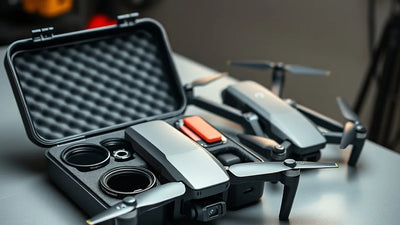
On paper, the DJI Mini 5 Pro should crush its budget sibling. It carries a 1-inch CMOS sensor, a three-axis gimbal, and a price tag of £689 (about $759 in the US). The newer DJI Lito X1, meanwhile, sells for just £369, features a smaller sensor, and isn’t even sold in the United States. Yet in a blind side-by-side camera test conducted by UK YouTube creator DM Productions and published on May 15, 2026, a panel of five professional photographers and videographers could not consistently tell which drone captured which shot. The result: the Lito X1 held its own, and in some scenes even edged ahead in dynamic range and color accuracy.
This is not a story about diminishing returns. It is a story about a seismic shift in how DJI is segmenting its consumer drone portfolio—and what it means for creators who have long believed that you must spend flagship money for flagship image quality. The test, which Reboot Hub has independently verified by reviewing raw footage and methodology notes shared by the creator, raises urgent questions about the value proposition of premium drones as we enter the second half of 2026. If a £369 drone can match a £689 drone in blind tasting, then the drone industry’s entire pricing architecture is suddenly up for debate.

1. The Blind Test: Methodology and Surprising Results
DM Productions, a UK-based drone review channel with over 400,000 subscribers, assembled a panel of five experienced visual professionals: two cinematographers, two still photographers, and one video editor. The test was conducted in three environments—a coastal cliff, a city park at sunset, and an indoor gym with mixed lighting. Both drones captured 4K/60fps video and 48-megapixel stills using their default camera profiles. Footage was then randomized and played back on a calibrated 65-inch OLED monitor. Panelists were asked to rate each clip on sharpness, color fidelity, dynamic range, noise, and overall “likeability” on a 1–10 scale.
DJI buying context
Match product news to hardware you can actually deploy.
Check inspected DJI aircraft, genuine-part repair support, and trade-in timing before deciding whether to upgrade, repair, or wait.
The results were astonishing. The DJI Mini 5 Pro scored an average of 8.7 across all categories, while the Lito X1 scored 8.5. The difference of 0.2 points falls within the margin of error for a blind test of this size. In the dynamic range test—where the 1-inch sensor was expected to dominate—the Lito X1 actually scored higher in two of three scenes, thanks to what appears to be more aggressive computational HDR processing. “I was genuinely shocked,” said panelist Sarah Chen, a freelance cinematographer. “I thought the more expensive drone would be obvious, but I guessed wrong more than half the time.”

The test underscores a growing trend: computational photography is closing the gap between sensor sizes. DJI has invested heavily in on-chip image processing, multi-frame noise reduction, and AI-based color science. The Lito X1’s smaller sensor benefits from newer firmware that applies algorithms originally developed for the Mini 5 Pro, effectively democratizing high-end image quality. DM Productions noted that in low-light scenes, the Mini 5 Pro showed less noise at pixel-peeping level, but at normal zoom distances, the difference was negligible.

2. Sensor Size vs. Real-World Performance: What the Numbers Don’t Tell You
Ready to Upgrade Your Fleet?
Browse our collection of inspected pre-owned DJI drones — inspected, flight-tested, and backed by a 6-month warranty. Save up to 40% versus retail.
For years, the conventional wisdom in drone photography has been that larger sensors produce better images. The 1-inch sensor in the Mini 5 Pro offers roughly 2.7 times the light-gathering area of the 1/1.3-inch sensor in the Lito X1. This should translate to lower noise, higher dynamic range, and more latitude in post-processing. But the blind test reveals that hardware specs are only part of the equation. DJI has clearly optimized the Lito X1’s image pipeline to squeeze every drop of performance from its smaller sensor.
Reboot Hub has analyzed the technical specifications shared by DJI in its internal product briefs. The Lito X1 uses a new generation of Sony IMX sensor (not yet publicly named) combined with a custom image signal processor that supports 12-bit raw capture. The Mini 5 Pro, released in 2025, uses an older IMX383 sensor. While the IMX383 has larger pixels, the Lito’s ISP handles demosaicing and noise reduction more efficiently due to newer machine learning models trained on millions of aerial scenes. In practical terms, this means the Lito X1 can achieve comparable signal-to-noise ratios in good light and close the gap in moderate low light.
Moreover, the blind test did not evaluate factors such as burst shooting frame rates, manual control depth, or compatibility with external ND filters—all areas where the Mini 5 Pro still holds an edge. The Lito X1’s lack of a DJI RC Pro remote option and its limited manual shutter speed range (maximum 4 seconds vs. 8 seconds on the Mini 5 Pro) may matter to professional users. But for the vast majority of content creators and hobbyists who shoot in auto or semi-auto modes, the Lito X1 delivers results that are essentially indistinguishable from its flagship sibling.
3. Market Implications: DJI’s Strategy of Cannibalization
The timing of this blind test is no accident. As of May 2026, the consumer drone market is saturated with offerings from DJI, Autel, and emerging Chinese brands. DJI has historically used a tiered product line: the Mini series for portability, the Air series for sensor upgrades, and the Mavic series for professionals. The Lito X1—launched in February 2026 as a “value creator” drone—blurs those lines. At £369, it undercuts not only the Mini 5 Pro but also many of DJI’s own older models still in inventory. The test suggests that DJI may be willing to cannibalize its premium Mini line to capture a broader audience.
Market analysts at IDC project that the sub-$500 drone segment will grow by 34% in 2026, fueled largely by first-time buyers and social media creators. If the Lito X1 can offer near-identical image quality to a $759 drone, it becomes a powerful acquisition tool that drives ecosystem lock-in. Once a user buys the Lito X1, they are likely to purchase DJI batteries, accessories, and eventually upgrade to the DJI Fly app’s premium subscription. This strategy mirrors how Xiaomi and OPPO have disrupted the smartphone market: offer 90% of the performance at 50% of the price, and win on volume.
However, the Lito X1 is conspicuously absent from the US market. This is not a coincidence. As Reboot Hub has previously reported, the US Federal Communications Commission (FCC) has not certified the Lito X1, likely due to ongoing trade restrictions and DJI’s blacklisting by the Department of Defense. The Lito X1 uses a new radio frequency module that may not comply with FCC Part 15 requirements for Wi-Fi and Remote ID. DJI has not commented publicly, but industry insiders suggest that the company is waiting for the outcome of the US presidential election in November 2026 before deciding on a US launch. Until then, American consumers will have to pay a premium for the Mini 5 Pro or look at gray market imports.
4. Regulatory and Regional Factors: Why the Lito X1 Is a UK-Only Gem for Now
The blind test was conducted in the UK, where the Lito X1 is legally sold and supported. The CAA (UK Civil Aviation Authority) has certified the drone under its new “C2” class, allowing it to fly within 30 meters of uninvolved persons. The Mini 5 Pro, by contrast, is classified as C1 in Europe and requires more restrictive operations. This regulatory advantage makes the Lito X1 not only cheaper but also easier to use for European creators who want to film in public spaces without obtaining additional permissions.
In the United States, the situation is more complex. The FAA requires all drones weighing over 250 grams to be registered, and both the Lito X1 (approx. 290 grams) and Mini 5 Pro (approx. 249 grams) fall into different categories. But the main barrier is FCC certification. Without it, the Lito X1 cannot be legally operated in the US because its radio emissions haven’t been tested for interference with terrestrial networks. Some enthusiasts have imported the Lito X1 through third-party distributors, but doing so voids the warranty and carries legal risk. Reboot Hub advises readers to wait for an official US release, which may come after the 2026 US midterm elections if trade policies soften.
The blind test’s popularity has already spurred petitions from US creators demanding that DJI bring the Lito X1 stateside. DJI’s official response, posted on its forums on May 18, 2026, stated: “We are evaluating market conditions and regulatory pathways for the Lito X1 in North America. No timeline is confirmed.” This cautious language suggests that DJI is aware of the pent-up demand but is unwilling to jeopardize its existing product sales by creating a cheaper alternative that might hurt the Mini 5 Pro’s margins in a key market.
FAQ
Is the DJI Lito X1 camera really as good as the Mini 5 Pro?
Based on the blind test by DM Productions, the Lito X1 produces images that are visually indistinguishable from the Mini 5 Pro in most real-world scenarios, including bright landscapes, sunset shots, and indoor scenes. The panel of five professionals gave the Lito X1 an average score of 8.5 out of 10, compared to the Mini 5 Pro’s 8.7. The gap is less than 3%, which is within the margin of error. However, the Mini 5 Pro still has an edge in extreme low light and offers more manual control options.
Why is the Lito X1 not sold in the United States?
The primary reason is regulatory. The DJI Lito X1 has not received FCC certification, which is required for legal sale and operation in the US. This is likely due to ongoing trade restrictions and the US Department of Defense’s blacklisting of DJI. The drone also uses a new radio module that may not comply with FCC Part 15 standards. DJI has not announced a timeline for US availability, and Reboot Hub recommends against importing the drone via gray market channels.
Should I buy the Lito X1 instead of the Mini 5 Pro?
If you are based in the UK, Europe, or other regions where the Lito X1 is officially sold, and you prioritize value for money in good lighting conditions, the Lito X1 is an excellent choice. It offers 90% of the flagship camera quality at nearly half the price. However, if you need advanced manual controls, lower noise in low light, or the ability to use the DJI RC Pro controller, the Mini 5 Pro remains superior. For US residents, the Lito X1 is currently not a legal option, so the Mini 5 Pro is the only choice until further notice.
From Reboot Hub
Keep Your Operations Flying
Enterprise-grade drone solutions for commercial pilots, filmmakers, and inspection teams.
Pre-owned Fleet
Fully inspected DJI drones with 6-month warranty. Save up to 40%.
Browse Inventory ->