ABSI Hosts Robotics Team for Counter-UAS Target Tour
ABSI Aerospace and Defense welcomed The Hive Mind robotics team to tour its expendable unmanned target production for U.S. military counter-UAS training. This visit highlights the growing defense focus on drone threats and the industry's talent pipeline.

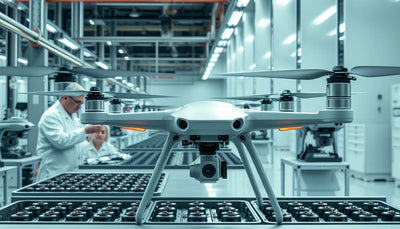
On June 26, 2026, DroneXL.co reported that ABSI Aerospace and Defense hosted members of the robotics team 836A, known as The Hive Mind, for a tour of its facility in California, Maryland. The team, based in Hollywood, Maryland, had just returned from the VEX IQ World Championship. During the tour, they observed how ABSI builds expendable unmanned targets used by the U.S. military to train against hostile drones. This visit signals a deepening connection between defense technology and educational outreach, with direct implications for the commercial drone market.
The role of expendable targets in counter-UAS training
ABSI designs and manufactures expendable unmanned aerial targets — low-cost drones that are meant to be destroyed during live-fire training exercises. The U.S. military uses these platforms to simulate the flight characteristics of hostile unmanned systems, allowing operators to practice detection, tracking, and engagement without risking expensive aircraft. The Hive Mind team saw firsthand how these targets are assembled, from airframe construction to avionics integration.
This production capability is becoming increasingly important as counter-UAS (C-UAS) technology matures. Military units and homeland security agencies require realistic, repeatable training scenarios to validate their defensive systems. ABSI's expendable targets provide a controlled, repeatable threat that helps refine tactics and equipment. For commercial drone operators, the proliferation of C-UAS training activity may lead to tighter airspace controls around sensitive sites, such as military bases, airports, and critical infrastructure. Fleet managers should anticipate increased scrutiny on drone flights near these zones and ensure their crews are trained to comply with temporary flight restrictions and remote identification requirements.
Fleet readiness
Keep DJI hardware available without overbuying new units.
Use defense and fleet news as a planning signal for repair support, inspected pre-owned aircraft, and replacement timing.

Moreover, the expendable nature of these targets underscores a broader trend: the military's willingness to consume drones at a high rate for training. This demand could influence the availability of certain components or even drive interest in used commercial drones that can be repurposed as low-cost targets. While ABSI builds purpose-built targets, the second-hand market for pre-owned DJI drones may find indirect opportunities as organizations look for affordable platforms to support training or research initiatives.
What this means for drone buyers
For buyers considering a pre-owned DJI drone, the growing emphasis on counter-UAS training adds a layer of market awareness. While expendable targets are not directly related to consumer or enterprise models, the defense sector's appetite for realistic threats could steady demand for older, more affordable platforms that mimic the size and flight profiles of modern hobbyist drones. This may help sustain resale values for iconic models such as the Phantom or Mavic series, which are often used in training environments.
Purchasers should also consider how their drone will be identified and tracked. The military's training targets are designed to be distinguishable from commercial drones, but regulatory bodies continue to refine rules for civilian UAVs. Ensuring that a pre-owned drone is equipped with proper remote ID hardware and can be updated to meet evolving standards is a sound investment. Fleets that rely on older airframes may need to evaluate repair options to maintain compliance. Operators seeking reliable upgrades can explore professional DJI repair services to extend the life of their equipment.
Additionally, the tour highlights the importance of STEM education in shaping the next generation of drone technicians and engineers. Buyers who support local robotics programs or participate in community outreach foster a talent pool that can eventually provide skilled repair services and innovative solutions. The Hive Mind's visit to ABSI demonstrates that even young students can gain exposure to aerospace manufacturing, which benefits the entire drone ecosystem.
STEM education and the drone industry workforce
The Hive Mind robotics team, comprising students from Hollywood, Maryland, had just returned from the VEX IQ World Championship before touring ABSI. This type of hands-on experience is invaluable for building future expertise in unmanned systems. The students saw engineering processes, quality control, and the practical application of their competition skills in a defense facility. For drone fleet operators and repair businesses, such educational connections represent a pipeline for recruiting motivated, technically minded employees.
As the drone industry matures, the need for skilled technicians who can repair, program, and operate UAVs grows. Companies that invest in internships, school partnerships, or facility tours are planting seeds for a workforce that understands both commercial and defense applications. The ABSI tour also indirectly benefits the second-hand market: a well-trained workforce ensures that pre-owned drones are refurbished and maintained to high standards. Customers of pre-owned DJI drones can feel more confident when they know that repair professionals are being nurtured through programs like those visible in this tour.
From a commercial perspective, the visibility of defense drone manufacturing can also influence market trends. If students become enthusiastic about drones through such visits, demand for entry-level models may rise, potentially tightening supply in the used market. Operators looking to sell older equipment could find it advantageous to time their listings with periods of heightened educational interest, such as after robotics competitions or industry events.
Commercial operator takeaways
After reading about the ABSI tour, drone operators and fleet managers should consider several practical steps. First, stay informed about local counter-UAS developments. If your area hosts military training or defense contractors, airspace restrictions may become more common. Second, evaluate your current drone fleet for compliance and upgradability. Older models that lack remote ID or have outdated firmware may need to be traded or upgraded. The company's drone trade-in guide can help navigate the process of exchanging used equipment for newer, more compliant platforms.
Third, think about how your organization can support STEM initiatives. Whether through donations, sponsored team kits, or facility tours, engaging with young talent builds goodwill and helps secure the industry's future workforce. Finally, for those in the market for a pre-owned DJI drone, the defense focus on counter-UAS training suggests that demand for realistic target platforms may keep certain model prices stable. Compare inventory from trusted sources that offer inspected pre-owned units with clear provenance. The tour of ABSI's facility reminds us that the line between military training tools and commercial drones is not always rigid, and that the second-hand market can serve both communities.
What is an expendable unmanned target?
An expendable unmanned target is a low-cost drone designed to be shot down or destroyed during military training exercises. ABSI builds such targets for the U.S. military to practice counter-UAS tactics.
Why did the Hive Mind robotics team tour ABSI?
The team, from Hollywood, Maryland, visited ABSI to learn about aerospace engineering and the production of training targets. They had recently competed in the VEX IQ World Championship.
How should commercial drone operators respond to the growing counter-UAS focus?
Operators should ensure their drones comply with remote ID regulations, consider participating in training exercises to understand defensive measures, and keep their equipment updated through reliable repair services.