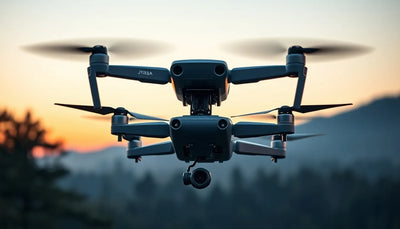
Wing and Walmart Expand Houston Drone Delivery to 1M Residents
Wing and Walmart activated eight new drone hubs in Houston, doubling their delivery footprint and covering over one million residents. The expansion signals growing commercial drone logistics capacity and has implications for fleet operators, repair services, and the pre-owned drone market.

Wing and Walmart have officially launched the next phase of their drone delivery network in the Houston area, activating eight new hubs that more than double Wing's existing footprint in the region. According to the announcement published on DRONELIFE on July 8, 2026, the expanded service now reaches more than one million Houston residents. For commercial drone operators, fleet managers, and buyers who track where the logistics market is heading, this expansion offers concrete evidence that last-mile drone delivery is moving from pilot projects to scaled operations.
The new hubs are not a single warehouse expansion but a distributed network that extends coverage across a larger geographic area. Wing and Walmart did not disclose the specific neighborhoods or the exact delivery radius of each hub, but the combined coverage of eight new sites implies a significant increase in daily delivery capacity. For anyone involved in drone fleet planning, repair services, or the pre-owned market, the implication is clear: as delivery networks grow, so does the installed base of aircraft, the demand for spare parts, and eventually the volume of units that rotate out of active service.
How the Houston expansion works
Wing is a subsidiary of Alphabet and has been operating drone delivery trials in several markets worldwide. The Houston expansion is one of its largest single deployments to date. The eight new hubs are integrated with Walmart's existing fulfillment and retail infrastructure, meaning that orders are prepared at a nearby store and then flown by Wing's drones directly to customer residences. The service covers a selection of items typical of convenience and grocery orders, though the source does not detail the exact weight or size limits of the deliveries.
Industrial drone procurement
Source a brand-new industrial drone for this mission.
Discuss mission fit, aircraft model, quantities, configuration, pickup, and lifecycle support with Reboot Hub.

For operators studying this model, the key takeaway is the hub-and-spoke architecture. Rather than launching from a central distribution center, Wing's hubs appear to be localized, likely positioned at or near Walmart stores. This reduces the flight distance needed for each delivery and allows the fleet to operate more trips per day. The network expansion to one million residents suggests that Wing has solved many of the operational challenges related to airspace coordination, landing zone identification, and battery management that smaller pilots have struggled with. For fleet managers considering their own delivery operations, this architecture is worth replicating.
Wing's drones are fixed-wing hybrids capable of vertical takeoff and landing. While the source does not provide technical specifications, the operational pattern is consistent with a platform designed for medium-range, light-payload deliveries. The expansion to eight new hubs indicates that Wing has confidence in the reliability and cost-per-delivery of its aircraft. That confidence may trickle down to the broader drone market: when a large operator scales its fleet, it often signals to manufacturers, repair shops, and pre-owned traders that the technology is becoming a commodity with predictable maintenance cycles.
Operational lessons for fleet managers
For fleet managers running commercial drone programs, the Houston expansion offers at least two operational lessons. First, the importance of distributed infrastructure. Wing did not build one giant hub; it built eight smaller ones. This approach minimizes deadhead flight time and increases responsiveness. If you are planning a delivery service with multiple operating zones, it may be more efficient to deploy several smaller launch sites rather than a single large base. Second, the integration with an existing retail logistics network—Walmart's stores and fulfillment system—suggests that drone operations work best when they ride on top of proven ground infrastructure rather than trying to replace it entirely.
Another implication involves fleet renewal cycles. As Wing and other delivery operators continue to expand, they will eventually retire older aircraft or sell off excess inventory. That creates supply in the pre-owned market. If you are a buyer looking for pre-owned DJI drones or similar commercial platforms, it is worth monitoring these large-scale deployments. When a major operator phases out a generation of drones, the units often come through channels like trade-in programs or bulk liquidation. Understanding the operational lifespan of delivery drones can help you time your purchases.
Repair services also see an impact. With more drones flying more hours, the demand for maintenance and genuine OEM spare parts grows. Operators in the Houston area may need to locate certified repair shops that can handle Wing's proprietary platforms. However, the broader ecosystem of delivery drones—including platforms from DJI, Skydio, and Autel—will also see increased usage, which means that professional repair services become a critical part of fleet uptime. For any operator running a multi-rotor delivery fleet, access to professional DJI repair services is an important consideration, especially as flight hours accumulate and components wear.
What this means for drone buyers
Drone buyers watching this expansion should consider three trends. First, the market for commercial delivery drones is maturing. As networks like Wing and Walmart's prove their viability, other retailers and logistics companies will follow. That increases the total addressable market for drones and drives innovation in battery life, payload capacity, and autonomous navigation. Second, the increased scale of operations means that the supply chain for spare parts and accessories will become more robust. When a fleet operator like Wing maintains hundreds of aircraft, the aftermarket for motors, propellers, batteries, and flight controllers becomes more accessible for smaller operators.
Third, the expansion raises the question of fleet turnover. Delivery drones have a finite operational life. Batteries degrade, airframes accumulate fatigue, and sensors need recalibration. As Wing retires older units—or as its maintenance cycle produces excess components—the pre-owned market may see a wave of high-quality, well-maintained aircraft. For buyers seeking pre-owned DJI drones, this is a encouraging sign. It means that more professionally flown drones will eventually enter the secondary market, often with documented maintenance histories and OEM parts. If you are planning a drone purchase in the next 12 to 18 months, it may be wise to monitor the lifecycle of these large delivery fleets and time your acquisition to coincide with their turnover cycles.
Fleet managers should also consider their own trade-in strategies. If you currently operate older delivery drones and are looking to upgrade to newer platforms, a drone trade-in guide can help you understand the value of your current equipment and how to transition to more capable aircraft. The Houston expansion suggests that the market is moving toward higher-volume, lower-cost delivery models, and your fleet needs to keep pace.
What this signals for the delivery drone market
The expansion by Wing and Walmart is not an isolated news item. It fits into a broader trend of large retailers and logistics companies investing heavily in drone delivery. Walmart has been running drone trials with multiple providers, including Flytrex and Zipline, while Amazon has its Prime Air program. The activation of eight hubs in Houston indicates that the market has crossed a tipping point from experimental to operational. For drone buyers, this means that the technology is becoming more standardized, and the risk of investing in a platform that becomes obsolete is decreasing.
From a pre-owned market perspective, the expansion is a double-edged sword. On one hand, the influx of professionally maintained drones into the secondary market will increase supply and potentially lower prices for high-end equipment. On the other hand, larger operators may choose to lease rather than own their fleets, which could reduce the number of units that eventually reach the pre-owned channel. Still, the overall trend is positive for buyers who are patient. The more drones that fly commercially, the more parts and aircraft will cycle through repair shops, trade-in programs, and resale platforms.
For professional repair services, the implications are straightforward. As the delivery drone fleet scales, the need for reliable, certified maintenance grows. Operators cannot afford downtime. Therefore, repair shops that invest in OEM parts and specialized knowledge will see increased demand. If you run a repair business, now is the time to build relationships with large fleet operators and to stock genuine spare parts for the most common delivery platforms.
Finally, drone buyers should consider the regulatory environment. Large expansions like this one require coordination with the FAA and local authorities. Wing has likely worked through complex airspace approvals, beyond visual line of sight (BVLOS) waivers, and community acceptance. These precedents make it easier for smaller operators to later apply for similar permissions. In other words, the Houston expansion clears a path for the entire industry.
How many new drone hubs did Wing and Walmart activate in Houston?
According to the DRONELIFE report from July 8, 2026, Wing and Walmart activated eight new drone delivery hubs in the Houston area, more than doubling Wing's previous footprint in the region.
How many residents does the expanded service now cover?
The service expansion reaches more than one million Houston residents. The eight new hubs significantly increase the delivery network's coverage compared to Wing's earlier operations in the city.
What should a drone buyer or fleet manager do after reading this news?
Monitor large delivery fleet turnover cycles for potential pre-owned purchases, invest in professional repair services and genuine spare parts to maintain uptime, and consider distributed hub architectures for your own delivery operations. The expansion signals that commercial drone logistics is scaling, which will affect equipment availability and maintenance demand across the industry.
Fontes consultadas
- DRONELIFE - primary source
Não estava disponível documentação oficial adicional no momento da publicação.
O Editorial Reboot Hub acrescenta análises de compra, reparação, revenda e operacionais para proprietários de drones. Se detetar um erro, contacte-nos para a revisão da correção através da nossa política editorial.