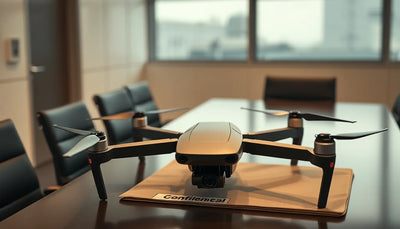
Tulare County Sheriff Deploys BRINC Drones for 911 Response
Tulare County Sheriff’s Office is finalizing a Drone as First Responder program with Motorola Solutions using BRINC hardware. This public safety shift signals growing demand for rapid-response drones, influencing fleet planning and the pre-owned drone market as agencies upgrade.

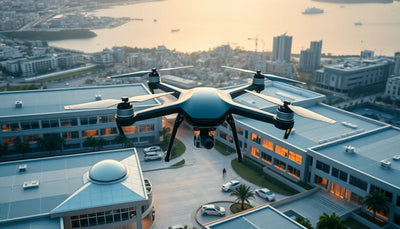
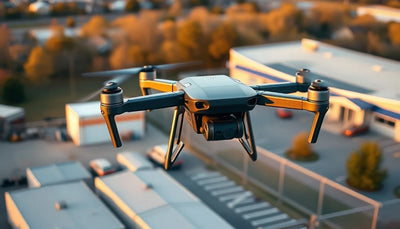
The Tulare County Sheriff’s Office is moving toward a future where drones, not deputies, are the first responders to 911 calls. According to a report from DroneXL.co, the county is finalizing a deal with Motorola Solutions to launch a Drone as First Responder (DFR) program built around BRINC hardware. The same system was already approved by the Porterville City Council for its police department. This marks a concrete step in public safety drone adoption that carries real implications for commercial fleet operators, buyers of pre-owned equipment, and repair service providers.
For anyone watching the emergency response drone sector, the Tulare County move is not an isolated experiment. It reflects a broader trend: agencies are moving from pilot projects to operational programs. Motorola Solutions, a familiar name in public safety communications, is now packaging BRINC drones as turnkey DFR solutions. That means hardware, software, dispatch integration, and training are coming as a package. Commercial operators who have considered bidding on public safety contracts or partnering with local law enforcement need to understand how these programs change the procurement landscape.
How the DFR model works and why it matters

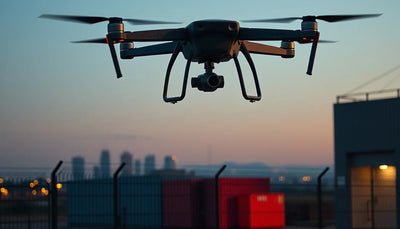
The core idea is simple: when a 911 call comes in, a drone launches from a pre-stationed base or a patrol vehicle and arrives at the scene before human responders. The drone streams live video to dispatchers and responding officers, providing situational awareness before anyone sets foot on site. Tulare County’s program uses BRINC drones, which are designed specifically for police and emergency operations. The Porterville City Council already approved the same setup, suggesting a coordinated regional approach.
Fleet readiness
Keep DJI hardware available without overbuying new units.
Use defense and fleet news as a planning signal for repair support, inspected pre-owned aircraft, and replacement timing.
What matters operationally is that these drones are not general-purpose consumer or enterprise units repurposed for public safety. BRINC builds its hardware with features like glass-breaking attachments, two-way audio, and ruggedized airframes—details that make them purpose-built for law enforcement. For fleet managers and repair shops, this means the public safety drone ecosystem is becoming a distinct vertical with its own supply chain, maintenance requirements, and upgrade cycles.
Commercial operators who provide aerial surveillance, infrastructure inspection, or event security should watch the Tulare County rollout closely. If the program proves reliable, other counties and cities will follow. That creates both competition—public safety agencies may contract with drone service providers instead of buying fleets—and opportunity: agencies will need trained pilots, maintenance partners, and spare parts. The Motorola Solutions involvement also signals that deep-pocketed integrators are entering the space, raising the bar for service quality.
What this means for drone buyers

For buyers of pre-owned DJI drones and enterprise equipment, the Tulare County deal confirms a trend that fleet managers have been discussing for the past year: as public safety agencies adopt purpose-built platforms like BRINC, they often replace or supplement existing DJI-based fleets. That can increase the supply of used DJI drones entering the secondary market. Operators looking for cost-effective ways to build or expand their own fleets may find more pre-owned DJI drones available from agencies that are upgrading to DFR-specific hardware.
However, buyers should be cautious. Not all used public safety drones are available for sale; many are traded in through government surplus auctions or remarketing partners. The timing matters: as Tulare County finalizes its contract, we may see older DJI models (Mavic 2 Enterprise, Matrice 200 series) appear on secondary markets. Fleet operators who need reliable, inspected pre-owned units should monitor these opportunities closely but also plan for potential compatibility issues. Agency-used drones may have flight hours, nonstandard payload mounts, or firmware locked to government accounts.
Another angle: the rise of DFR programs creates demand for drone repair services that can handle both consumer-grade and specialized public safety hardware. While BRINC and Motorola Solutions will likely offer their own support, smaller operators and independent repair shops may see increased requests for maintenance on the DJI drones that agencies still use for training, daytime patrol, or secondary roles. Investing in professional DJI repair services that use genuine OEM spare parts positions a repair business to serve both commercial and public safety clients.
For fleet managers evaluating their own DFR capabilities, the Tulare County example reinforces the value of having a dedicated rapid-response drone. But buying new BRINC hardware is expensive. A practical alternative is to build a DFR capability using proven DJI platforms, which are available as inspected pre-owned units at lower cost. A drone trade-in guide can help calculate the equity in existing fleet assets that could fund an upgrade.
Supply chain and repair implications for the second-hand market

Every new public safety drone program has ripple effects on the parts ecosystem. BRINC drones use proprietary components, so standard DJI repair parts will not apply. That means independent repair shops must decide whether to stock BRINC-specific spare parts, which may be harder to source and more expensive. At the same time, the increased supply of used DJI drones from agencies means more demand for OEM-pulled replacement parts—batteries, motors, gimbal assemblies, and camera modules.
The pre-owned market for DJI drones may see a pricing shift. As agencies like the Tulare County Sheriff’s Office commit to BRINC, they may offload their DJI fleets in batches. That could temporarily depress prices for certain models, especially older Enterprise builds. Buyers who have been waiting for a good deal on a Matrice 300 RTK or Mavic 2 Enterprise Dual may find attractive opportunities. But they should also consider that these drones often come with high flight hours and may require immediate inspection or battery replacement.
Repair businesses that focus on professional DJI repair services with genuine OEM parts will be well-positioned to handle this influx. Agencies that sell used drones typically do not provide warranty coverage, so the buyer’s confidence depends on having a trusted repair partner. That creates a value proposition: offer inspection and refurbishment services specifically for ex-government DJI drones, then resell them as inspected pre-owned units.
For fleet operators who currently use DJI drones for public safety contracts, the arrival of BRINC as a direct competitor is both a threat and an opportunity. It may push DJI to offer more competitive pricing or better support for DFR use cases. But it also means that the secondary market for DJI drones may become more crowded, making it harder to sell used equipment at high prices. Fleet managers should plan their upgrade cycles accordingly: trade in older units before the market gets flooded with agency surplus.
What operators should do now

The first step is to assess your own fleet composition. If you are running a mixed fleet of DJI drones and have considered adding a dedicated rapid-response platform, the Tulare County announcement is a data point, not a mandate. You do not need to buy BRINC tomorrow. But you should evaluate whether your current drones can be deployed in a DFR role with software like Motorola Solutions’ CAPE or third-party apps. Many enterprise DJI drones are capable of automated flight and real-time streaming, though they lack BRINC’s hardened physical features.
Second, if you are a repair shop or parts supplier, start asking local agencies about their equipment plans. Many police and sheriff departments are evaluating DFR programs. If they are moving to BRINC, they may have DJI surplus coming. Build relationships early to secure first access to used drones and spare parts. Offering trade-in services or buyback programs for agencies upgrading their fleet can give you a steady supply of inventory for the pre-owned market.
Third, buyers of pre-owned DJI drones should be patient but prepared. The Tulare County contract is still being finalized; surplus will not hit the market tomorrow. Use this time to research the specific models likely to be offloaded and understand their typical flight hours and failure points. Bookmark a drone trade-in guide to help evaluate the trade-in value of your current gear if you plan to upgrade later.
Finally, stay grounded in the source facts. The Tulare County program uses BRINC hardware, but Motorola Solutions is the system integrator. That means the support structure, software platform, and spare parts flow may go through Motorola first. If you are considering BRINC for your own operations, factor in the long-term service contract costs and the limited availability of third-party repair parts. For many operators, a well-maintained pre-owned DJI fleet with professional repair backing will remain the most practical and cost-effective choice for at least another year.
Will the Tulare County program replace all deputies with drones?
No. The DFR program is designed to provide situational awareness before officer arrival, not to substitute for human responders. Deputies still respond, but they arrive with more information about the scene, reducing risk and enabling faster decision-making.
Are BRINC drones compatible with DJI controllers or accessories?
BRINC drones are not compatible with DJI systems. They use proprietary hardware and software integrated through Motorola Solutions. Operators who own DJI equipment cannot operate BRINC drones with their existing remote controllers or ground stations.
How will this affect the price of used DJI drones?
In the short term, prices may soften as agencies replace their DJI fleets with purpose-built DFR platforms. The exact impact depends on how many drones each agency releases and the condition of those units. Buyers should monitor government surplus auctions and trusted pre-owned marketplaces for opportunities, but should also budget for inspection and battery replacement.