Teledyne FLIR Prism Ground ISR Signals Shift in Defense Drone Ecosystem
Teledyne FLIR OEM launched Prism Ground ISR, extending its AI software from counter-drone to military target classification. The move underscores rising defense ISR demand, affecting fleet readiness, parts availability, and the second-hand DJI market.

Notas editoriais
- Este artigo combina reportagens externas nomeadas com a análise própria do Reboot Hub para compradores de drones, operadores de frotas, clientes de reparação e observadores do mercado de DJI usados.
- Os factos das fontes são separados da interpretação. Quando um relatório fornece dados limitados, o artigo indica essa limitação e enquadra a visão do Reboot Hub como análise.
- O Reboot Hub possui links comerciais para produtos de drones e serviços de reparação; estes links são recursos para o leitor e não determinam a conclusão do artigo.
Teledyne FLIR OEM has released Prism Ground ISR, an AI-powered software stack that brings military target classification to ground-based intelligence, surveillance, and reconnaissance missions. Previously limited to counter-drone applications, the new platform combines AI, thermal imaging, and computational imaging to improve ground ISR operations. For drone fleet operators and used-market watchers, this signals that defense and public-safety budgets are accelerating toward AI-integrated surveillance systems — and that will ripple through the entire drone ecosystem, from parts availability to repair queues and second-hand DJI drone supply.

What the Prism Ground ISR announcement changes
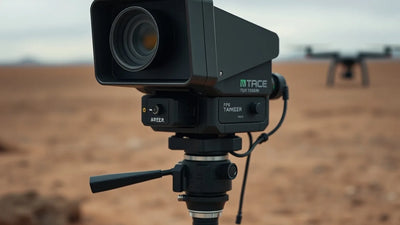
The Prism Ground ISR stack is designed to run on existing hardware, but it marks a deliberate expansion of Teledyne FLIR’s software family into a core military mission set. Where earlier versions focused only on identifying and tracking drones for counter-UAS, the new release can classify ground-based targets — vehicles, personnel, and infrastructure — in real time. According to the announcement, the platform uses advanced thermal imaging combined with onboard AI to reduce false alarms and improve operator response times.
This is not a consumer product. It is an OEM software layer intended for defense contractors and integrators who supply military ISR systems. That focus matters for anyone running enterprise drone fleets, because the same sensor, power, and processing components are now being pulled into defense procurement channels. When defense demand surges for thermal cameras, embedded GPUs, and rugged ground stations, civilian and commercial buyers can face longer lead times, higher prices, and scarcity of repair parts. The verified product database lists DJI’s O4 Ground Station with a typical power draw of 17.1 W in gateway mode and a low-power mode of 7 W; operators integrating similar ground ISR capabilities will need to match those power constraints when deploying alongside defense-grade AI software stacks.
Market and sector signal
The extended Prism platform is a clear signal that defense agencies are moving beyond drone-specific countermeasures toward multi-domain AI surveillance. That shift has concrete implications for three groups: fleet operators, parts suppliers, and used-drone market participants.
Fleet readiness
Keep mission-ready DJI hardware available without overbuying new units.
Reboot Hub helps teams source inspected pre-owned DJI platforms, repair genuine components, and keep essential spare parts moving.
First, military ISR programs often specify hardware that overlaps with high-end enterprise drones — thermal payloads, stabilized gimbals, and processing modules. As Teledyne FLIR’s software gains adoption, the components used in its thermal sensors (cores like the Boson or Tau series) may see tighter allocation. That directly affects repair shops that rely on OEM spare parts for DJI’s Matrice or M30 series, which often integrate FLIR thermal modules. Reboot Hub’s OEM spare parts availability becomes a critical resource when supply chains tighten.
Second, second-hand DJI drones that were originally deployed in defense or public-safety roles may be diverted from resale as agencies upgrade to integrated Prism ISR-equipped systems. Older DJI M600, M200, or M300 platforms with thermal payloads could become more scarce on the used market because defense buyers will hold onto them longer or scrap them for parts. Conversely, operators who already use DJI docks — such as the DJI Dock 3, which has a 55 kg weight and operates from -30°C to 50°C — may find that ground ISR integration via software rather than hardware extends the useful life of existing drone-in-a-box deployments. The Dock 3’s 800 W input power and 27-minute charge time (15% to 95% at 25°C) make it a viable platform for persistent surveillance missions that could later accept Prism-level AI analytics through edge processing.
Third, stock-sector watchers should note that Teledyne Technologies (NYSE: TDY) gains a competitive advantage in the ISR software layer. This may pressure other defense sensor makers to accelerate their own AI stacks, leading to more rapid obsolescence cycles for older thermal cameras and ground stations. For operators who plan capital expenditures, buying a current-generation DJI O4 Ground Station — with its low-power mode of 7 W — makes more sense than investing in legacy ground control hardware that may lack the compute headroom for future AI classification software.
What this means for drone buyers
For buyers of certified refurbished DJI drones or those planning a fleet upgrade, the Prism Ground ISR signal translates into concrete timing considerations. Defense demand for integrated ISR systems usually peaks in the third and fourth quarters as fiscal-year spending accelerates. That means spare parts for popular thermal-equipped drones — especially gimbal cables, shutter assemblies, and processing boards — may see intermittent shortages from September through December.
Buyers in the second-hand market should watch for an uptick in listings of older Matrice platforms as agencies consolidate around newer models that support Prism or competing AI stacks. However, the supply of used DJI drones with verified FLIR thermal payloads may shrink because those units remain valuable for defense resale programs or repair core harvesting. If you are a fleet manager, consider pre-ordering OEM spare parts for your current thermal-equipped drones now, before the autumn supply crunch. Reboot Hub’s professional DJI repair services can help extend the life of existing airframes while the market adjusts.
Additionally, the DJI O4 Ground Station’s 17.1 W typical power draw and the Dock 3’s 800 W input capacity are relevant benchmarks when evaluating ground-based AI processing. If you plan to integrate third-party classification software similar to Prism, ensure your ground station or dock can supply enough continuous power for the edge computer. The O4’s low-power mode (7 W) is useful for prolonged standby, but active AI inference will likely require the standard mode. Operators should test thermal management at high ambient temperatures — the Dock 3 is rated for 50°C, but sustained compute loads may reduce that margin.
Fleet readiness and repair planning
The Prism Ground ISR release reinforces a broader trend: defense-driven technology investment pushes enterprise drone fleets to maintain higher readiness levels. When military customers pull components and repair capacity, commercial and public-safety operators face longer repair queues. For example, a repair depot that services both DJI drones and FLIR thermal cores may prioritize defense contracts over commercial work during sustained ISR procurement cycles.
To mitigate that risk, operators should:
- Maintain a buffer stock of critical OEM spare parts for thermal payloads and dock electronics.
- Plan scheduled maintenance and firmware upgrades during the summer months before the Q4 defense spending wave.
- Consider professional DJI repair services that use genuine parts and maintain traceability — especially if your fleet is used in public-safety roles that overlap with defense requirements.
Operators who deploy drone-in-a-box solutions like the DJI Dock 3 should also verify that their ground ISR integration can work within the dock’s operating temperature range of -30°C to 50°C. The Dock 3’s closed dimensions (640 x 745 x 770 mm) and open dimensions (1760 x 745 x 485 mm) provide a compact but capable footprint for fixed-site surveillance. As software like Prism evolves to support more sensor fusion, docks with adequate power and thermal headroom will retain higher resale value in the second-hand market.
How does Prism Ground ISR affect used DJI drone prices?
Increased defense spending on AI-driven ISR tends to push thermal-equipped DJI drones out of the used market as agencies retain them for longer periods or scrap them for components. Near-term, prices may rise for certified used M300 and M30 units with FLIR payloads. Buyers should look for certified refurbished DJI drones as a stable alternative to uncertain private-party listings.
Should I upgrade my ground station to prepare for AI ISR software?
If your current ground control system lacks the power budget to run an edge computer simultaneously with radio telemetry and display feeds, upgrading to a unit like the DJI O4 Ground Station (7 W idle, 17.1 W typical) is wise. The O4’s low-power mode is not recommended at -40°C to -20°C, so operators in cold climates should plan for battery or heated enclosure solutions.
Which parts are most likely to become scarce due to defense ISR demand?
Thermal camera cores (e.g., FLIR Boson bundles), gimbal ribbon cables, and processing boards that combine GPU modules with 4G/LTE modems are the most exposed. Order OEM spare parts for these items early through established channels to avoid autumn repair delays.
From Reboot Hub
Keep mission-ready DJI hardware available without overbuying new units.
Reboot Hub helps teams source inspected pre-owned DJI platforms, repair genuine components, and keep essential spare parts moving.
Certified DJI drones
Inspected pre-owned aircraft with warranty coverage and clear condition grading.
Browse inventory ->Genuine-part repair
Diagnostics, repair planning, and component replacement for working DJI fleets.
Book a repair ->OEM spare parts
Batteries, propellers, gimbals, and essential DJI components for faster recovery.
Shop parts ->