Drone and Robot Dog Team Tested in Chengdu Fire Response
Chengdu's Jinjiang District ran its first real-world test of an "air-space-ground-human" emergency system pairing drones with robot dogs at a fire scene. The exercise signals how integrated robotics may reshape public-safety procurement and operator expectations.

Quick answer
Chengdu's Jinjiang District conducted its first real-world test of an integrated drone and robot dog emergency response system at a fire scene.
- The test paired aerial drones with ground-based robot dogs in a fire scenario.
- The system is described as an 'air-space-ground-human' intelligent emergency response.
- The exercise was reported by Chuanguan News as the first real-world test of this setup.
- The event points to growing public-safety interest in multi-robot coordination.
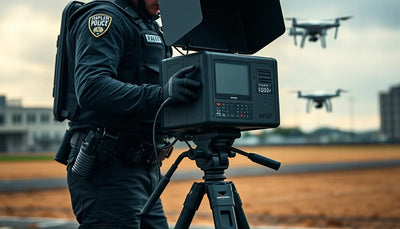
Chengdu's Jinjiang District has run what local media describes as the first real-world test of an integrated drone and robot dog emergency response system at a fire scene. The exercise, reported by Chuanguan News, paired aerial drones with quadruped ground robots under an "air-space-ground-human" coordination model, marking a concrete step beyond simulation for public-safety robotics in the region.
Market context
Turn market news into a buy, repair, or trade-in decision.
Compare pre-owned availability, resale timing, and repair economics before the market moves again.

The report frames the event as a field validation rather than a controlled demonstration. While operational specifics such as flight duration, sensor payloads, or data link architecture were not detailed in the source material, the deployment itself carries commercial weight. Municipal emergency services in China have been steadily layering unmanned systems into fire and disaster workflows, and a live fire scene test suggests procurement teams are now evaluating how aerial and ground robots perform together under real conditions.
What the Chengdu test actually shows
According to Chuanguan News, the Jinjiang District exercise involved a drone and a robot dog operating jointly at a fire scene, with the stated goal of testing an "air-space-ground-human" intelligent emergency response framework. The phrasing indicates a coordination layer connecting airborne observation, ground-level mobility, and human command decisions, though the source does not specify which manufacturer platforms were used or what data-sharing protocols were in place.
For commercial observers, the most important signal is not the hardware itself but the operational concept. Firegrounds present difficult conditions for both aerial and ground robots: heat, smoke, unstable structures, and radio interference all stress sensors, links, and autonomy. A real-world test implies the local emergency authority is moving from vendor demos toward integrated mission planning, which typically precedes larger fleet commitments.
Reboot Hub analysis: the absence of detailed specifications in the initial reporting is normal for early public-safety trials in China. Procurement agencies often validate operational fit before releasing platform details, and follow-up tenders or contract notices may reveal which vendors are positioned for scaled deployment.
Why multi-robot coordination matters for public-safety procurement
The Chengdu exercise reflects a broader shift in emergency response purchasing. Instead of buying a drone or a ground robot as standalone tools, agencies are increasingly looking at coordinated systems where aerial units provide overwatch, mapping, and thermal context while ground robots enter hazardous zones for closer inspection or payload delivery. The "air-space-ground-human" label used in the source suggests human operators remain in the loop, which is significant for regulatory and liability reasons.
For fleet operators and service providers, this trend changes the competitive landscape. Companies that only supply aerial platforms may find themselves excluded from tenders that require ground-robot integration, while robotics integrators with multi-domain experience could gain an advantage. The test also hints at future demand for unified command software, shared data links, and maintenance contracts covering mixed fleets.
Drone buyers watching this space should note that public-safety deployments often influence adjacent commercial markets. Thermal payloads, obstacle avoidance, and autonomous mission planning refined for fireground use frequently migrate into inspection, security, and industrial applications, shaping what becomes available and affordable for private operators.
What this means for drone owners and the market
The Chengdu test is a market-trends signal rather than a product launch. It tells commercial operators that integrated aerial-ground robotics is moving from concept into field validation, which over time may shift procurement criteria, training requirements, and aftermarket service demand. Agencies that adopt mixed fleets will need maintenance partners capable of handling both aircraft and legged ground platforms, a capability not every repair shop currently offers. For owners evaluating service and lifecycle risk, Drone Wiki explains the relevant repair, parts, resale, or operational path.
For individual pilots and small fleet owners, the immediate impact is indirect. The exercise does not change airspace rules, import policy, or consumer drone pricing. However, it reinforces a pattern that has been building for several years: public-safety agencies are becoming more sophisticated buyers, and their requirements increasingly shape the enterprise drone ecosystem. Operators who follow these procurement signals can anticipate which capabilities, such as thermal imaging, mesh networking, and autonomous coordination, will become standard in future commercial platforms.
In the pre-owned DJI market, public-safety trials like this one matter because agency fleet refresh cycles eventually release inspected, well-documented aircraft into secondary channels. When municipal or emergency services upgrade to newer integrated systems, their older thermal-equipped platforms often become available to commercial buyers at lower entry costs. For operators considering a pre-owned DJI drone for inspection or security work, monitoring public-safety procurement activity can offer early clues about which models and payloads will become more accessible. Reboot Hub's Drone Wiki provides model-level context that can help buyers evaluate those opportunities as they appear.
The practical takeaway for fleet managers is to treat multi-robot coordination as a planning factor, not a distant concept. If your operation handles inspections, emergency support, or security, consider whether your current training, maintenance relationships, and upgrade path account for ground robots working alongside your aircraft. The Chengdu exercise suggests that integrated deployments are no longer confined to research labs or trade-show stages.
What to watch next
Chuanguan News did not specify whether the Jinjiang District test will lead to a formal procurement program, expanded trials, or vendor selection. The next meaningful signals will likely come from local government tender notices, follow-up reporting on platform details, or announcements from robotics manufacturers claiming involvement in the exercise.
Commercial operators should also watch for similar tests in other Chinese cities and in markets where public-safety agencies are evaluating integrated unmanned systems. If the "air-space-ground-human" model proves operationally useful in Chengdu, it could become a reference architecture for emergency response procurement elsewhere, influencing which robotics categories receive public funding and how quickly they scale.
FAQ
Frequently asked questions
What exactly was tested in Chengdu?
According to Chuanguan News, Chengdu's Jinjiang District tested a drone and a robot dog working together at a fire scene as part of an "air-space-ground-human" intelligent emergency response system. The source describes it as the first real-world test of this approach in the district.
Does this test change anything for commercial drone buyers?
Not immediately. The exercise does not alter airspace rules, pricing, or product availability. Its significance is as a market signal that public-safety agencies are moving toward integrated aerial-ground robotics, which may influence future platform capabilities and secondary-market supply as agency fleets refresh.
Should fleet managers prepare for robot dog integration?
Fleet managers in inspection, security, and emergency support should treat multi-robot coordination as a planning factor. The Chengdu test suggests integrated deployments are entering field validation, and operations that anticipate this shift may be better positioned when procurement criteria and training requirements evolve.
Which sources support this update?
The article distinguishes reported information from analysis and does not present an unverified source as official confirmation.
What remains subject to change?
Retail pricing, availability, product bundles and regulatory timelines can change. Readers should verify the latest terms with the named retailer, manufacturer or regulator before acting.
How should buyers or operators use this analysis?
Use the verified facts as a starting point, then compare mission fit, lifecycle support, maintenance needs and current procurement terms before making a purchase or fleet decision.
Fontes consultadas
- Source material - primary source
Não estava disponível documentação oficial adicional no momento da publicação.
O Editorial Reboot Hub acrescenta análises de compra, reparação, revenda e operacionais para proprietários de drones. Se detetar um erro, contacte-nos para a revisão da correção através da nossa política editorial.