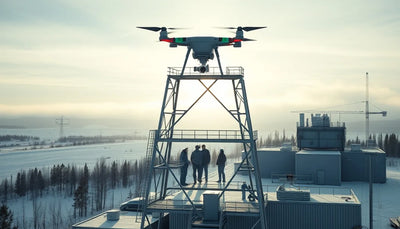
Yangpu Port Completes First Drone Anchorage Supply Trial Flight
Yangpu Port in Hainan has completed the first trial flight of a drone-based maritime anchorage material delivery project, according to People's Daily Online Hainan Channel. The test marks an early step toward using unmanned aircraft for ship-to-shore logistics in commercial port operations.

Quick answer
Yangpu Port in Hainan completed the first trial flight of a drone maritime anchorage material delivery project, as reported by People's Daily Online Hainan Channel.
- The trial involved drone delivery of materials to vessels at anchorage
- The project is located at Yangpu Port in Hainan, China
- The development was reported by People's Daily Online Hainan Channel
- The test represents an early-stage commercial port logistics drone application
Yangpu Port in Hainan has completed the first trial flight of a drone maritime anchorage material delivery project, according to a report from People's Daily Online Hainan Channel. The milestone, while early-stage, places the port among a growing number of commercial hubs testing unmanned aircraft for routine logistics between shore facilities and vessels waiting at anchorage.
Market context
Turn market news into a buy, repair, or trade-in decision.
Compare pre-owned availability, resale timing, and repair economics before the market moves again.

The trial is significant because anchorage supply delivery has traditionally relied on manned launches or service boats, which carry higher labor costs, slower response times, and operational risk in congested harbor waters. A drone-based alternative, even in testing, suggests port operators are beginning to evaluate unmanned systems as a practical tool for moving small materials, documents, or consumables to ships that are not berthed at a quay.
What the Yangpu Port trial actually shows
People's Daily Online Hainan Channel reported that the Yangpu Port drone maritime anchorage material delivery project completed its first trial flight. The report did not specify the drone model, payload weight, flight distance, or the type of materials delivered. Those operational details remain unverified in the available source material.
What the trial does establish is that a Chinese port authority or its commercial partners have moved beyond conceptual planning into a live flight test. For the commercial drone industry, this is the kind of signal that matters. Port logistics is a high-frequency, repeatable use case, and even a single successful trial can lead to expanded pilot programs, procurement discussions, and eventual service contracts.
Reboot Hub analysis: the absence of published technical specifications means buyers and operators should treat this as a market-direction indicator rather than a validated operational benchmark. The trial confirms institutional interest in maritime drone logistics, but it does not yet provide evidence of sustained commercial deployment.
Why maritime logistics drones are gaining commercial attention
Ports and shipping operators face constant pressure to reduce vessel turnaround time and lower the cost of ancillary services. Anchorage deliveries, including spare parts, medical supplies, ship documents, and small consumables, are often time-sensitive but low-volume. Sending a manned boat for a small parcel is expensive and slow.
A drone can potentially complete the same delivery in a fraction of the time, with lower fuel costs and reduced crew exposure. For fleet operators and logistics providers, this creates a new service category that sits between traditional marine transport and shore-based courier networks. The Yangpu Port trial, as reported by People's Daily Online Hainan Channel, is one of several regional efforts exploring this model.
Commercial drone buyers should note that maritime operations demand different capabilities than land-based delivery. Saltwater corrosion, wind gusts over open water, vessel movement, and radio interference from port infrastructure all affect aircraft performance and maintenance cycles. Any operator evaluating this segment will need to account for accelerated wear on motors, airframes, and connectors, which has direct implications for spare parts planning and repair budgets.
What this means for drone owners and the market
The Yangpu Port trial reinforces a broader market trend: commercial drone demand is shifting from consumer photography toward repeatable industrial workflows. Ports, energy facilities, and logistics hubs are evaluating drones not as one-off tools but as infrastructure that must remain available on demand. That shift changes how buyers think about fleet redundancy, maintenance scheduling, and parts sourcing.
For owners of pre-owned DJI drones and other commercial platforms, the maritime logistics trend matters in two ways. First, it expands the pool of potential buyers and use cases for inspected pre-owned aircraft, particularly for operators testing new service lines without committing to full-price new hardware. Second, it increases the value of genuine OEM spare parts and professional DJI repair, because industrial users cannot tolerate extended downtime when a delivery contract depends on aircraft availability. For readers tracking how pre-owned DJI drones fit into commercial workflows, the Drone Wiki provides reference material on platform selection and ownership considerations. For owners evaluating service and lifecycle risk, Drone Wiki explains the relevant repair, parts, resale, or operational path.
Fleet managers evaluating port or maritime drone programs should begin by mapping the operational environment: wind conditions, salt exposure, landing surface movement, and payload requirements. A trial flight in Hainan does not mean the model is proven for other ports, but it does suggest that early movers are testing the economics of drone-based anchorage supply. Buyers who wait for published operational data may miss the window to build internal expertise before contracts formalize.
The commercial outlook for port drone logistics
The Yangpu Port trial is best understood as an early validation point rather than a commercial launch. The source report from People's Daily Online Hainan Channel confirms the first trial flight occurred, but it does not describe a follow-on schedule, regulatory approvals, or commercial terms. Those gaps are normal for early-stage infrastructure projects, especially in China, where port drone programs often progress through phased testing before public tenders are issued.
For repair services and parts suppliers, maritime drone programs create a distinct maintenance profile. Aircraft operating near saltwater require more frequent inspection of bearings, fasteners, and electrical contacts. Operators who standardize on a single platform family can simplify parts inventory, while mixed fleets may face higher logistics complexity. Professional repair providers that understand corrosion-related failure modes will be better positioned to serve this segment as it matures.
The pre-owned market could also see increased interest from small logistics companies and port service contractors that want to experiment with anchorage delivery without large capital outlay. Inspected pre-owned commercial drones offer a lower-cost entry point, provided buyers verify battery health, motor condition, and airframe integrity before purchase. Genuine OEM-pulled parts remain critical for maintaining reliability in corrosive maritime environments.
Ultimately, the Yangpu Port trial is one data point in a larger pattern. Ports and industrial operators are testing drones for tasks that were previously handled by manned vessels or ground crews. Each successful trial, however limited in scope, strengthens the case for broader adoption and creates downstream demand for aircraft, parts, maintenance, and operator training.
FAQ
Frequently asked questions
What happened at Yangpu Port?
Yangpu Port in Hainan completed the first trial flight of a drone maritime anchorage material delivery project, according to People's Daily Online Hainan Channel. The trial involved using a drone to deliver materials to vessels at anchorage.
Why does this matter for commercial drone operators?
The trial signals growing institutional interest in using drones for port logistics, a high-frequency commercial use case. Operators who understand maritime requirements such as corrosion resistance and wind performance may be better positioned for future service opportunities.
Should drone buyers act on this news?
Buyers should monitor the project for published operational data before making procurement decisions. The trial confirms market direction but does not yet provide verified specifications, payload figures, or commercial terms that would support a specific purchase.
Which sources support this update?
The article distinguishes reported information from analysis and does not present an unverified source as official confirmation.
What remains subject to change?
Retail pricing, availability, product bundles and regulatory timelines can change. Readers should verify the latest terms with the named retailer, manufacturer or regulator before acting.
How should buyers or operators use this analysis?
Use the verified facts as a starting point, then compare mission fit, lifecycle support, maintenance needs and current procurement terms before making a purchase or fleet decision.
Fontes consultadas
- Source material - primary source
Não estava disponível documentação oficial adicional no momento da publicação.
O Editorial Reboot Hub acrescenta análises de compra, reparação, revenda e operacionais para proprietários de drones. Se detetar um erro, contacte-nos para a revisão da correção através da nossa política editorial.