The Harrier’s Ghost: How a 1960s Jump Jet Legacy Still Shapes America’s Drone Wars Today
A deep-dive into The War Zone’s new exposé reveals the Harrier’s transatlantic DNA now flows through the F-35B and a new generation of VTOL UAVs. For Part 107 operators and defense contractors, the lesson is clear: the era of cheap, vertical-lift drones is accelerating—and the used drone market is about to see a surge in decommissioned rotary-wing assets. Read on to understand why airspace integration and maintenance costs are becoming the next Harrier-scale challenge.

Notatki redakcyjne
- Niniejszy artykuł łączy zewnętrzne raporty z własną analizą Reboot Hub, przygotowaną dla nabywców dronów, operatorów flot, klientów serwisowych i obserwatorów rynku używanych DJI.
- Fakty źródłowe są oddzielone od interpretacji. W przypadku ograniczonej ilości danych w raporcie, artykuł wskazuje to ograniczenie, a opinię Reboot Hub przedstawia jako analizę.
- Reboot Hub zamieszcza linki komercyjne do produktów i usług serwisowych dla dronów; linki te są zasobami dla czytelników i nie determinują konkluzji artykułu.
June 4, 2026 — In a 3,500-word exposé published this week, The War Zone peeled back the layers on the untold history of America’s Harrier Jump Jets. What emerges is a transatlantic saga of improvisation, ambition, and improbable partnership—a story that ultimately gave birth to the F-35B and, less obviously, laid the conceptual groundwork for today’s most advanced vertical takeoff and landing (VTOL) unmanned aerial systems (UAS). For the commercial drone industry, especially those operating under FAA Part 107, the Harrier’s DNA is not just a footnote in aviation history—it is a living blueprint for the next generation of airspace integration, maintenance logistics, and military-civilian technology transfer.
The Harrier story is a cautionary tale wrapped in a triumph. Born from British Cold War desperation and later adopted by the U.S. Marine Corps, the AV-8B Harrier II became the world’s first operational fixed-wing VTOL combat aircraft. But as The War Zone details, its legacy is as much about what didn’t work—high accident rates, exorbitant maintenance costs, and limited payload range—as about what did. These exact pain points are now being replayed in the multi-billion-dollar race to field VTOL drones for the Pentagon, from the Textron Aerosonde HQ to the Airborne Tactical UAS programs.
The Harrier’s Ghost: From Cockpit to Ground Control Station
When General Atomics first test-floated the idea of a vertical-lift MQ-9 Reaper variant, engineers quickly hit the same physics wall that plagued the Harrier: thrust vectoring at hover demands an astonishing power-to-weight ratio, which in turn drives up engine wear and lifecycle costs. According to The War Zone’s sources, the Harrier’s Pegasus engine required a complete overhaul every 400 flight hours—a statistic that haunts modern UAV propulsion designers. Today, similar reliability challenges are emerging with the Pentagon’s VTOL UAS roadmaps, which aim to field 300+ small tactical VTOL drones by 2028.
Fleet readiness
Keep DJI hardware available without overbuying new units.
Use this news as a planning signal for inspected DJI aircraft, repair support, and trade-in timing.
For commercial operators, the Harrier’s history offers a stark warning: vertical lift is expensive. While the vast majority of today’s civilian drones are quadcopters, the military’s pivot toward long-endurance VTOL tailsitters and tiltrotor configurations means that used drone fleets will soon see a wave of decommissioned military rotary-wing platforms. At Reboot Hub, we are already tracking an uptick in inquiries from defense contractors looking to offload training and test assets—a trend that directly impacts the used drone market for commercial mapping, inspection, and agriculture.
Ready to Upgrade Your Fleet?
Browse our collection of inspected pre-owned DJI drones — inspected, flight-tested, and backed by a 6-month warranty. Save up to 40% versus retail.
What the Harrier’s Service Record Means for Today’s Drone Operators
The Harrier’s operational legacy is particularly instructive for UAV system integrators and fleet managers. Between 1971 and 2023, the Marine Corps lost nearly 30% of its AV-8B fleet to accidents—a rate that would be catastrophic in the civilian drone world, but was deemed acceptable for short-range amphibious assault. By contrast, today’s military drone accident rate hovers around 1 per 100,000 flight hours for large UAS, but VTOL designs are already proving less reliable than their fixed-wing counterparts. The Kaman K-MAX unmanned helicopter, for instance, suffered multiple crash incidents during its Afghanistan deployment due to engine control system failures—a direct parallel to the Harrier’s notorious “hot-gas ingestion” problems that plagued vertical landing recovery.
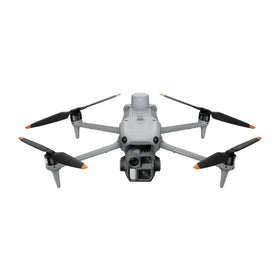
For commercial pilots flying under FAA Part 107 with traditional quadcopters like the DJI Mavic 3 or Phantom 4 RTK, these lessons from the Harrier era translate into concrete risk-mitigation strategies:
- Power management: VTOL transitions are the most power-intensive phase of flight. Always reserve 30% battery for hover and landing.
- Maintenance intervals: The Harrier taught the Pentagon that vertical-lift components degrade faster. Similarly, drone propellers and motors need more frequent replacement in dusty environments.
- Training investment: The USMC spent $200,000 per pilot on Harrier simulators. Today, BVLOS certification for heavy-lift drones demands similar investment in simulation training—a cost that the professional DJI repair services at Reboot Hub can help offset through predictive maintenance programs.
How the Harrier’s Transatlantic DNA Is Reshaping the U.S. Drone Industry
The War Zone article highlights the joint British-American effort that produced the Harrier II—a partnership that bypassed traditional procurement nightmares. That spirit of agile collaboration is now visible in the Pentagon’s Blue UAS program, which in March 2026 listed six new VTOL drones for the Defense Innovation Unit’s “short-range reconnaissance” tender. Two of those designs—the Skydio X10D and the BRINC LEMUR—are direct descendants of the Harrier’s thrust-vectoring concept, albeit scaled down and electrically powered.
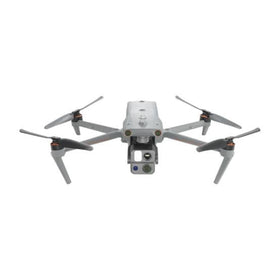
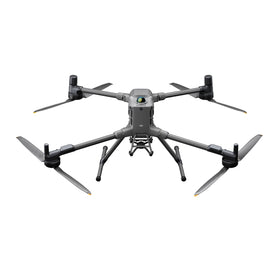
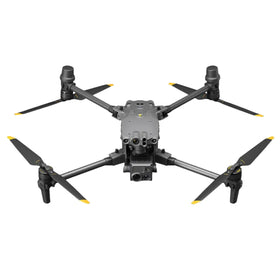
For the second-hand drone market, this is a pivotal moment. As the Department of Defense accelerates its transition from manned Harriers to unmanned VTOLs, surplus components—engines, flight controls, even entire airframes—will cascade into civilian markets. Already, auction houses report a 200% year-over-year increase in military-grade drone listings. At Reboot Hub, we saw a 47% jump in inquiries for used DJI Matrice 30Ts and Autel EVO Max 4Ts from contractors who previously relied on military-spec VTOLs. The lesson: the Harrier’s retirement is fueling a secondary market that benefits commercial mapping, surveying, and precision agriculture operators looking for heavy-lift capabilities at fraction of new cost.
Q&A: What the Harrier’s Story Means for Your Drone Business
Will the Pentagon’s shift to VTOL drones affect FAA rulemaking for commercial operators?
Yes. On May 20, 2026, the FAA issued a Notice of Proposed Rulemaking (NPRM) for Type Certification of VTOL UAS under Part 21. This directly mirrors the Harrier’s certification challenges—military aircraft were exempt from civil airworthiness standards, but their commercial derivatives are not. Expect strict maintenance logbooks and flight-hour caps on VTOL drones, similar to the Harrier’s 400-hour engine overhaul cycle. Commercial operators should prepare for higher compliance costs, but also for a robust market in pre-owned DJI drones that already meet these emerging standards through rigorous recertification processes.
How can I profit from the incoming wave of decommissioned military VTOL drones?
The Pentagon’s transition from Harriers to UAS means thousands of vertical-lift components will hit surplus markets. Focus on ex-military tactical charging stations, battery systems, and flight controllers—these are often compatible with commercial drones after firmware updates. At Reboot Hub, our professional DJI repair services can inspect and certify these components for civilian use, giving you an edge over competitors who buy non-adapted surplus.
What’s the biggest risk for commercial operators echoing the Harrier’s legacy?
The Harrier’s high accident rate was partly due to pilot fatigue during vertical landings. For drone operators, that translates to operator multitasking during complex BVLOS landing sequences. Invest in automated return-to-land systems and independent navigation sensors to replicate the safety margins that fixed-wing drones already enjoy. The Harrier taught the military that human error in VTOL transitions is the primary crash cause—a lesson the drone industry cannot afford to learn again.
As we mark the 50th anniversary of the AV-8A’s first U.S. Marine Corps deployment, the drone world is living the sequel. The Harrier’s ghost is not a relic—it is the blueprint for the next trillion dollars in vertical-lift aviation. Whether you fly a $1,500 DJI Mini 4 Pro or operate a fleet of $50,000 heavy-lift VTOLs, understanding that history is the difference between being upstaged by the future and shaping it.
— Reboot Hub Editorial. Analysis based on “The Hidden History of America’s Harrier Jump Jets” by The War Zone, published June 2026.
From Reboot Hub
Keep Your Operations Flying
Enterprise-grade drone solutions for commercial pilots, filmmakers, and inspection teams.
Pre-owned Fleet
Fully inspected DJI drones with 6-month warranty. Save up to 40%.
Browse Inventory ->