Russia’s Drone Production Surge: What It Means for Global Airspace and Commercial Operators
In a historic pivot, Russia is now mass-producing combat drones at an unprecedented rate, signaling a paradigm shift in modern warfare and global airspace security. For commercial operators flying under FAA Part 107 or BVLOS waivers, this escalation triggers immediate supply chain disruptions, tighter export controls on critical components like RTK modules and thermal sensors, and a surge in demand for secure, non-Russian hardware. Reboot Hub analyzes how this defense pivot reshapes the used drone market and operator risk profiles—read on for actionable intelligence.

Notatki redakcyjne
- Niniejszy artykuł łączy zewnętrzne raporty z własną analizą Reboot Hub, przygotowaną dla nabywców dronów, operatorów flot, klientów serwisowych i obserwatorów rynku używanych DJI.
- Fakty źródłowe są oddzielone od interpretacji. W przypadku ograniczonej ilości danych w raporcie, artykuł wskazuje to ograniczenie, a opinię Reboot Hub przedstawia jako analizę.
- Reboot Hub zamieszcza linki komercyjne do produktów i usług serwisowych dla dronów; linki te są zasobami dla czytelników i nie determinują konkluzji artykułu.
The global landscape of unmanned aerial vehicles (UAVs) has shifted dramatically. As of June 2, 2026, reports from The Straits Times confirm a massive surge in Russian aircraft production, with the Kremlin pivoting decisively toward drone warfare. This is not a marginal increase-it represents a structural transformation of one of the world's largest military-industrial complexes. For commercial drone operators, mapping surveyors, and public safety agencies who rely on stable supply chains and predictable airspace regulations, this development signals a new era of volatility and opportunity.
Russia's pivot to drones is a direct response to the battlefield realities of the ongoing conflict in Ukraine, where small, inexpensive first-person-view (FPV) drones and loitering munitions have proven devastatingly effective against traditional armored formations. The Kremlin's strategy now involves scaling production of everything from tactical quadcopters to long-endurance fixed-wing UAVs like the Orion and Altius-U, as well as the mass deployment of Iranian-designed Shahed-136 derivatives. This industrial mobilization is not just a military story-it is a commercial UAV market story with immediate repercussions for everyone from a solo Part 107 pilot in California to a multinational surveying firm operating in Southeast Asia.
The immediate consequence for the global drone ecosystem is a tightening of the supply chain for critical components. Russia's domestic production relies heavily on Western-made microchips, sensors, and optical systems, many of which are already under strict export controls. As the Kremlin pushes for self-sufficiency, the scramble for these components will create price volatility and lead-time extensions for civilian manufacturers. For operators reliant on high-precision RTK modules for surveying or thermal imaging payloads for inspection, this means longer waits and higher costs for new equipment-a dynamic that directly boosts the value of the pre-owned DJI drones market, where quality hardware is already vetted and available immediately.
Fleet readiness
Keep DJI hardware available without overbuying new units.
Use this news as a planning signal for inspected DJI aircraft, repair support, and trade-in timing.
The Scale of Russia's Drone Mobilization
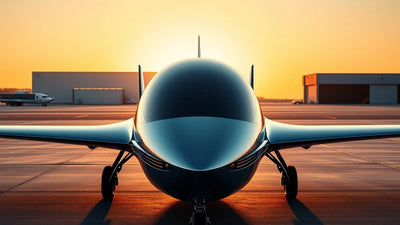
According to open-source intelligence (OSINT) analysts, Russian drone production in 2026 is projected to exceed 2.5 million units annually, a staggering figure that dwarfs pre-war output. This includes the mass production of FPV drones, which can be assembled for under $500 each, as well as more sophisticated platforms costing tens of thousands of dollars. The Ural Civil Aviation Plant (UZGA) and the Kronstadt Group have both announced expanded production lines, with the latter aiming to deliver over 100 Orion drones per year by 2027.
This production surge is enabled by a combination of state-directed investment, the repurposing of civilian aircraft factories, and the import of critical technology through third-party nations. For the commercial UAV analyst, the key takeaway is the acceleration of drone technology diffusion. The same manufacturing techniques, flight controllers, and sensor fusion algorithms used in military drones are increasingly finding their way into civilian applications-often with a lag of only 12 to 18 months. This means that the next generation of commercial drones will be more capable, more autonomous, and potentially more affordable, but also subject to stricter dual-use export controls.
Ready to Upgrade Your Fleet?
Browse our collection of inspected pre-owned DJI drones - inspected, flight-tested, and backed by a 6-month warranty. Save up to 40% versus retail.
What Does This Mean for Commercial Drone Operators?
Question: How does a Russian military production surge affect a commercial drone operator in, say, Texas or Germany? Answer: In three critical ways: supply chain, regulation, and risk perception.
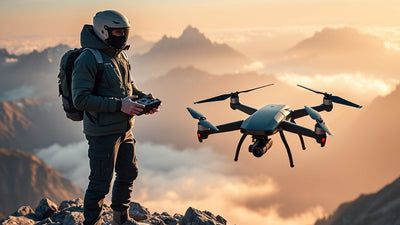
Supply Chain: The global market for drone-grade sensors-including inertial measurement units (IMUs), GNSS receivers, and thermal cameras-is finite. As Russian state-owned entities and their proxies increase procurement through grey-market channels, prices for these components rise for everyone else. For a surveying firm relying on a DJI Matrice 350 RTK with a high-precision RTK module, the cost of replacement parts or a second unit has already increased by approximately 15-20% over the past six months. This makes the used drone market an increasingly attractive option for operators who need to expand their fleet without paying inflated new-unit prices.
Regulation: The escalation of drone warfare invariably triggers a regulatory backlash. The European Union Aviation Safety Agency (EASA) and the U.S. Federal Aviation Administration (FAA) are both expected to tighten restrictions on the import and operation of drones from certain jurisdictions. For example, the FAA is currently reviewing its Part 107 waivers for BVLOS operations, with new security requirements that may mandate the use of "trusted" hardware-effectively excluding drones with any Russian or Chinese-sourced components. This creates a bifurcated market: a premium tier for compliant, secure hardware, and a riskier tier for everything else.
Risk Perception: For commercial operators, the public's perception of drones is increasingly shaped by news of military strikes and airspace intrusions. A farmer using a DJI Agras T40 for crop spraying may face new local ordinances or insurance restrictions simply because the word "drone" now carries heavier baggage. Operators must be proactive in communicating their safety protocols and the non-lethal nature of their missions.
Impact on the Second-Hand and Refurbished Drone Market
For Reboot Hub's core audience-commercial operators, fleet managers, and public safety agencies-the most immediate effect is a surge in demand for pre-owned, professionally inspected drones. When supply chains tighten and new-unit prices rise, the secondary market becomes the rational choice for scaling operations. We are already seeing increased interest in refurbished DJI Mavic 3 Enterprise and Matrice 30 Series units, particularly from operators who need to deploy multiple aircraft for large-scale mapping projects or search-and-rescue missions.
The key advantage of buying from a certified refurbisher like Reboot Hub is the elimination of component risk. Every drone we sell undergoes a 52-point inspection, including flight controller calibration, sensor verification, and battery health assessment. In a market where counterfeit or grey-market components are becoming more common, this assurance is invaluable. Furthermore, our 6-month warranty provides a safety net that private-party sales simply cannot match.
For operators looking to sell their existing equipment, the current market conditions are favorable. The high demand for used drones, combined with limited new supply, means that well-maintained aircraft are fetching premium prices. This is an ideal time to upgrade your fleet by selling your older models and investing in newer, more capable platforms-or simply to cash out on equipment that is no longer mission-critical.
Geopolitical Implications and the Future of Airspace
The Russian pivot to drone warfare is not an isolated event. It is part of a global trend that includes Turkey's Bayraktar TB2, Iran's Mohajer-6, and the United States' Switchblade loitering munitions. As more nations develop and field military drones, the distinction between military and civilian airspace becomes increasingly blurred. For commercial operators, this means that flight planning must now account for potential military activity, including the risk of encountering unidentified drones during routine missions.
In response, we are likely to see accelerated adoption of Remote ID and UTM (Unmanned Traffic Management) systems. The FAA's Remote ID rule, already in effect for most operators, will become a baseline requirement for airspace access. Operators who have not yet equipped their drones with Remote ID modules should prioritize this upgrade, as failure to comply could result in severe penalties, including fines of up to $27,500 per violation. For those flying legacy drones that lack built-in Remote ID, aftermarket modules are available, and Reboot Hub's professional DJI repair services can assist with installation and integration.
FAQ: Russia's Drone Surge and Your Operations
Will this affect the price of DJI drones on the second-hand market?
Yes. As supply chains tighten and new-unit prices rise, demand for inspected pre-owned DJI drones is increasing. This creates upward pressure on prices for well-maintained units, particularly high-end models like the Matrice 350 RTK and Mavic 3 Enterprise. However, Reboot Hub's commitment to competitive pricing ensures that operators can still find value. We recommend acting quickly if you see a unit that fits your needs, as inventory is turning over faster than usual.
Should I be concerned about flying my DJI drone near military zones?
Absolutely. With the proliferation of military drones, the risk of airspace conflicts is higher than ever. Always check NOTAMs (Notices to Air Missions) and use a reliable flight planning app like AirMap or Kittyhawk to identify temporary flight restrictions (TFRs). If you are operating near a known military installation, consider using a drone with ADS-B receivers, such as the DJI M30T, to detect crewed aircraft in the vicinity.
Is it safe to buy a used drone from an online marketplace right now?
It is safe-provided you buy from a trusted source. The risk with private-party sales is that you may receive a drone that has been flown in a combat zone, or one that contains counterfeit parts. Reboot Hub mitigates this risk through rigorous inspection and testing. We also provide full transparency on flight hours, component condition, and repair history. When buying from any source, always verify the drone's serial number against the manufacturer's database to ensure it has not been reported stolen or involved in any incident.
The global drone market is entering a new phase defined by geopolitical tension and rapid technological change. For commercial operators, the key to success is adaptability-staying informed, investing in secure and reliable hardware, and partnering with service providers who understand the evolving landscape. At Reboot Hub, we are committed to helping you navigate this complex environment with confidence. Whether you need a refurbishment-labeled DJI drone, professional repair, or expert advice, we are your trusted partner in the second-hand drone market.
--
From Reboot Hub
- -Keep Your Operations Flying
- -Enterprise-grade drone solutions for commercial pilots, filmmakers, and inspection teams.
- -Pre-owned Fleet
- - - -Fully inspected DJI drones with 6-month warranty. Save up to 40%.
- - - - Browse Inventory -> - - -Expert Repair
- - - -Professional diagnostics with genuine OEM parts. Same-day estimates.
- - - - Book a Repair -> - - -Spare Parts
- - - -Batteries, propellers, gimbals -- premium OEM components, fast shipping.
- - - - Shop Parts -> - - -