Palladyne AI's SwarmOS Exercise: What It Means for Drone Buyers
Palladyne AI’s SwarmOS demonstration in a U.S. Army exercise pushed shares up 50% YTD and attracted 15 hedge funds. For drone buyers and fleet operators, this signals growing defense demand for autonomous swarms, influencing commercial drone pricing and availability.

Palladyne AI Corp (NASDAQ:PDYN) stepped into the spotlight on June 16, 2026, when the company demonstrated its SwarmOS during a U.S. Army exercise. The event landed in the middle of a strong financial run: Palladyne shares are already up roughly 50% year-to-date, and the stock is backed by 15 hedge funds. Analysts expect the shares to surge more than 88% from the current price over the next 12 months. For commercial drone operators and fleet managers, the combination of a real-world military swarm demonstration and robust investor interest raises practical questions about how autonomous technology may reshape procurement, pricing, and fleet strategy.
The Palladyne AI Edge – SwarmOS and Defense Applications
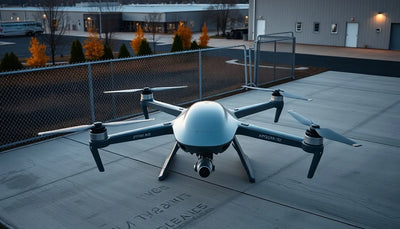
The core technology that drew attention is Palladyne’s SwarmOS – an operating system designed to coordinate multiple drones autonomously without direct human control over each unit. The June 16 army exercise put this system through a realistic operational scenario, demonstrating that the software can manage a group of unmanned aircraft to achieve mission objectives in dynamic environments.
For drone buyers who follow defense contracts, this kind of real-world validation is significant. Military procurement has historically driven advances in sensor fusion, flight control, and autonomous decision-making that later trickle into commercial platforms. While Palladyne AI is primarily a software company, its swarm technology relies on compatible hardware – often from existing drone manufacturers. That means a successful military deployment could encourage more investment in drone-agnostic AI platforms, potentially lowering the barrier for enterprise fleets to adopt multi-vehicle coordination.
Purchase timing
Use market shifts to buy, sell, repair, or wait with more context.
Compare trade-in timing, pre-owned DJI pricing, and repair economics before committing new capital.

From a commercial perspective, the exercise also signals that autonomy is moving beyond lab tests. Fleet operators who manage survey, inspection, or logistics missions using pre-owned DJI drones should monitor how these AI layers integrate with mature hardware. The ability to run swarm logic on proven airframes could extend the useful life of existing fleets, making professional DJI repair services and inspected pre-owned units even more valuable as bridge technologies.
Financial Signal for Drone Sector Investors
Palladyne AI’s stock performance has caught the attention of institutional investors. The company is backed by 15 hedge funds, and analyst projections call for an 88% upside over the next 12 months. With shares already up 50% year-to-date and trading under $10, PDYN is considered one of the best AI stocks under that threshold.
For drone buyers and fleet managers, the financial story is not just about stock trading. Capital flowing into AI-driven drone software often correlates with increased R&D spending, which can accelerate feature releases and compatibility updates. It also affects the secondary market: when a defense-focused AI company gains traction, original equipment manufacturers may shift production priorities toward platforms that support autonomous coordination, potentially tightening supply for older models. This is where the pre-owned DJI drones market becomes a strategic buffer. Operators who rely on stable, well-supported hardware can still acquire high-quality units through inspected pre-owned channels while the industry sorts out next-generation standards.
Moreover, the hedge fund presence suggests that sophisticated investors see long-term value in drone software rather than just hardware margins. That could influence how drone buyers think about total cost of ownership – future fleets may need to budget for monthly software subscriptions or per-mission AI fees, not just airframes and batteries.
What this means for drone buyers
The immediate takeaway for anyone purchasing drones – whether for enterprise, public safety, or agricultural operations – is that the market is entering a phase where software capability will increasingly differentiate platforms. SwarmOS is a specific defense-focused product, but the trend toward autonomous multi-drone operations is visible across the commercial sector as well. Buyers should expect that drone models released in the next two to three years will be designed with swarm compatibility in mind, even if they are not initially used that way.
For operators who do not need cutting-edge AI today, there is a strong case for holding onto proven equipment. Mature platforms like certain DJI enterprise models remain workhorses for mapping, inspection, and surveying. Purchasing pre-owned DJI drones can provide access to these reliable airframes at a lower entry cost, preserving budget for future software upgrades or training. Additionally, maintaining existing fleets with professional DJI repair services ensures that hardware stays airworthy while the industry clarifies which autonomous features will become standard.
Fleet managers should also consider the drone trade-in guide when planning upgrades. As defense contracts push innovation cycles, older models may depreciate faster once new AI-capable versions hit the commercial market. Timing a trade-in or sale before that depreciation accelerates can protect fleet value.
Practical Implications for Fleet Operators and the Pre-Owned Market
The Palladyne AI exercise is a concrete example of how defense requirements are shaping drone software development. For fleet operators, this means keeping an eye on compatibility: if your operation relies on a mixed fleet of DJI and other platforms, swarm software like SwarmOS may eventually offer a unified control layer. However, early implementations are likely to be proprietary and require specific hardware integration.
In the meantime, the pre-owned drone market remains a stabilizing force. Demand for inspected pre-owned DJI drones continues to grow as operators balance the desire for advanced capability with the need for predictable costs. Platforms that have a long track record of reliability, such as the DJI Matrice or Mavic Enterprise series, are especially attractive because they can be paired with third-party autonomy solutions without the risk of untested airframes.
Repair services also gain importance in this environment. Keeping a fleet flying while waiting for certification of new swarm-ready drones means investing in professional repairs using genuine OEM spare parts. This approach avoids forced upgrade cycles and lets operators deploy capital only when the technology has matured.
Does the SwarmOS exercise directly affect commercial drone buyers?
Not directly, but it demonstrates that autonomous multi-drone coordination is being validated in demanding military environments. That validation tends to accelerate commercial adoption, which may eventually affect pricing, feature sets, and upgrade timelines for enterprise drones.
Should I consider investing in Palladyne AI stock based on this news?
This article does not provide investment advice. The source data indicates that 15 hedge funds back PDYN and analysts project an 88% upside, but stock performance carries inherent risk. Drone buyers should focus on operational needs first and treat financial news as a secondary signal of industry direction.
How should fleet operators prepare for the shift toward autonomous swarms?
Maintain current fleets with professional DJI repair and consider purchasing inspected pre-owned DJI drones to defer large capital outlays. Use a drone trade-in guide to time equipment refreshes when new autonomous features become commercially available and proven in the field.