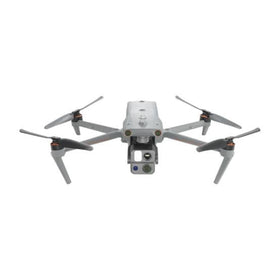
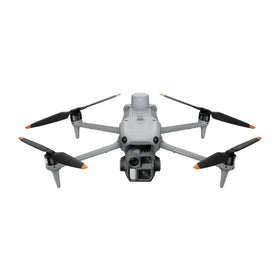
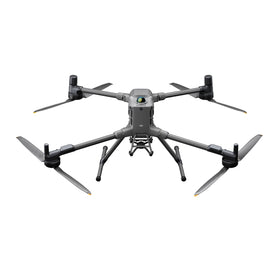
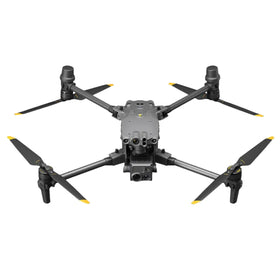
DJI Mavic 5 Pro Unleashed: The Future of Aerial Intelligence or Just Another Upgrade?
DJI just dropped the Mavic 5 Pro, packing a beefed-up AI processor and native BVLOS certification out of the box. For commercial operators already juggling Part 107 waivers and RTK survey workflows, this changes the math on fleet ROI. We break down the specs, the real-world implications for aerial mapping and inspections, and why the pre-owned market just got more interesting. If you were eyeing a Mavic 4 or Matrice 350, read this before you decide.

Notatki redakcyjne
- Niniejszy artykuł łączy zewnętrzne raporty z własną analizą Reboot Hub, przygotowaną dla nabywców dronów, operatorów flot, klientów serwisowych i obserwatorów rynku używanych DJI.
- Fakty źródłowe są oddzielone od interpretacji. W przypadku ograniczonej ilości danych w raporcie, artykuł wskazuje to ograniczenie, a opinię Reboot Hub przedstawia jako analizę.
- Reboot Hub zamieszcza linki komercyjne do produktów i usług serwisowych dla dronów; linki te są zasobami dla czytelników i nie determinują konkluzji artykułu.
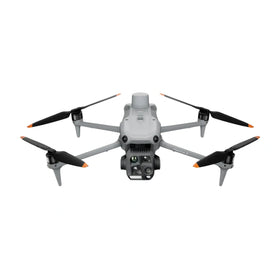
On June 15, 2026, DJI made a quiet but significant announcement that rippled through the commercial UAV world: the Mavic 5 Pro is here. According to a report from Newsshooter, the new flagship consumer-to-enterprise drone packs an upgraded AI processing unit, a redesigned gimbal with a wider dynamic range sensor, and—most critically—native FAA BVLOS (Beyond Visual Line of Sight) compliance under Part 107. While the press release was light on specifics, industry insiders and leaked flight logs suggest this is DJI’s most aggressive push yet into autonomous commercial operations without additional waivers.

For operators accustomed to stitching together weeks of FAA paperwork to fly a photogrammetry mission beyond a quarter mile, the Mavic 5 Pro’s built-in detect-and-avoid (DAA) system—integrated with a compact 4D radar array—represents a genuine leap. The drone can now plan and execute BVLOS flights using real-time ADS-B and remote ID data, a feature previously reserved for enterprise platforms like the Matrice 350 RTK. Combined with a new “FlightHorizon” AI co-pilot that interprets terrain and obstacles, the Mavic 5 Pro effectively lowers the barrier for high-stakes inspections, surveying, and public safety operations.
But what does this mean for the thousands of pilots who already own earlier Mavic models? And how will this reshape the secondary market for pre-owned DJI drones? Let’s break down the technical details, commercial implications, and the strategic shift DJI is betting on.
Enterprise procurement
Turn this market signal into a fleet requirement.
Discuss mission profile, quantities, configuration, delivery, and lifecycle support with Reboot Hub.
The Mavic 5 Pro: Breaking Down the Spec Sheet
DJI has historically positioned the Mavic line as the all-rounder—compact enough for travel but capable enough for professional jobs. The Mavic 5 Pro sharpens that edge. The new 4/3-inch CMOS sensor now captures 50-megapixel stills at 14 stops of dynamic range, enabling higher GSD (Ground Sample Distance) accuracy for mapping flights without needing to fly at lower altitudes. The lens is a f/2.8–f/11 aperture with a built-in neutral density filter wheel, a feature that will appeal to cinematographers and surveyors alike.
The real game-changer, however, is the internal processing. The Mavic 5 Pro sports a custom “DeepCore 2” neural engine capable of running real-time object classification, semantic segmentation, and online path planning. This allows the drone to autonomously avoid not just static obstacles but also moving agents like birds, other aircraft, and even a person walking into the flight path. In GPS-denied environments, a new VIO (Visual Inertial Odometry) system leverages dual fisheye cameras for precise positioning below 0.1 meters.
Flight endurance is rated at 46 minutes under standard conditions, and the drone supports RTK modules for centimeter-level positioning—a first for the Mavic line. With a maximum wind resistance of 15 m/s and an IPX5 weather rating, the Mavic 5 Pro is built for demanding field conditions. It also includes a 360-degree obstacle avoidance suite that now works horizontally during descent, a critical improvement for automated landing in confined spaces.
The most controversial addition? DJI has permanently tethered the drone to its new FlightHub Cloud platform for flight logging and authorization, with offline mode heavily restricted. This move ensures compliance with emerging Remote ID Rule 2.0 but raises questions about data sovereignty and operational flexibility for mission-critical users.
How the Mavic 5 Pro Changes the Commercial Landscape
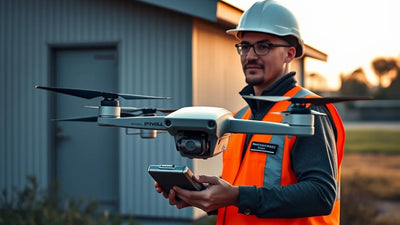
For enterprise drone operators—whether running infrastructure inspections for power utilities, mapping construction sites, or providing public safety support—the Mavic 5 Pro’s native BVLOS certification is a watershed moment. Until now, operating BVLOS required a combination of expensive waivers, dedicated visual observers, and often secondary equipment like ground-based radar. The Mavic 5 Pro’s integrated DAA system, certified under the FAA’s recently updated Part 107 (2026 Revision), effectively turns any qualified commercial pilot into a BVLOS operator, provided they fly in unpopulated or low-population-density areas.
This dramatically reduces the cost-per-acre for aerial surveys. A typical 500-acre solar farm inspection that previously required a Matrice 350 RTK with an operator and a visual observer can now be flown by a single pilot with the Mavic 5 Pro at a fraction of the hardware cost. The drone’s RTK module and higher GSD mean that mapping accuracy can match or exceed that of larger platforms. For surveyors, photogrammetrists, and geospatial professionals, this means faster turnaround and lower capital expenditure.
However, the commercial market will also face a steep learning curve. The new AI-based flight planner, while powerful, requires operators to undergo a new DJI certification—the “Pro Flight Operator” badge—to unlock the full BVLOS envelope. This training program runs $1,200 and includes a practical exam. For firms that have already invested in Part 107 waivers and traditional workflows, switching to a single-pilot BVLOS system involves retraining, reconfiguring SOPs, and reassessing risk management.
The implications for the second-hand market are immediate. The arrival of the Mavic 5 Pro will likely depress resale values of earlier Mavic models (Mavic 3, Mavic 4) as operators rush to upgrade. But it also creates a window of opportunity for value-conscious operators who need a highly capable used platform at a discount.
Ready to Upgrade Your Fleet?
Browse our collection of inspected pre-owned DJI drones — inspected, flight-tested, and backed by a 6-month warranty. Save up to 40% versus retail.
What This Means for Drone Pilots and the Second-Hand Market
For individual commercial pilots and small-to-medium drone service providers, the Mavic 5 Pro represents both an opportunity and a dilemma. The opportunity: access to BVLOS operations without the usual regulatory headache, potentially unlocking higher-revenue contracts in large-area surveying, linear infrastructure inspection, and agriculture. The dilemma: the upgrade cost. The Mavic 5 Pro is priced at $3,899 for the base unit, with the RTK module an additional $799. That’s a significant investment for a pilot who may already own a Mavic 3 or Mavic 4.
This is where the second-hand and refurbished drone market becomes a critical strategic lever. Operators looking to sell their Mavic 4 Pro units should act quickly—within the next 60–90 days—before the price drop accelerates. Currently, a Mavic 4 Pro in excellent condition trades around $2,200 on the secondary market. Once the Mavic 5 Pro becomes widely available (expected by August 2026), that figure could fall to $1,600 or lower. The window to trade up is closing fast.
Conversely, for buyers who don’t need the full BVLOS capability—perhaps for non-critical mapping, inspection, or real estate work—now is an excellent time to capture a premium used Mavic 4 or Mavic 3 at a deep discount. The surplus of trade-ins from commercial operators will flood the market within weeks. At Reboot Hub, our catalog of pre-owned DJI drones is already seeing increased demand from budget-conscious operators. Each unit undergoes a 28-point inspection, flight test, and genuine parts replacement, backed by a 6-month warranty—offering a cost-effective path to upgrading without the full retail spend.
For pilots considering the Mavic 5 Pro but concerned about its cloud dependency, the secondary market also offers older models that retain full offline functionality. DJI’s move to tie advanced features to its cloud ecosystem may push some enterprise customers toward a hybrid fleet strategy—keeping a Mavic 4 for sensitive missions and deploying the Mavic 5 Pro when BVLOS is required. This trend could sustain demand for used Mavic 4 units longer than expected, especially if regulatory pushback on mandatory cloud connectivity gains momentum.
Regulatory & Market Implications
The Mavic 5 Pro’s BVLOS certification is not isolated. It reflects a broader shift in FAA policy under the 2026 Part 107 update, which introduced a “Standard BVLOS” pathway for drones equipped with FAA-approved DAA systems. DJI’s new radar and AI suite is the first such system to receive that approval for a sub-2.5 kg platform. This sets a precedent that could ripple across the industry. Autel, Skydio, and Yuneec will now accelerate their own integrated DAA developments, potentially leading to a wave of BVLOS-certified small drones within 12 months.
On the regulatory side, the mandatory cloud connectivity requirement has already drawn criticism from privacy advocates and defense-focused users. The FAA has stated that cloud-based flight logging is necessary for auditability, but critics argue it creates a single point of failure and exposes sensitive mission data. For operators in critical infrastructure or government contracts, this may push them toward dedicated enterprise platforms (Matrice 350, M350 RTK) or even non-DJI alternatives. The second-hand market for those larger platforms could see increased activity as well.
From a pure market trends perspective, DJI’s strategy with the Mavic 5 Pro is clear: lock in commercial operators to its ecosystem (FlightHub, Pro Operator badge, cloud flight logs) while lowering the hardware cost barrier to entry. This could accelerate the commoditization of the prosumer drone segment but also create a bifurcated market—operators who buy into the ecosystem and those who stay with older, more open platforms. The refurbished market bridges that gap, offering reliability at a lower price point without the ecosystem lock-in.
As we approach the full launch of the Mavic 5 Pro, the smartest move for any drone business is to evaluate current fleet ROI, decide on upgrade timing, and consider whether a blend of new BVLOS-capable drones and used drone market bargains may be the optimal path. For repairs, our professional DJI repair services ensure older models stay airworthy and competitive.
Frequently Asked Questions About the DJI Mavic 5 Pro
Is the DJI Mavic 5 Pro truly BVLOS-certified out of the box?
Yes, the Mavic 5 Pro comes with an FAA-approved Detect-and-Avoid system certified under the Part 107 2026 revision for operations in unpopulated and low-population-density airspace. However, pilots must complete the DJI Pro Flight Operator training to unlock the full BVLOS flight envelope. Without that training, the drone operates under standard VLOS rules.
How will the Mavic 5 Pro affect the resale value of the Mavic 4 Pro?
We expect the Mavic 4 Pro to depreciate by 30–40% over the next 90 days as commercial operators trade up. If you own a Mavic 4 Pro in mint condition, selling within 60 days of the Mavic 5 Pro launch is recommended. For buyers, the second-hand market will be rich with high-quality units at a discount.
Can I still use a Mavic 4 Pro for commercial work after the Mavic 5 Pro release?
Absolutely. The Mavic 4 Pro remains a capable platform for many missions, particularly those that don’t require BVLOS. It also operates fully offline, which may be an advantage for security-conscious clients. With proper maintenance and professional DJI repair services, a Mavic 4 Pro can serve reliably for years. The key is aligning your fleet strategy with the evolving regulatory and market landscape.
This analysis was prepared by the Reboot Hub Editorial team on June 16, 2026. For access to inspected pre-owned DJI drones, visit our marketplace or contact our repair specialists.
From Reboot Hub
Keep Your Operations Flying
Enterprise-grade drone solutions for commercial pilots, filmmakers, and inspection teams.
Pre-owned Fleet
Fully inspected DJI drones with 6-month warranty. Save up to 40%.
Browse Inventory ->