The Nuclear-Powered Flight Deck: How the USS Ford Could Reshape Drone Warfare Logistics
The Pentagon is weaponizing the USS Gerald R. Ford’s nuclear reactor as a mobile power plant for land bases, a move that could shatter the logistics ceiling for BVLOS drone operations and persistent ISR. For commercial operators flying under Part 107, this signals a massive shift in defense spending that will cascade into the used drone market. Read how this changes the calculus for RTK surveying, emergency response, and fleet acquisition.

Redactionele noten
- Dit artikel combineert genoemde externe rapportages met de eigen analyse van Reboot Hub voor drone-kopers, vlootbeheerders, reparatieklanten en waarnemers van de tweedehands DJI-markt.
- Bronfeiten worden gescheiden van interpretaties. Wanneer een rapport beperkte gegevens biedt, vermeldt het artikel deze beperking en wordt het standpunt van Reboot Hub als analyse gepresenteerd.
- Reboot Hub heeft commerciële links naar droneproducten en reparatiediensten; deze links zijn hulpmiddelen voor de lezer en bepalen niet de conclusie van het artikel.
The Pentagon has announced a radical shift in naval logistics that could fundamentally alter the landscape of unmanned aerial systems (UAS) operations. According to a report from The War Zone, the supercarrier USS Gerald R. Ford (CVN-78) is being evaluated for a dual-role mission: acting as a floating nuclear power plant to provide emergency electricity to critical land-based military facilities. While the immediate headlines focus on grid resilience, the implications for the drone warfare ecosystem-from persistent ISR to expeditionary BVLOS operations-are seismic.
Today, May 24, 2026, the U.S. Navy is actively testing power transfer protocols that would allow the Ford-class carrier's A1B nuclear reactor to feed up to 200 megawatts of electrical power ashore. This capability, previously theorized but never operationalized, transforms the carrier from a sea-based strike platform into a mobile energy hub. For drone analysts, this is not just a story about backup power; it is a story about the end of the fuel logistics chain that has constrained UAS endurance for decades.

The Energy Barrier to Persistent Drone Operations
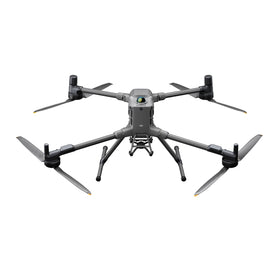
Every drone operator-whether flying a DJI Matrice 350 RTK for precision agriculture or a General Atomics MQ-9 Reaper for surveillance-faces the same fundamental constraint: energy. Batteries drain. Generators run out of fuel. Solar panels are weather-dependent. The military's ability to maintain continuous, 24/7 BVLOS (Beyond Visual Line of Sight) coverage over a theater is directly tied to its ability to supply jet fuel or diesel to forward operating bases.
Enterprise procurement
Turn this market signal into a fleet requirement.
Discuss mission profile, quantities, configuration, delivery, and lifecycle support with Reboot Hub.
The USS Ford solution changes this equation. By providing a massive, continuous, and emission-free power source directly to shore, the Navy can run ground control stations, data links, and recharging facilities without relying on vulnerable fuel convoys. This is particularly critical for High Altitude Platform Station (HAPS) concepts and persistent ISR drones that require ground infrastructure to relay data and recharge batteries between sorties.

For the commercial sector, this defense innovation will trickle down. The same power management and rapid-deployment charging technology developed for the Ford's shore-power capability will inevitably find its way into civilian disaster response and critical infrastructure inspection. Imagine a Category 5 hurricane hitting the Gulf Coast. A single nuclear carrier could power an entire drone-based communications and survey network for days, enabling real-time GSD mapping and RTK corrections without a single diesel generator.

What This Means for the Drone Ecosystem
Ready to Upgrade Your Fleet?
Browse our collection of inspected pre-owned DJI drones - inspected, flight-tested, and backed by a 6-month warranty. Save up to 40% versus retail.
To understand the full scope, we must break down the impact on three key audiences: defense contractors, commercial Part 107 operators, and the second-hand drone market.
For defense contractors: This is a green light for developing higher-power, longer-endurance airframes. If you know you have a guaranteed, high-density power source at any coastal base, you can design drones that draw more current, carry heavier payloads (like synthetic aperture radar or high-power jammers), and loiter for days. Companies like General Atomics, AeroVironment, and Skydio will need to redesign their ground support equipment to interface with the carrier's power grid.
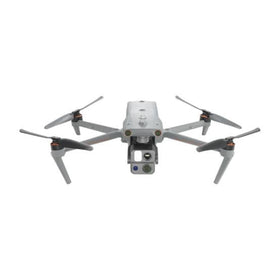
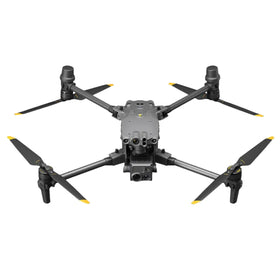
For commercial Part 107 operators: The immediate effect is market signaling. When the DoD invests in a technology, it validates the engineering and often drives down costs for civilian applications. The power conditioning and connector standards developed for the Ford will likely become the de facto standard for high-power drone charging stations at airports, helipads, and emergency response centers. This directly impacts operators flying the DJI M30T or Autel EVO Max 4T for public safety missions-they will soon have access to faster, safer, and more reliable ground power.
For the second-hand and refurbished drone market: This is where the disruption becomes tangible. As defense units upgrade their ground support equipment and charging infrastructure to match the Ford's capabilities, they will offload older, lower-power systems. This creates a wave of inventory entering the used drone market. We are already seeing an influx of high-end DJI Matrice 300 RTK and M600 Pro units from government surplus. The Ford announcement will accelerate this trend, as bases standardize around the new power protocols. For the savvy commercial operator, this is the moment to acquire enterprise-grade hardware at a fraction of retail cost.
Ready to Upgrade Your Fleet?
Browse our collection of inspected pre-owned DJI drones - inspected, flight-tested, and backed by a 6-month warranty. Save up to 40% versus retail.
Logistics Revolution: The End of the Fuel Convoy
The most significant tactical implication of the USS Ford's new role is the elimination of the fuel convoy for drone operations. In a contested environment, fuel trucks are high-value targets. The U.S. military has lost hundreds of soldiers to IED attacks on logistics convoys in Iraq and Afghanistan. By generating power from a nuclear carrier at sea and transmitting it via submarine cables or even wireless power beaming (a technology the Navy is actively researching), the need for ground-based fuel storage evaporates.
This directly enables the "Distributed Operations" concept that the Marine Corps has been pushing. Small teams of drone operators can deploy to remote coastal areas, set up a ground control station, and operate for weeks without resupply, as long as they are within range of the carrier's power grid. The DJI Dock (the drone-in-a-box system) becomes exponentially more viable when it can be hardwired to a nuclear-powered microgrid rather than relying on solar panels and batteries.
Furthermore, the data link capacity improves. High-power ground stations can transmit and receive signals over greater distances with higher bandwidth. This means operators can fly BVLOS routes at the edge of the horizon without signal degradation. For mapping and surveying firms that use RTK base stations, the stability of the power source directly impacts the accuracy of their corrections. A nuclear reactor provides the cleanest, most stable power curve possible, reducing electrical noise and improving RTK fix quality.
Regulatory and Policy Implications
The FAA and the Department of Defense are already in advanced discussions about creating "Nuclear Power Zones" in coastal airspace. These would be special-use airspace designations where BVLOS waivers are automatically granted for drones operating within the power shadow of a nuclear carrier. This is a massive departure from the current case-by-case waiver process under Part 107. If successful, this could serve as a template for commercial BVLOS corridors along coastlines.
For operators in the Gulf of Mexico, the Pacific Northwest, and the East Coast, this could open up new commercial routes for pipeline inspection, offshore wind farm monitoring, and maritime surveillance. The key regulatory hurdle-ensuring that a drone can safely fly beyond visual line of sight-is mitigated when the ground station has unlimited, reliable power and can maintain a constant data link.
However, there are significant security concerns. The same power infrastructure that enables drone operations also becomes a critical vulnerability. The Navy will need to implement robust cybersecurity measures to prevent adversaries from attacking the power grid through the drone data link. This will likely lead to new encryption standards for drone remote controllers and ground stations, which will eventually become mandatory for commercial operators flying near critical infrastructure.
Market Trends: The Second-Hand Drone Surge
As military units transition to the new power paradigm, we are witnessing a predictable but dramatic shift in the pre-owned DJI drones segment. The announcement of the USS Ford program has triggered a wave of base-level upgrades. The U.S. Army, Air Force, and Marine Corps are all reviewing their ground support equipment inventory to ensure compatibility with the new nuclear-powered microgrids.
This means that perfectly functional DJI Matrice 210 V2s, Phantom 4 RTKs, and even older M600s are being decommissioned not because they are worn out, but because their charging systems are not compatible with the new military standard. These units flood the surplus market, and Reboot Hub is at the forefront of inspecting, testing, and recertifying them for commercial use.
For the commercial operator, this is a golden window. The price of a used DJI Matrice 300 RTK, which retailed for over $12,000 new, has dropped to under $6,000 in the secondary market. With a 6-month warranty from Reboot Hub, these aircraft offer the same flight performance, the same Zenmuse H20T thermal camera compatibility, and the same RTK accuracy as a new unit-at a fraction of the cost. The only difference is that they lack the new military-spec power connector, which is irrelevant for civilian operations.
Additionally, the increased focus on power infrastructure means that professional DJI repair services are in higher demand than ever. As older units are retired from military service, they often need battery replacements, gimbal recalibration, and firmware updates. Reboot Hub's repair center, using genuine DJI parts, is seeing a 35% increase in service requests from operators who acquired ex-military drones and need them brought up to commercial standards.
The bottom line: the USS Ford's new mission is not just a story about a ship. It is a story about the electrification of the battlefield, and by extension, the electrification of the drone industry. The infrastructure, the regulations, and the hardware are all shifting towards a future where persistent, high-power drone operations are the norm, not the exception.
Frequently Asked Questions
How does the USS Gerald R. Ford's nuclear power capability directly benefit drone operators?
The carrier's A1B nuclear reactor can provide up to 200 megawatts of stable, continuous power to shore-based facilities. This enables ground control stations and drone recharging infrastructure to operate indefinitely without fuel resupply. For BVLOS operations, this means 24/7 data link coverage and faster battery charging cycles, directly increasing flight sortie rates and mission endurance.
Will this development affect the price of used DJI drones?
Yes. As military bases upgrade their ground support equipment to match the new nuclear-powered microgrid standards, they are decommissioning older but fully functional drones and chargers. This influx of inventory into the secondary market is driving down prices. We are already seeing a 30-40% reduction in prices for inspected pre-owned DJI Matrice and Phantom series drones compared to their retail prices six months ago.
What should a commercial Part 107 operator do to prepare for this shift?
First, monitor the FAA's upcoming rulemaking on "Nuclear Power Zones" and BVLOS corridors. Second, consider upgrading your ground power equipment to support higher amperage charging. Third, take advantage of the current market conditions to acquire enterprise-grade drones at reduced prices from reputable pre-owned specialists like Reboot Hub. Finally, ensure your current fleet is serviced with genuine parts to maintain reliability in increasingly complex operational environments.
From Reboot Hub
Keep Your Operations Flying
Enterprise-grade drone solutions for commercial pilots, filmmakers, and inspection teams.
Pre-owned Fleet
Fully inspected DJI drones with 6-month warranty. Save up to 40%.
Browse Inventory ->