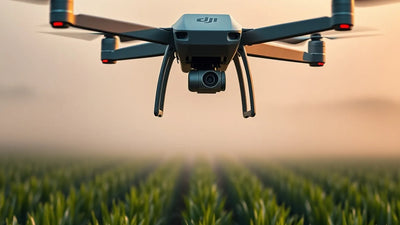
Silicon Valley vs. Russian EW: Zelenskyy’s AI Drone Pitch Could Rewrite the Rules of Aerial Combat
Ukrainian President Zelenskyy has issued a direct challenge to Silicon Valley defense startups: trade your cutting-edge AI algorithms for the world’s most intense, real-world combat data. This isn't a theoretical partnership. It’s a high-stakes exchange where neural networks are being trained on live electronic warfare (EW) jamming, GPS spoofing, and anti-drone countermeasures. For commercial drone operators and the second-hand market, the implications are seismic. As battlefield AI matures, expect a surge in demand for ruggedized, refurbished platforms like the DJI Matrice 350 RTK and M30T, which are proving their worth as the ultimate hardware testbeds. The race to fuse AI with drone hardware is on—and the used drone market is the supply line for the revolution.

Redactionele noten
- Dit artikel combineert genoemde externe rapportages met de eigen analyse van Reboot Hub voor drone-kopers, vlootbeheerders, reparatieklanten en waarnemers van de tweedehands DJI-markt.
- Bronfeiten worden gescheiden van interpretaties. Wanneer een rapport beperkte gegevens biedt, vermeldt het artikel deze beperking en wordt het standpunt van Reboot Hub als analyse gepresenteerd.
- Reboot Hub heeft commerciële links naar droneproducten en reparatiediensten; deze links zijn hulpmiddelen voor de lezer en bepalen niet de conclusie van het artikel.
Ukrainian President Volodymyr Zelenskyy has made a direct, high-stakes pitch to the defense technology startups of Silicon Valley. In a recent engagement reported by Business Insider, the Ukrainian leader offered a deal that no other nation on Earth can match: access to the most brutal, fast-paced, and data-rich proving ground for artificial intelligence in military history. The proposition is simple. Silicon Valley brings the AI, the advanced algorithms, and the neural networks. Ukraine brings the war.
For the commercial UAV industry and the second-hand drone market, this is not a distant geopolitical headline. It is a seismic signal that the very definition of a "drone" is about to change. The fusion of cutting-edge AI with combat-hardened hardware-much of which is sourced from the commercial sector-is accelerating at a pace that will ripple through regulations, fleet management strategies, and the value of pre-owned equipment for years to come. As of May 31, 2026, the lines between a commercial aerial survey tool and a tactical reconnaissance asset have never been blurrier.
The Battlefield as a Laboratory: Why Ukraine's Data is Priceless
Zelenskyy's pitch hinges on a single, undeniable asset: terabytes of real-time, high-fidelity combat data. For any AI startup developing autonomous drone navigation, target recognition, or electronic warfare countermeasures, synthetic data is cheap. Real data from a contested environment where Russian electronic warfare (EW) systems are actively jamming GPS, spoofing signals, and deploying anti-drone nets is priceless.
Enterprise procurement
Turn this market signal into a fleet requirement.
Discuss mission profile, quantities, configuration, delivery, and lifecycle support with Reboot Hub.
This direct feedback loop allows developers to train models that can distinguish between a civilian vehicle and a military supply truck under heavy EW duress. It allows for the refinement of BVLOS (Beyond Visual Line of Sight) algorithms that must navigate through a constantly shifting electromagnetic spectrum. For the first time, a nation-state is offering a "live-fire API" to private industry. The implications for the Defense sector are immediate. Startups like Palantir, Anduril, and newer entrants like Shield AI and Skydio are now in a race to integrate their autonomy stacks onto platforms that can survive the mud, cold, and electronic chaos of the Eastern European front.
This directly impacts the hardware supply chain. The DJI Mavic 3, M30T, and Matrice 350 RTK have become the workhorses of this conflict, adapted with custom payloads and AI modules. As these platforms prove their resilience in the harshest conditions, their reputation in the commercial sector is solidified. A drone that can survive a Russian EW attack can certainly handle a complex RTK surveying mission on a wind-swept construction site.
What This Means for Commercial Drone Operators and the Second-Hand Market
For the everyday drone pilot operating under FAA Part 107 or EASA regulations, the Zelenskyy pitch signals a shift in the technological baseline. The AI features that are currently considered premium-such as obstacle avoidance, subject tracking, and automated flight paths-are being stress-tested and evolved for combat scenarios. The next generation of commercial drones will inherit this hardened AI.
For the second-hand and refurbished drone market, the implications are profound. As defense startups and military units scramble to procure ruggedized platforms, the demand for high-end, pre-owned drones is surging. The DJI Matrice 350 RTK, with its IP55 rating and compatibility with a wide range of payloads, is becoming a prime target. This increased demand is stabilizing prices in the used drone market, making inspected pre-owned units an even more attractive investment for commercial operators who need enterprise-grade hardware without the enterprise price tag.
Ready to Upgrade Your Fleet?
Browse our collection of inspected pre-owned DJI drones - inspected, flight-tested, and backed by a 6-month warranty. Save up to 40% versus retail.
The Hardware Crucible: From Commercial Shelf to Combat Front
The central question for defense startups is not just "what AI do we run?" but "what hardware do we fly it on?" The answer, increasingly, is commercial off-the-shelf (COTS) drones. The DJI Matrice 350 RTK, for example, offers a robust SDK, a reliable RTK module for precision navigation even under GPS denial, and a modular payload system that can be adapted for thermal, LiDAR, or specialized electronic warfare packages. Its ability to be repaired and upgraded is a critical factor in a war of attrition.
This is where the second-hand market becomes a strategic asset. The conflict has created an enormous demand for spare parts, replacement airframes, and entire fleets. This demand flows back into the global supply chain. Commercial operators who are upgrading from a Mavic 2 Enterprise to a M30T are finding a ready market for their used equipment. This liquidity is a boon for the industry, allowing capital to be recycled and ensuring that high-quality hardware remains in service rather than being decommissioned.
Furthermore, the tactical lessons learned are driving hardware modifications. We are seeing a rise in "field-modified" drones with custom 3D-printed parts, upgraded antennas for extended range, and hardened data links. These modifications are informing the next generation of commercial design. The demand for professional DJI repair services is increasing as operators seek to keep their fleets operational and adapted to new threats. The ability to quickly swap a gimbal, replace a motor, or upgrade a payload is no longer a convenience-it is a necessity for operational continuity.
Regulatory and Strategic Implications for the Global UAV Industry
The Zelenskyy pitch also forces a re-evaluation of export controls and regulations. As AI-capable drones become more autonomous, the lines between a commercial survey tool and a weapon system are blurring. The U.S. Department of Commerce and the FAA are closely watching this development. The integration of advanced AI into platforms that are widely available on the second-hand market raises new questions about dual-use technology.
For commercial operators in the United States and Europe, this could mean tighter scrutiny on drone sales, especially for high-end models like the Matrice 350 RTK. However, it also validates the commercial drone ecosystem as a critical component of national security. The skills that commercial pilots develop-mission planning, sensor operation, data analysis-are directly transferable to defense applications. This convergence is likely to lead to new training programs and certification pathways that bridge the gap between Part 107 operations and tactical missions.
The Future of the Used Drone Market in an AI-Driven World
As AI becomes the defining feature of the next generation of UAVs, the hardware platform becomes a commodity. The value of a drone will increasingly be determined by its ability to host and power advanced AI payloads. This favors robust, well-built, and repairable platforms like the DJI Matrice series. The used drone market is poised to become the primary source of these platforms for smaller defense contractors, research institutions, and commercial operators who cannot afford the latest $15,000+ flagship model.
At Reboot Hub, we are seeing this trend firsthand. The demand for pre-owned DJI drones has never been higher. Operators are recognizing that a well-maintained, pre-owned Matrice 350 RTK or M30T offers 90% of the capability of a new unit at a fraction of the cost. This allows them to allocate more of their budget to the AI software and payloads that truly differentiate their operations.
The convergence of battlefield AI and commercial hardware is not a future trend-it is happening now. Zelenskyy's pitch to Silicon Valley is a catalyst that will accelerate the development of autonomous drone systems, reshape the defense industry, and solidify the role of the second-hand market as a critical infrastructure provider. For the commercial operator, the message is clear: the drone you fly today is the foundation for the AI of tomorrow. Keep it maintained, keep it upgraded, and understand its value.
FAQ: What Does the Zelenskyy AI Drone Pitch Mean for You?
1. How will this affect the price of used DJI drones on the second-hand market?
The increased demand from defense startups and military units for ruggedized platforms like the DJI Matrice 350 RTK and M30T is creating upward pressure on prices for high-end used drones. This is beneficial for sellers looking to upgrade their fleets, as they can command higher resale values. For buyers, it reinforces the value of investing in inspected pre-owned units from reputable sources like Reboot Hub, which offer warranty and quality assurance, protecting against the volatility of the private market.
2. Should commercial drone operators be concerned about new regulations following this development?
Yes, but cautiously. The integration of advanced AI into COTS drones will likely prompt regulators like the FAA and EASA to update guidelines on autonomous flight, data security, and export controls. Commercial operators should stay informed about changes to Part 107 and any new requirements for AI-enabled flight modes. However, this also legitimizes the commercial sector as a vital part of the defense industrial base, which could lead to more government-funded training and certification programs.
3. What specific drone models are most likely to be impacted by this defense AI trend?
The DJI Matrice 350 RTK and M30T are the clear frontrunners due to their ruggedness, modular payload systems, and robust SDK. The DJI Mavic 3 Enterprise series also remains popular for smaller tactical roles. We also expect to see increased interest in specialized platforms like the Skydio X10, which has native AI autonomy. For the second-hand market, the Matrice 200 series V2 and the original M30 are also seeing renewed interest as budget-friendly alternatives that can still host advanced payloads.
--
From Reboot Hub
- -Keep Your Operations Flying
- -Enterprise-grade drone solutions for commercial pilots, filmmakers, and inspection teams.
- -Pre-owned Fleet
- - - -Fully inspected DJI drones with 6-month warranty. Save up to 40%.
- - - - Browse Inventory -> - - -Expert Repair
- - - -Professional diagnostics with genuine OEM parts. Same-day estimates.
- - - - Book a Repair -> - - -Spare Parts
- - - -Batteries, propellers, gimbals -- premium OEM components, fast shipping.
- - - - Shop Parts -> - - -