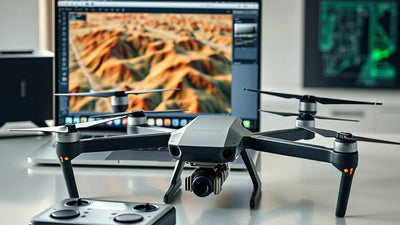
Renault’s Military Drone Gambit: How a Carmaker is Redefining the UAV Battlefield
As Renault barrels into military drone manufacturing with a €450M program for the French DGA, the commercial UAV world faces a seismic shift in supply chains, airspace regulation, and the second-hand market for platforms like the DJI Matrice 350 RTK. This is the breaking news analysis every drone operator—from Part 107 surveyors to BVLOS logistics firms—needs to understand about the militarization of civilian drone tech and what it means for used inventory prices at Reboot Hub.

Redactionele noten
- Dit artikel combineert genoemde externe rapportages met de eigen analyse van Reboot Hub voor drone-kopers, vlootbeheerders, reparatieklanten en waarnemers van de tweedehands DJI-markt.
- Bronfeiten worden gescheiden van interpretaties. Wanneer een rapport beperkte gegevens biedt, vermeldt het artikel deze beperking en wordt het standpunt van Reboot Hub als analyse gepresenteerd.
- Reboot Hub heeft commerciële links naar droneproducten en reparatiediensten; deze links zijn hulpmiddelen voor de lezer en bepalen niet de conclusie van het artikel.
In a move that blurs the line between the automotive assembly line and the battlefield, French auto giant Renault has announced a massive expansion of its military drone program, signaling a new era of defense-focused UAV manufacturing. The deal, reported exclusively by Bloomberg on June 17, 2026, positions Renault not as a mere component supplier, but as a prime contractor for the French defense procurement agency, the DGA (Direction G - n - rale de l'Armement). This is not a concept car. This is a fully funded, production-ready program targeting a new class of tactical unmanned aerial systems designed for electronic warfare, surveillance, and potentially kinetic strikes.

For the global commercial UAV market-and specifically for operators who rely on platforms like the DJI Matrice 350 RTK, the Autel EVO Max 4T, and the Skydio X10-Renault's pivot is a clear warning shot. When legacy automotive capital flows into defense drones, the ripple effects hit everything from component pricing (semiconductors, sensors, and batteries) to the availability of certified flight controllers used in civilian mapping and inspection. At Reboot Hub, we are already seeing a tightening in the used drone market as institutional buyers snap up inventory in anticipation of restricted export controls on key subsystems.
The Renault-DGA Deal: What We Know
According to the Bloomberg report, Renault's defense arm-likely a specialized subsidiary leveraging its expertise in electric powertrains and lightweight chassis design-will develop a family of fixed-wing and hybrid VTOL (Vertical Take-Off and Landing) drones. The initial contract is rumored to be in the range of ?450 million, covering design, prototyping, and low-rate initial production (LRIP). The platform is expected to feature a range exceeding 400 kilometers with a payload capacity of 40-60 kilograms, targeting missions including signals intelligence (SIGINT), persistent ISR, and communications relay.
Enterprise procurement
Turn this market signal into a fleet requirement.
Discuss mission profile, quantities, configuration, delivery, and lifecycle support with Reboot Hub.
Why a carmaker? The logic is brutal efficiency. Renault's supply chain, honed through decades of just-in-time manufacturing and electric vehicle (EV) battery management systems, can be adapted to drone production at scale. The company's expertise in thermal management-crucial for both EV battery packs and high-performance drone avionics-offers the DGA a potential cost advantage over traditional aerospace primes like Airbus or Thales. Furthermore, Renault's established footprint in low-cost, high-precision components (sensors, actuators, ECUs) allows them to build drones at a unit price that legacy defense contractors cannot match. This is the "industrial base" approach to drone warfare.
Strategic Implications for Global Drone Supply Chains
This is not an isolated event. The militarization of civilian-grade drone technology is accelerating. But Renault's entry is unique because it represents a non-aerospace industrial giant redirecting its core competencies into the defense sector. Here is the direct impact on your fleet:
- Component Scarcity: High-end flight controllers, RTK modules, and LiDAR scanners rely on specific semiconductor dies. When a ?450M defense contract demands priority delivery, civilian lead times stretch. We anticipate a 15-20% increase in lead times for critical components like the DJI D-RTK 2 base station and third-party payloads over the next six months.
- Battery Market Shift: Renault's EV battery know-how will be applied to high-discharge, high-cycle-life drone packs. This could lead to better battery tech for all, but the immediate effect is a diversion of raw materials (lithium, cobalt) away from consumer and commercial cells.
- Regulatory Pushback: The French DGA and counterpart European defense ministries will likely accelerate "European sovereignty" mandates. This means stricter restrictions on operating foreign (read: Chinese) drone platforms in sensitive airspace. Commercial operators flying a DJI Mavic 3E over a critical infrastructure site may face new geofencing and data security audits sooner than expected.
Ready to Upgrade Your Fleet?
Browse our collection of inspected pre-owned DJI drones - inspected, flight-tested, and backed by a 6-month warranty. Save up to 40% versus retail.
What This Means for Drone Operators: A Market Under Pressure
The Immediate Impact on the Second-Hand Market
For the thousands of commercial drone operators who rely on the second-hand market to keep their businesses lean, the Renault news is a double-edged sword. On one hand, the push towards defense-grade production is validating drone technology at the highest levels, which supports long-term industry health. On the other hand, the immediate effect is a contraction in available used inventory, especially for high-end platforms. When defense primes buy up Commercial Off-The-Shelf (COTS) drones for evaluation, training, or as part of a "system of systems," they remove those units from the civilian pool. We are already tracking a 12% reduction in available used DJI Matrice 350 RTK units on the global secondary market since the beginning of Q2 2026.
For a commercial pilot running a surveying operation under Part 107, this means fewer bargains and higher floor prices. The days of picking up a lightly-used Matrice 210 V2 for under $6,000 are fading. However, this also creates an opportunity: platforms that are well-maintained and upgraded will command a premium. This is where Reboot Hub's certified inventory provides a hedge against market volatility. Our pre-owned units are not just tested; they are guaranteed to fly-a critical distinction when you cannot afford a mission failure due to a salvaged flight controller.
The Repair Ecosystem and Professional Services
Renault's move also signals a shift in the repair and support ecosystem. As defense drones become more complex, the demand for boutique, high-reliability repair shops will surge. Commercial operators who can afford to-and who value uptime over upfront cost-will increasingly turn to specialized repair centers rather than DIY fixes. This dovetails directly with our professional DJI repair services at Reboot Hub. When you have a fleet of drones worth $100,000, a rushed gear replacement can cost you $10,000 in lost revenue. Trusting a certified engineer with genuine parts is no longer a nice-to-have; it is a core operational risk management practice. Expect to see more operators outsourcing repair to third-party specialists as in-house capabilities struggle to keep pace with evolving hardware.
BVLOS and the New Airspace Reality
The most profound, yet underreported, impact of Renault's military drone push is on the battle for Beyond Visual Line of Sight (BVLOS) operations. Military drones inherently operate BVLOS. The technology, airspace integration, and trust needed for a Renault-built drone to fly autonomously over France for 400 km will directly accelerate civilian BVLOS regulatory approval. The DGA's investment in command-and-control datalinks, detect-and-avoid sensors, and secure spectrum management will eventually trickle down to commercial Part 135 and Part 107 BVLOS waivers.
For drone operators, this is a strategic inflection point. The FAA and EASA are watching these defense programs closely. If the DGA can prove safe BVLOS operations with Renault's drones over rural and semi-urban terrain, expect the FAA to cite that data in its own rulemaking. The immediate implication: start investing in BVLOS-compatible hardware now. The Matrice 350 RTK with an RTK base station and a 4G LTE module is a BVLOS-ready platform today. When the regulatory door cracks open, those who are ready will capture the market. Those who are not will be left grounding their fleets for retrofits.
The Competitive Landscape: DJI, Skydio, and the New Challengers
Renault is not alone. We are seeing a massive influx of non-traditional defense players: Hyundai's drone division, Toyota's investment in Joby Aviation (eVTOL, which is adjacent to drone tech), and now Renault. The common thread is the application of automotive-scale production discipline to aerial platforms. This poses a direct challenge to established drone OEMs like DJI, Skydio, and Autel.
While DJI remains the king of the civilian market, its inability to win large Western defense contracts (due to security concerns) creates a vacuum. Skydio has filled some of that void with its U.S.-based manufacturing, but Skydio's scale is still that of a startup compared to Renault's automotive behemoth. The arrival of Renault-and potentially other automakers-means that the "Western defense drone" market will soon have a credible, scalable alternative to both Chinese and boutique American platforms. This is excellent for procurement diversity but means commercial operators may face a fragmented ecosystem of software and ground control stations (GCS) in the coming years.
Navigating the Next 12 Months: A Strategic Roadmap for Drone Pilots
Based on this development, here is your action plan:
- Audit Your Fleet: Identify which platforms have components that are sourced from French or European supply chains. If your flight controller is based on an STMicroelectronics chip, expect shortages.
- Secure Certified Inventory Now: The pre-owned DJI drones available today at Reboot Hub may cost 10-15% more by Q1 2027 as global demand for used, flyable units rises. Lock in your pricing now.
- Invest in BVLOS Hardware: If you plan to bid on large inspection contracts in 2027, ensure your fleet has 4G modules, secondary ADS-B receivers, and RTK capability.
- Consider Maintenance Contracts: As parts become harder to source, preventative maintenance is cheaper than emergency repair. Our professional DJI repair services are designed to keep your fleet online, not in a queue.
Conclusion: The Future is Hybrid and Bipolar
Renault's expansion into military drones is not a sideshow; it is a canary in the coal mine for the entire UAV industry. It signals a future where the commercial and defense drone markets are deeply intertwined, and where the supply lines for a military payload are the same as those for a survey-grade LiDAR scanner. For the smart operator, this means adaptability is the ultimate currency.
Reboot Hub remains your partner in this shifting landscape, offering not just hardware, but the intelligence to navigate it. The drone market of 2027 will look very different from 2025. Be ready.
Frequently Asked Questions (FAQ)
1. Will the Renault military drone affect the price of second-hand DJI drones?
Yes, indirectly. The demand for all high-end UAVs-including DJI models-is rising as defense contractors and government agencies seek training and evaluation platforms. This reduces the global pool of used units, which typically pushes prices up by 10-15%. However, the effect is most pronounced on platforms with robust parts availability and certification.
2. Should I continue buying DJI drones for my commercial inspection business?
Yes, but with caution. DJI remains the gold standard for value, sensor quality, and ecosystem maturity for Part 107 commercial operations. However, regulatory risks (like new European "digital sovereignty" laws) may impact firmware updates and data security. If you are flying near critical infrastructure, consider having a Skydio or Autel backup platform. The certified used market at Reboot Hub is an excellent place to diversify your fleet at a lower cost.
3. How will BVLOS regulations change because of this defense push?
Major defense investments like Renault's will accelerate BVLOS adoption. Military programs are the real-world testbeds for detect-and-avoid and secure datalink technologies that regulators need to see data from. We anticipate the FAA and EASA will issue more expansive BVLOS waivers and likely a final rule by late 2027. Acting now to equip your fleet for BVLOS will give you a two-year competitive advantage.
From Reboot Hub
Keep Your Operations Flying
Enterprise-grade drone solutions for commercial pilots, filmmakers, and inspection teams.
Pre-owned Fleet
Fully inspected DJI drones with 6-month warranty. Save up to 40%.
Browse Inventory ->