Michigan’s Manufacturing Muscle Drives a Drone Industry Revival – What Commercial Operators Need to Know
Michigan is scrambling to close the gap in the national drone race, but its deep-rooted automotive and aerospace manufacturing base could give it a decisive edge in industrial UAV production. For commercial operators, the state’s push for extended BVLOS corridors, RTK ground-station networks, and tax incentives for drone manufacturing means lower barriers to fleet expansion and a surge in supply for the used drone market. Reboot Hub analyzes the infrastructure gaps, regulatory hurdles, and why now is the time to invest in inspected pre-owned equipment before prices spike.

Redactionele noten
- Dit artikel combineert genoemde externe rapportages met de eigen analyse van Reboot Hub voor drone-kopers, vlootbeheerders, reparatieklanten en waarnemers van de tweedehands DJI-markt.
- Bronfeiten worden gescheiden van interpretaties. Wanneer een rapport beperkte gegevens biedt, vermeldt het artikel deze beperking en wordt het standpunt van Reboot Hub als analyse gepresenteerd.
- Reboot Hub heeft commerciële links naar droneproducten en reparatiediensten; deze links zijn hulpmiddelen voor de lezer en bepalen niet de conclusie van het artikel.
Michigan has long been the engine room of American manufacturing, but when it comes to the drone industry, the Great Lakes State has been running on fumes compared to early adopters like North Dakota, New York, and California. A recent article from Mining Gazette bluntly stated that Michigan is “playing catch-up on the drone race,” yet the piece also highlighted a crucial competitive advantage that the state can no longer ignore: its unrivaled manufacturing ecosystem. For an industry that increasingly demands precision engineering, high-volume production, and rapid prototyping, Michigan’s past is suddenly becoming its future.

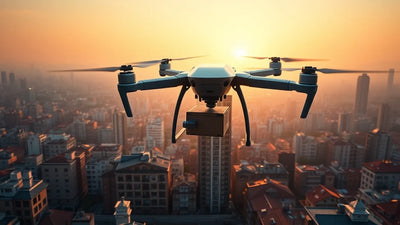
As of June 2026, the gap is real. According to the Association for Uncrewed Vehicle Systems International (AUVSI), Michigan ranks outside the top ten states for drone business registration and infrastructure investment. But state legislators and local economic development groups are now mobilizing. Recent bills propose $50 million in grants for drone manufacturing facilities, and the Michigan Department of Transportation has started mapping airspace for long-range BVLOS (Beyond Visual Line of Sight) corridors that could connect Detroit, Ann Arbor, and Grand Rapids with autonomous cargo routes. The state’s 700+ automotive suppliers and two major aerospace R&D hubs – in Sterling Heights and Kalamazoo – are already working with startups to adapt assembly lines originally designed for car parts into production flows for heavy-lift UAVs and delivery drones.
The Michigan Manufacturing Advantage for Drone Production
What does a 100-year history of building cars and planes have to do with building drones? Everything. The same tooling, supply chains, and workforce that produce stamped metal panels, electric motors, and composite body panels for the automotive industry can be retooled – often at a fraction of the cost of a greenfield factory – to produce drone airframes, gimbal housings, and propulsion systems. Companies like DENSO, Magna, and Continental are already spinning off drone-adjacent divisions, and the state’s network of community colleges is launching certification programs for UAV assembly technicians.
Enterprise procurement
Turn this market signal into a fleet requirement.
Discuss mission profile, quantities, configuration, delivery, and lifecycle support with Reboot Hub.
“Detroit knows how to make things at scale,” said Rebecca Holtz, director of the Michigan Unmanned Aerial Systems Consortium, in a recent industry briefing. “When the FAA finally opens up the national airspace for routine commercial BVLOS operations later this year, the companies that can deliver thousands of high-quality drones will be the ones that win. Michigan can do that faster than any other state because we already have the factories, the workers, and the logistics.”
This manufacturing base also feeds directly into the professional DJI repair services ecosystem. As more industrial drones are deployed in the region, the need for certified repair centers that can handle high-volume component swaps and firmware updates will explode. Michigan’s existing auto repair and electronics refurbishment networks are perfectly positioned to pivot into UAV maintenance, creating a virtuous cycle where local drone fleets are supported by local technicians who can source genuine parts from the same suppliers that feed the OEMs.
Michigan’s Drone Infrastructure and Regulatory Push
But manufacturing alone won’t close the gap. Drone adoption depends on accessible test ranges, reliable cellular and RTK correction networks, and a regulatory environment that encourages experimentation rather than punishment. Michigan has been slow on all three fronts. The state’s only FAA-designated UAS test site – the Michigan Tech Research Institute – has limited capacity, and while the Michigan Economic Development Corporation (MEDC) recently launched a “Drone-Ready Communities” program, only a handful of the state’s 1,200 municipalities have signed up.
Ready to Upgrade Your Fleet?
Browse our collection of inspected pre-owned DJI drones — inspected, flight-tested, and backed by a 6-month warranty. Save up to 40% versus retail.
To accelerate, Michigan’s governor recently signed an executive order creating a cross-agency Drone Task Force that includes the Michigan Department of Transportation, the State Police, and the Department of Natural Resources. The task force’s first deliverable is a proposed state-level version of Part 107 that would allow for faster exemptions for agricultural, construction, and utility inspection operators. If passed, any operator holding a valid Part 107 certificate from the FAA could fly in Michigan’s proposed BVLOS corridors without additional state paperwork – a move that would instantly make the state more attractive to national fleet operators.
What This Means for Commercial Drone Operators and the Second-Hand Market
For everyday drone pilots and commercial operators, Michigan’s catch-up effort is a double-edged sword. On one hand, more BVLOS corridors and faster permitting mean more revenue opportunities for agricultural spraying, roof inspection, and infrastructure mapping. On the other hand, the state’s initial lack of investment has left a vacuum that out-of-state operators are already filling. Fleets based in Indiana, Ohio, and Pennsylvania are routinely flying into Michigan waters for lake survey work, and they are bringing their own equipment, which often includes older, depreciated drones that are ideal candidates for the second-hand market.
This is where the used drone market becomes a critical enabler. As more operators enter the Michigan market – either as locals or out-of-state contractors – the demand for affordable, high-quality pre-owned drones will spike. Michigan’s manufacturing history also means there are dozens of small workshops that can refurbish old DJI M300s, M350s, and M30Ts with genuine parts, extending their service life by years. At Reboot Hub, we are already seeing increased inquiries from Michigan-based inspectors for our inventory of pre-owned DJI drones, particularly the M30T with thermal payloads, which is ideal for power line and pipeline surveys in the state’s vast rural areas.
However, operators must be cautious. Without a robust state-level regulatory framework, pilots flying BVLOS operations could face enforcement actions from local law enforcement or the Michigan Department of Natural Resources, which has its own airspace restrictions. The task force’s recommendation to simplify compliance is promising, but until it becomes law, operators should treat Michigan as a Part 107+ environment – meaning they should have waivers for any operation that deviates from visual-line-of-sight rules. We also recommend that pilots investing in a used fleet look for models with full NDAA-compliance paperwork, as federal contracts and some state grants may require it.
Reboot Hub’s Verdict: Opportunities for Fleet Upgrades in the Great Lakes State
The state of Michigan is finally treating drones as more than a novelty. The intersection of its manufacturing legacy, a motivated economic development agency, and the impending FAA BVLOS rulemaking creates a perfect storm for growth. But the window is narrow. As other states like Texas and Florida pour billions into drone infrastructure, Michigan must execute its plan within the next 12 months to avoid falling further behind.
For commercial operators, the smartest move right now is to prepare for a surge in demand. That means securing reliable, affordable hardware now before prices rise due to increased competition and potential supply chain snags. The used drone market is well-stocked with ex-lease and trade-in units from industrial fleets that are upgrading to newer models, and at Reboot Hub we are seeing excellent condition DJI M350s with fewer than 100 flight hours available at 35% below retail. Combined with our professional DJI repair services, operators can get a flight-ready, fully warrantied system that will give them a competitive edge when Michigan’s BVLOS corridors open.
The bottom line: Michigan is waking up, but its drone industry will not thrive on manufacturing alone. It needs regulatory agility, infrastructure investment, and a vibrant second-hand ecosystem to support new entrants. Reboot Hub will continue to monitor these developments and update our inventory to match the market’s needs.
Frequently Asked Questions
How will Michigan's manufacturing history affect the availability of used drones in the state?
Michigan’s deep bench of precision manufacturing and electronics assembly workers makes it a prime location for drone refurbishment workshops. As more fleets operate in the state, the supply of high-quality pre-owned drones will increase, and local repair shops will be able to overhaul units with genuine parts. This will likely stabilize prices and increase the availability of pre-owned DJI drones for new operators entering the market.
What BVLOS corridors are being planned in Michigan, and how can operators prepare?
The Michigan Drone Task Force is evaluating three initial BVLOS corridors: Detroit–Ann Arbor, Grand Rapids–Kalamazoo, and a northern route from Traverse City to the Mackinac Bridge. Each corridor will require cellular coverage augmentation and RTK base stations. Operators preparing for these should invest in drones with 4G/5G connectivity modules and RTK-capable payloads. Also, ensure your aircraft are registered with both the FAA and (soon) the state database.
Should I buy a used drone now or wait for Michigan’s market to mature?
The current pricing environment is favourable. With many industrial fleets upgrading to newer models (e.g., DJI Matrice 4 series or Autel EVO Max), the supply of lightly used M300 and M350 units is high. As Michigan’s regulatory picture clears and demand spikes, prices on the second-hand market could rise 10–15% within six months. Buying a refurbishment-labeled DJI drone now from a trusted vendor locks in your capital expenditures and gives you a head start on commercial opportunities.
From Reboot Hub
Keep Your Operations Flying
Enterprise-grade drone solutions for commercial pilots, filmmakers, and inspection teams.
Pre-owned Fleet
Fully inspected DJI drones with 6-month warranty. Save up to 40%.
Browse Inventory ->