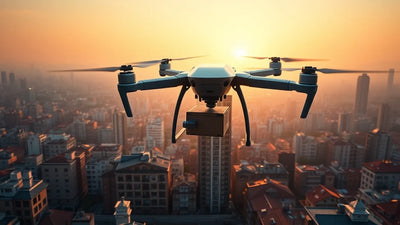
Maharashtra’s ₹25,000 Crore Drone Policy: What It Means for India's UAV Industry
Maharashtra’s new Automated Systems Policy 2026 commits ₹25,000 crore and 100,000+ jobs to drones and robotics. For commercial operators, this means BVLOS corridors, RTK base station subsidies, and a surge in used drone fleets. Reboot Hub analyzes the compliance landscape, market disruption, and second-hand drone implications for Indian and global UAV professionals.

Redactionele noten
- Dit artikel combineert genoemde externe rapportages met de eigen analyse van Reboot Hub voor drone-kopers, vlootbeheerders, reparatieklanten en waarnemers van de tweedehands DJI-markt.
- Bronfeiten worden gescheiden van interpretaties. Wanneer een rapport beperkte gegevens biedt, vermeldt het artikel deze beperking en wordt het standpunt van Reboot Hub als analyse gepresenteerd.
- Reboot Hub heeft commerciële links naar droneproducten en reparatiediensten; deze links zijn hulpmiddelen voor de lezer en bepalen niet de conclusie van het artikel.
On June 18, 2026, the Government of Maharashtra officially unveiled the Automated Systems Policy 2026, a landmark regulatory and investment framework aimed at transforming the state into a global hub for drones, robotics, and autonomous mobility. The policy targets a staggering ?25,000 crore in investment and the creation of over one lakh jobs over the next five years. For the commercial UAV industry, this is not just another state-level announcement - it is a seismic shift that will reshape airspace regulations, supply chains, and the second-hand drone market across India and beyond.

Maharashtra, home to India's financial capital Mumbai and a thriving tech ecosystem in Pune and Nagpur, has positioned itself as the first major Indian state to dedicate an entire policy to automated systems. The policy covers everything from urban air mobility (UAM) corridors and drone-in-a-box infrastructure to robotics manufacturing incentives and autonomous vehicle testing zones. Critically, it includes specific provisions for Beyond Visual Line of Sight (BVLOS) operations, RTK base station deployment, and data privacy standards - all of which have immediate implications for drone pilots and commercial operators.
Policy Overview and Investment Targets
The Automated Systems Policy 2026 is structured around four pillars: skilling and employment, infrastructure development, research and innovation, and ease of doing business. The government aims to attract ?25,000 crore in cumulative investment by 2031, with a target of 100,000 direct jobs and 50,000 indirect jobs. Key incentives include capital subsidies of up to 25% for drone and robotics manufacturing units, land allocation at concessional rates in existing industrial parks, and a single-window clearance system for UAV operations.
Operator checklist
Turn policy news into a safer fleet decision.
Before changing aircraft, compare repair paths, available DJI inventory, and trade-in timing against the rule change.
For drone fleet operators, the policy mandates that all commercial drones above 2 kg must be registered on the state's newly launched Maharashtra Automated Systems Registry (MASR), which will integrate with the central Digital Sky platform. Additionally, the state will establish five dedicated Drone Test and Certification Centers in Nagpur, Pune, Aurangabad, Nashik, and Mumbai, each equipped with RTK base stations and geofencing infrastructure. These centers will also serve as repair and refurbishment hubs, directly impacting the used drone market by creating certified exchange programs.
Key Provisions for Drone Industry
Several provisions in the policy directly affect daily drone operations and fleet management. First, the state will issue automatic BVLOS permits for approved operators within designated air corridors - a major step forward for precision agriculture, infrastructure inspection, and mapping companies. Second, the policy offers a 50% subsidy on RTK base station installations for survey-grade drone operators, reducing the cost of high-accuracy ground control. Third, it mandates remote ID compliance for all drones above 250 grams, aligning with international standards such as FAA Part 89 and EASA's upcoming U-space regulation.
For drone pilots, this means stricter compliance but also expanded commercial opportunities. The policy introduces a state-level drone pilot licensing framework that supplements DGCA's Remote Pilot Certificate (RPC). Pilots who complete the Maharashtra-approved BVLOS training program will receive priority access to state-funded emergency response and infrastructure projects. This creates a clear pathway for professional drone operators to scale their businesses.
Ready to Upgrade Your Fleet?
Browse our collection of inspected pre-owned DJI drones - inspected, flight-tested, and backed by a 6-month warranty. Save up to 40% versus retail.
What Does the Automated Systems Policy 2026 Mean for Commercial Drone Operators?
To cut through the policy jargon, we break down the immediate operational and financial impact in a direct Q&A format.
Q: Will BVLOS operations become cheaper and easier in Maharashtra?
A: Yes. The policy creates designated BVLOS corridors with pre-cleared airspace, reducing the per-mission approval time from weeks to hours. Operators using RTK-enabled drones (like the DJI Matrice 350 RTK or Phantom 4 RTK) will benefit from the 50% subsidy on base stations. However, operators must ensure their drones are MASR-registered and equipped with remote ID modules - which may require retrofitting older models.
Q: How does this affect the second-hand drone market in India?
A: The policy's emphasis on certified test centers and registry compliance will likely increase demand for pre-owned drones that meet state standards. Older drones without remote ID or insufficient payload capacity may lose value, while well-maintained pre-owned DJI drones will become sought-after assets for operators entering the Maharashtra market. The state's subsidy on new RTK equipment may also prompt upgrades, flooding the used market with mid-range drones - a classic opportunity for buyers.
Q: What about drone repair and maintenance?
A: The five Drone Test and Certification Centers will include authorized repair workshops. This aligns with the need for professional DJI repair services to handle the increased fleet density. Operators should ensure their maintenance partners use genuine parts and are listed on the MASR platform to avoid compliance gaps.
Second-Hand Drone Market Dynamics and Fleet Upgrades
The Maharashtra policy directly stimulates the used drone market through two mechanisms: subsidy-induced upgrades and mandatory compliance. As operators rush to equip their fleets with remote ID modules and RTK capabilities, many will sell off older units that cannot be easily upgraded. This creates a glut of entry-level drones (e.g., DJI Mavic 2 Pro, Phantom 4 Pro v2) in the secondary market, driving down prices. Conversely, high-end models with integrated RTK modules and ruggedized builds (such as the DJI Matrice 300 RTK or Matrice 350 RTK) will hold their value longer and may even appreciate due to increased demand from government projects.
For small and medium drone service providers, this is an ideal time to expand fleets at lower capital outlay. Reboot Hub's inventory of pre-owned DJI drones offers a reliable path to acquire flight-ready units with warranty coverage - crucial for operators bidding on state-funded contracts that require insurance and maintenance history. The policy's requirement for periodic inspections at MASR-approved centers also means that a documented repair history (as provided by Reboot Hub's service log) becomes a competitive advantage.
Additionally, the policy's focus on local manufacturing may eventually reduce reliance on imported drone components, but in the immediate term, second-hand imports from markets like the US and Europe (especially pre-owned DJI models) will fill the gap. Operators should verify compliance with India's BIS certification and MASR registry before purchasing any used drone for operation in Maharashtra.
Global Implications and Supply Chain Shifts
Maharashtra's policy is not an isolated event. It mirrors similar initiatives in other Indian states (like Telangana's drone policy and Karnataka's aerospace cluster) and aligns with the central government's Production-Linked Incentive (PLI) scheme for drones. For global UAV manufacturers, this signals a growing regulatory ecosystem in India that favors companies with certified aftermarket support and refurbishment capabilities. DJI, as the dominant player in the Indian market, will see its inspected pre-owned channel expand - and Reboot Hub is already positioned to serve that demand.
The requirement for remote ID and RTK integration also pushes the industry toward standardized data formats and interoperable ground control systems. This benefits operators who use integrated platforms like DJI Pilot 2 or UGCS, and may disadvantage those relying on older proprietary software. For fleet managers, the policy is a wake-up call to audit their equipment and prepare for compliance deadlines starting January 1, 2027.
FAQ: Maharashtra Automated Systems Policy 2026
1. When does the policy come into effect?
The policy was announced on June 18, 2026, with immediate effect. Some provisions, such as mandatory remote ID and MASR registration, will be enforced from January 1, 2027. Operators should register their drones and apply for BVLOS permits as soon as possible to avoid compliance backlogs.
2. Does the policy apply to drones used for hobby or recreational purposes?
Yes, all drones above 250 grams operated within Maharashtra territory fall under the policy. Hobbyists must register on the MASR portal and equip their drones with remote ID modules. Failure to comply can result in fines up to ?25,000 and seizure of the drone. However, micro drones (sub-250g) used strictly indoors are exempt.
3. How can I find inspected pre-owned drones that meet Maharashtra's new standards?
Reboot Hub offers a wide selection of pre-owned DJI drones that are fully flight-tested and come with remote ID modules and warranty. We also provide professional DJI repair services to upgrade older models to MASR compliance. Visit our marketplace to browse inventory that meets the new regulatory requirements.
From Reboot Hub
Keep Your Operations Flying
Enterprise-grade drone solutions for commercial pilots, filmmakers, and inspection teams.
Pre-owned Fleet
Fully inspected DJI drones with 6-month warranty. Save up to 40%.
Browse Inventory ->