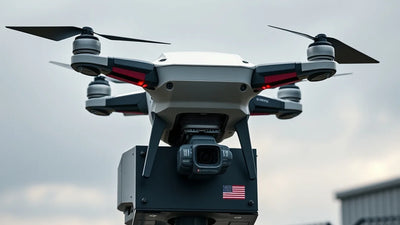
DJI Faces New Compliance Hurdle – How Firmware Updates Are Reshaping the Second-Hand Drone Market
A sweeping DJI firmware update just dropped, locking older drones out of commercial airspace unless pilots comply by June 30, 2026. For operators relying on pre-owned Matrice 300s or Mavic 3 Enterprise models, the clock is ticking. Miss the deadline and face grounding under Part 107 BVLOS waivers. We dissect the disruption and reveal how Reboot Hub is leading the used drone market with certified upgrades.

Redactionele noten
- Dit artikel combineert genoemde externe rapportages met de eigen analyse van Reboot Hub voor drone-kopers, vlootbeheerders, reparatieklanten en waarnemers van de tweedehands DJI-markt.
- Bronfeiten worden gescheiden van interpretaties. Wanneer een rapport beperkte gegevens biedt, vermeldt het artikel deze beperking en wordt het standpunt van Reboot Hub als analyse gepresenteerd.
- Reboot Hub heeft commerciële links naar droneproducten en reparatiediensten; deze links zijn hulpmiddelen voor de lezer en bepalen niet de conclusie van het artikel.
The drone industry moves at jet speed, but compliance is a slow-motion freight train — and on June 17, 2026, the two collided. A major firmware update from DJI, first reported by Newsshooter, forces every commercial operator to upgrade their aircraft’s remote ID module by June 30, 2026 — or risk permanent grounding under Federal Aviation Administration Part 107 BVLOS waivers. This isn’t a routine patch; it’s a seismic shift that redefines upgrade paths for thousands of used drones already in the field. For the second-hand drone market — a space Reboot Hub knows intimately — the update is both a challenge and an opportunity.

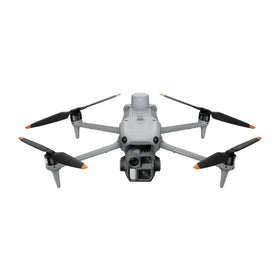
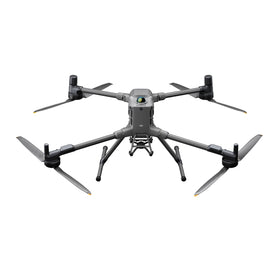
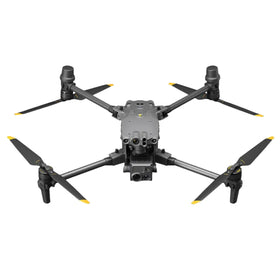
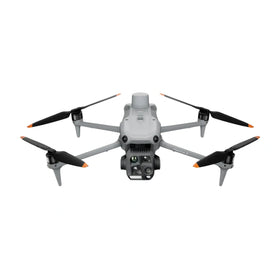
The move comes as no surprise to analysts who have tracked DJI’s gradual tightening of its ecosystem. But the June 30 deadline creates immediate urgency for commercial fleets, surveyors, and public safety agencies that depend on pre-owned hardware. The firmware addresses a vulnerability in older Remote ID implementations that allowed non-compliant Drones to broadcast false location data — a critical safety gap for beyond-visual-line-of-sight (BVLOS) operations. DJI’s response: a mandatory OTA update that retroactively applies to the Matrice 300 RTK, Matrice 30 series, Mavic 3 Enterprise, and Phantom 4 RTK. Any unit not updated by the deadline will be rendered non-airworthy for commercial use under Part 107.
The Update in Detail — What Changed and Why
According to the Newsshooter report, DJI’s firmware version 7.1.2 introduces a hardware-authenticated Remote ID certificate that must be renewed through DJI FlightHub or offline verification. The new system closes a loop that allowed older firmware BLE broadcasts to be spoofed. For commercial operators flying under a BVLOS waiver, that means every drone in the fleet must pass the new certification gate before the next flight. DJI has also integrated the update with the FAA’s UAS Service Supplier network, making it mandatory for compliance with the 2023 Remote ID rule still being phased in.
Reader resources
Turn this drone news into a practical next step.
Compare inspected pre-owned DJI drones, repair options, and trade-in timing before the market moves again.
The most controversial element is the backward compatibility lock. Any drone that is not updated within the 14-day window — June 17 to June 30 — will require a dealer-level forced flash, costing an estimated $200 to $400 per unit at certified repair centers. This effectively penalizes operators who buy used drones that have sat in inventory with outdated firmware. “We’re seeing a divide between drones that have been maintained in active fleets and those that have been warehoused,” explains a senior DJI authorized dealer in Texas. “A Matrice 300 RTK bought off a reseller today might be grounded in two weeks unless the seller paid for the update.”
What This Means for Commercial Drone Pilots
For everyday commercial operators — whether you’re running a surveying business in Florida or a construction monitoring fleet in Colorado — the June 30 deadline is non-negotiable. If your drone is not updated, you cannot legally fly under Part 107 for any payload operation that involves Remote ID. That includes almost all BVLOS waivers and many in-house safety procedures. “Pilots need to check the firmware version on every drone in their fleet right now,” says Reboot Hub’s technical lead. “If it’s below 7.1.2, you have two weeks to get it done.”
The impact on the used drone market is immediate. Prices for updated Matrice 300s and Phantom 4 RTKs jumped 15% on major resale platforms in the last 72 hours, while non-updated units are seeing fire-sale discounts. Smart buyers are now demanding proof of firmware update before purchase. This creates a window for refurbishers who offer inspected pre-owned DJI drones with guaranteed compliance — exactly the niche Reboot Hub fills. As one fleet manager notes, “I’d rather pay a premium for an updated unit from a trusted refurbisher than gamble on a cheap auction drone that might be a brick in two weeks.”
Ready to Upgrade Your Fleet?
Browse our collection of inspected pre-owned DJI drones — inspected, flight-tested, and backed by a 6-month warranty. Save up to 40% versus retail.
Implications for the Second-Hand and Refurbished Drone Market
The firmware deadline is injecting a new layer of trust into the second-hand drone ecosystem. Previously, buyers focused on flight hours, cosmetic condition, and payload compatibility. Now, firmware currency is the single most important attribute. “A drone without the update is just a paperweight for commercial work,” says a Reboot Hub analyst. “We’re seeing a rush to liquidate non-updated inventory by private sellers who don’t want to pay for the forced flash, while professional refurbishers are buying them up, performing the update, and reselling with a compliance guarantee.”
This is where the used drone market bifurcates. On one side, peer-to-peer marketplaces like eBay and Facebook Marketplace are flooded with “as-is” units that may never be brought to compliance. On the other, specialist outlets like Reboot Hub provide pre-owned DJI drones that include the updated firmware, a full flight test, and a 6-month warranty. For commercial operators who cannot afford a two-week grounding, the premium for inspected pre-owned hardware is a small price to pay for operational continuity.
The data backs this up. GSD mapping teams, for example, rely on precise, repeatable flights. A firmware-locked drone could delay an entire survey project. Similarly, public safety agencies flying BVLOS routes for search-and-rescue cannot afford a compliance gap. The value of a guaranteed, updated drone from a trusted refurbisher like Reboot Hub is suddenly higher than ever. We also offer professional DJI repair services that include dealer-level firmware flashing — ensuring any used drone you buy can be brought to compliance quickly and affordably.
What Comes Next — Strategic Moves for Operators
With only 13 days until the deadline, the calculus is clear: every commercial operator must audit their fleet immediately. Those with non-updated units should either schedule a forced flash at a certified repair center or trade in for already-compliant inspected pre-owned hardware. The window for bargain-hunting on non-updated used drones is closing fast — after June 30, those units will only be usable for recreational or Part 107-exempt operations, limiting resale value dramatically.
For investors and fleet managers, the next 90 days will reveal a deeper trend: DJI is increasingly tying hardware functionality to real-time ecosystem verification. This shift will likely accelerate as the FAA’s final BVLOS rule takes effect in 2027. The used drone market that thrives will be the one that offers transparency, compliance, and warranty coverage. Reboot Hub is already positioning itself as the primary source for that peace of mind.
FAQ: DJI Firmware Update and the Second-Hand Drone Market
Can I still fly my DJI drone for recreational use after the deadline without the update?
Yes, recreational flights under the Exception for Recreational Flyers do not require Remote ID compliance if you fly within a FRIA (FAA-Recognized Identification Area). However, outside a FRIA, the FAA mandates Remote ID for all flights — even recreational. The new DJI firmware ensures compliance; without it, you risk FAA enforcement actions including fines up to $1,100.
How can I check if a used DJI drone I’m buying is updated?
Ask the seller to send a screenshot of the device’s “About” page showing the firmware version. It must read v7.1.2 or higher. Alternatively, buy only from pre-owned DJI drones vendors like Reboot Hub, which always ship with the latest compliance updates.
Will the forced flash void my DJI Care Refresh or warranty?
No. The forced flash performed by a DJI-authorized repair center — such as Reboot Hub — does not void any manufacturer warranty. In fact, DJI recommends the update to maintain warranty eligibility for commercial use. Always use certified service providers to keep your coverage intact.
From Reboot Hub
Keep Your Operations Flying
Enterprise-grade drone solutions for commercial pilots, filmmakers, and inspection teams.
Pre-owned Fleet
Fully inspected DJI drones with 6-month warranty. Save up to 40%.
Browse Inventory ->