DJI EV50 Delivery Drone Tested on Everest: What It Means for Operators
DJI successfully tested its EV50 delivery drone on Mount Everest, demonstrating extreme-altitude performance. This signals a leap for high-altitude logistics, fleet planning, and the pre-owned drone market. Discover what this milestone means for buyers and repair services.

DJI’s decision to test its EV50 delivery drone on the slopes of Mount Everest is more than a headline-grabbing stunt. For fleet operators, repair customers, and those watching the pre-owned DJI market, it is a clear signal that high-altitude, high-stakes logistics have entered a new phase. The test, reported by Stuff South Africa, places the EV50 in one of the most punishing environments on Earth—where thin air, extreme cold, and unpredictable winds challenge every component. While specific performance figures were not detailed in the coverage, the very fact that DJI conducted and publicised this trial tells a story of engineering confidence and commercial intent.
For buyers and fleet managers accustomed to operating delivery drones in temperate lowlands, the Everest test might seem distant. But the implications are practical and near-term. Any drone that can endure the Khumbu region’s conditions can likely handle urban or alpine logistics with greater margin. This makes the EV50 an intriguing option for operators who need reliability in tough terrain—whether that means mountainous delivery routes, cold-chain logistics in northern climates, or remote medical supply drops. The test also reinforces DJI’s long-term commitment to cargo drones, which should inform how the second-hand market values older DJI platforms and spare parts inventory.
What this test reveals about DJI’s delivery drone strategy
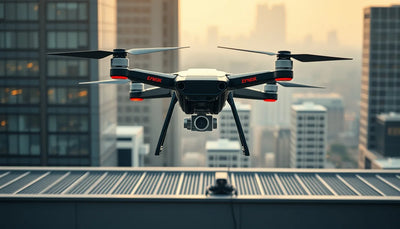
The EV50 is not a consumer model. It is a dedicated cargo drone designed for commercial payloads, and Everest is the ultimate endurance check. The source report confirms that DJI ran the test on Mount Everest, though no specific altitude, flight duration, or payload weight was provided. Still, operating any multirotor above 5,000 metres requires aggressive derating of motors, precise battery thermal management, and flight-control algorithms that compensate for reduced air density. DJI’s willingness to risk a prototype in that environment suggests the EV50 is approaching production readiness. For fleet operators planning expansion into verticals like mining, construction, or emergency delivery, this test reduces uncertainty: a drone that flies on Everest will handle most lower-altitude missions with extra headroom.
DJI buying context
Match product news to hardware you can actually deploy.
Check inspected DJI aircraft, repair support, and trade-in timing before deciding whether to upgrade, repair, or wait.

The choice of Everest also has a public-relations dimension, but it should not be dismissed as mere marketing. A failed test would damage DJI’s reputation in the logistics sector, so the fact that they shared the result implies success. For repair services and spare-part suppliers, a successful extreme-condition test means that genuine OEM parts will become more critical as operators push these drones into harsh environments. Aftermarket or counterfeit components may fail earlier when cold-soaked at altitude, reinforcing the value of professional DJI repair services using authentic spares.
What this means for drone buyers
If you are evaluating delivery drones for your fleet, the Everest test should shift your criteria. The EV50’s ability to function at extreme altitude is a proxy for overall build quality, thermal management, and motor reliability. Buyers should ask manufacturers not just for range and payload tables but for environmental stress-test data. DJI has effectively set a benchmark. Competing platforms that lack similar high-altitude validation will need to demonstrate their own ruggedness, which may take time. In the short term, operators who need a proven heavy-lift drone for difficult terrain may find the EV50 an attractive option once it becomes commercially available—likely through DJI’s enterprise channels or authorised dealers. Those buying into the DJI ecosystem now should plan for the EV50’s eventual impact on residual values of older delivery drones. As newer, more capable models enter the field, pre-owned DJI drones that cannot match altitude performance may see faster depreciation. A prudent move is to keep your current fleet well maintained with genuine OEM spare parts to maximise trade-in value when you upgrade. Consider using a drone trade-in guide to time your transition.
Implications for the pre-owned DJI market and repair ecosystem
News of the Everest test will influence secondary market valuations. High-altitude certification, even anecdotally, adds a premium to any drone. Pre-owned DJI drones that have been operated in controlled environments and maintained with OEM-pulled parts will hold value better than units with uncertain histories. However, the EV50 itself is not yet available on the second-hand market. That means current owners of Matrice and M200/300 series platforms should not panic-sell. Instead, note that DJI is investing heavily in delivery drones—a sign that the commercial drone market is maturing. As more enterprise models are released, the supply of pre-owned units from earlier generations will increase, potentially lowering prices for budget-conscious buyers. For repair shops, the Everest test underscores the importance of using genuine components. A repair that uses aftermarket motors or ESCs may compromise altitude performance, especially in cold conditions. Fleet managers should demand that any repair done on their drones uses parts that meet DJI’s original specifications. Our professional DJI repair services can help ensure your drones are returned to factory-standard condition, which is particularly important if you plan to operate in demanding environments or resell your assets later.
Practical steps for fleet operators after the Everest news
What should a buyer, pilot, or repair customer do differently after reading this? First, review your current drone’s operational limits. If you fly in mountainous regions, cold climates, or at elevations above 3,000 metres, your drone may already be near its performance ceiling. Use the EV50 test as a prompt to recalibrate your flight planning and battery management. Second, when budgeting for future fleet expansion, include a line item for ruggedised models like the EV50 rather than assuming any mid-range delivery drone will suffice. Third, if you rely on pre-owned DJI drones, verify that any unit you purchase has a documented service history and has not been exposed to extreme conditions that could have caused latent damage. A well-maintained pre-owned drone can still deliver excellent value, but only if its components are genuine and its flight logs are clean. Finally, talk to your repair partner about upgrading critical parts—such as motors and ESCs—if you intend to fly at high altitude. A professional tune-up before the season can prevent costly in-flight failures. The Everest test is a reminder that even the most reliable mass-produced drones benefit from expert maintenance and OEM-pulled spare parts.
Is the DJI EV50 available for purchase now?
The source report does not indicate a commercial release date for the EV50. The Everest test suggests it is in advanced development, but DJI has not announced general availability. Operators interested in the platform should monitor DJI’s enterprise announcements and prepare their fleet budgets for a possible 2027 launch.
Can lower-altitude drones be flown on Everest after this test?
No. The EV50 is a specially designed cargo drone. Standard consumer or prosumer DJI models do not have the power-to-weight ratio, thermal management, or propeller efficiency required for 8,000-metre altitudes. Attempting to fly a Mavic or Mini on Everest would result in immediate loss of lift and control. The test does not imply that all DJI drones can now operate at extreme altitude; only that the EV50 platform has been validated for that environment.
How does this affect the value of my current pre-owned DJI drone?
In the near term, the Everest test primarily impacts the perception of DJI’s delivery drone line. Older enterprise drones like the Matrice 300 RTK may see slightly decreased demand if buyers hold out for the EV50. However, for now, those older platforms remain capable workhorses for many missions. To protect your asset value, maintain your drone with genuine OEM spare parts and keep thorough maintenance records. When you decide to upgrade, a well-documented pre-owned DJI drone will command a better price.