Dazzle Paint vs. AI Drones: Russia's Analog Trick to Confuse Machine Vision
Russia is deploying World War I-era "dazzle" camouflage on military trucks to fool AI-enabled drone targeting systems. This article analyzes the technical battle between analog deception and autonomous machine vision, exploring implications for counter-drone tactics, commercial UAV operators navigating restricted airspace under FAA Part 107, and the evolving threat landscape that is reshaping the used drone market and fleet upgrade cycles.

Redactionele noten
- Dit artikel combineert genoemde externe rapportages met de eigen analyse van Reboot Hub voor drone-kopers, vlootbeheerders, reparatieklanten en waarnemers van de tweedehands DJI-markt.
- Bronfeiten worden gescheiden van interpretaties. Wanneer een rapport beperkte gegevens biedt, vermeldt het artikel deze beperking en wordt het standpunt van Reboot Hub als analyse gepresenteerd.
- Reboot Hub heeft commerciële links naar droneproducten en reparatiediensten; deze links zijn hulpmiddelen voor de lezer en bepalen niet de conclusie van het artikel.
In a tactical evolution that reads like a Cold War-era science fiction plot, Russia has begun applying "dazzle" camouflage-a disruptive paint scheme originally used on battleships in World War I-to its military trucks in an effort to confuse the machine-vision targeting systems of AI-enabled drones. The development, first reported by The War Zone on June 2, 2026, signals a new chapter in the escalating electronic warfare and counter-drone arms race unfolding on battlefields from Eastern Europe to the Middle East.
For commercial drone operators, defense analysts, and second-hand market assessors at Reboot Hub, this is not merely a historical curiosity. It is a stark indicator of how rapidly drone technology-and the countermeasures against it-are evolving. The implications for flight safety, airspace management, and the valuation of drone hardware are profound. As autonomous systems become cheaper and more accessible, the methods used to defeat them are growing more sophisticated, and sometimes, more primitive.
The Return of Razzle Dazzle
Dazzle camouflage, also known as "razzle dazzle," does not attempt to hide a vehicle. Instead, it uses high-contrast geometric patterns-bold stripes, jagged angles, and intersecting shapes-to break up the visual outline of an object. This makes it difficult for an observer (or a camera) to accurately judge the object's speed, direction, distance, and orientation. For a human eye, it is disorienting. For an AI-powered object detection algorithm, it can be catastrophic.
Fleet readiness
Keep DJI hardware available without overbuying new units.
Use this news as a planning signal for inspected DJI aircraft, repair support, and trade-in timing.
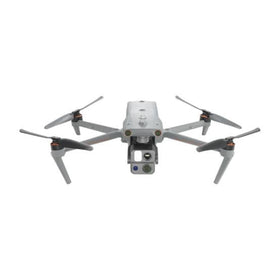
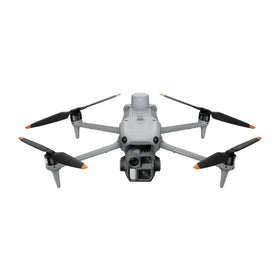
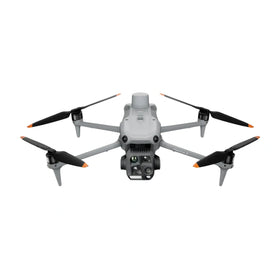
Modern machine-vision systems used on drones-such as those found on the DJI Mavic 3 Enterprise or Autel EVO Max 4T-rely on convolutional neural networks (CNNs) trained on thousands of labeled images of military vehicles. These algorithms identify targets by recognizing edges, shadows, and specific geometric shapes. Dazzle patterns are designed to break those edges, introduce false contours, and create visual noise that degrades the AI's confidence score below the threshold required for autonomous targeting or tracking.
"This is a direct attack on the data pipeline," explains Dr. Elena Vasquez, a computer vision researcher at the University of Texas. "If you can't reliably segment the target from the background, your tracking loop fails. The drone either loses lock or locks onto a false positive."
Early field reports from the conflict in Ukraine suggest that dazzle-painted trucks have experienced a measurable reduction in successful drone strikes. While not a silver bullet, the technique offers a low-cost, low-tech countermeasure that can be applied with spray paint and stencils, making it highly scalable for logistics units that cannot afford electronic warfare jammers or decoy systems.
What Does This Mean for Commercial Drone Operators?
For the average commercial drone pilot flying under FAA Part 107 in the United States, or under EASA regulations in Europe, the dazzle paint debate may seem irrelevant. But it is not. The same machine-vision algorithms that are being fooled by paint are the backbone of modern autonomous flight features, including obstacle avoidance, precision landing, and terrain following.
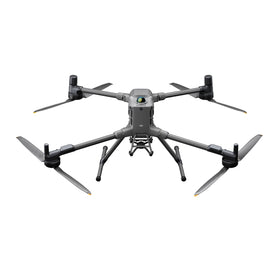
If military forces are actively developing countermeasures that degrade these algorithms, it raises a critical question: How robust are the sensors and software on your drone? A DJI Matrice 350 RTK performing a BVLOS powerline inspection relies on its forward-facing stereo cameras to detect and avoid unexpected obstacles, such as birds, wires, or construction cranes. If a simple paint job can confuse that system, what happens when a drone encounters a deliberately deceptive structure, such as a tower painted with dazzle patterns to deter bird strikes?
This is not a hypothetical. In early 2026, a series of incidents near restricted military airspace in the United States saw civilian drones losing GPS lock and entering ATTI mode after flying near painted radar domes. While the cause was likely RF interference, the visual confusion added to the risk. For operators, the lesson is clear: rely on redundant sensor systems (LIDAR, RTK, IMU) and do not assume that optical cameras are infallible.
Ready to Upgrade Your Fleet?
Browse our collection of inspected pre-owned DJI drones - inspected, flight-tested, and backed by a 6-month warranty. Save up to 40% versus retail.
The Second-Hand Drone Market Implications
At Reboot Hub, we track the pulse of the used drone market daily. The dazzle paint development has a direct impact on how we assess the value of certain drone models. Here is why.
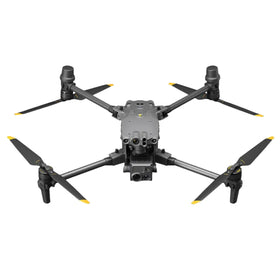
Drones that rely heavily on optical object detection-such as older DJI Phantom 4 Pro V2.0 units or entry-level Mavic Air 2S platforms-are becoming less desirable for military and government buyers who require robust autonomous targeting. Conversely, drones equipped with LIDAR, thermal imaging, or multi-spectral sensors that do not depend on visible-light CNNs are retaining their value better. The DJI Matrice 300 RTK with a Zenmuse H20T payload, for example, uses thermal and laser rangefinding in addition to optical cameras, making it inherently more resistant to visual deception.
We are already seeing a shift in the secondary market. In Q1 2026, prices for high-end enterprise drones (Matrice 350 RTK, Autel EVO Max 4T) rose by 6-8% compared to Q4 2025, while consumer-grade drones with basic obstacle avoidance dropped by 3-5%. The reason is clear: serious operators are investing in sensor redundancy. They want platforms that can operate in degraded visual environments (DVE) and are less susceptible to countermeasures like dazzle paint, smoke screens, or laser dazzlers.
For the budget-conscious operator, this trend means that now is an excellent time to buy a slightly older but sensor-rich platform. A refurbishment-labeled DJI Matrice 210 V2, for instance, offers dual downward vision sensors, an upward infrared sensor, and IP43 ingress protection-all for under $4,000. In contrast, a new consumer drone with similar optical-only obstacle avoidance might cost $2,500 but offers no path to upgrade to LIDAR or thermal. The long-term value proposition is shifting in favor of enterprise-grade hardware.
Counter-Countermeasures: The Next Frontier
As soon as dazzle paint became a known tactic, drone software developers began working on counter-countermeasures. The most promising approach involves training AI models on synthetic images of dazzle-painted vehicles. By augmenting training datasets with digitally generated dazzle patterns, engineers can teach the neural network to ignore the visual noise and focus on invariant features such as wheelbase length, engine heat signature, or the unique reflection pattern of a windshield.
Companies like Shield AI and Anduril are already incorporating adversarial training into their computer vision pipelines. The U.S. Department of Defense's Joint Artificial Intelligence Center (JAIC) released a white paper in March 2026 detailing "adversarial patch detection" algorithms designed to identify and filter out painted patterns before they reach the targeting system. This is a cat-and-mouse game that will only intensify.
For the commercial sector, this arms race has a silver lining. The same adversarial training techniques that make military drones more resilient will eventually trickle down to enterprise products. In the next 12-18 months, we expect DJI, Autel, and Skydio to release firmware updates that improve obstacle avoidance performance in low-contrast or deliberately deceptive environments. For now, however, operators should be cautious when flying near any structure with bold, unnatural patterns-including new construction scaffolding, billboards, or even certain types of solar farms.
Regulatory and Safety Implications
The use of dazzle paint also raises questions about airspace safety and regulatory compliance under FAA Part 107. If a drone loses visual lock on a target and enters an uncontrolled descent or flyaway, the pilot is ultimately responsible. The FAA has not yet issued any guidance specifically addressing dazzle paint, but the agency's general stance on "reckless operation" (14 CFR - 107.23) could apply if a pilot knowingly flies over an area where visual deception is being used.
Furthermore, the rise of autonomous drone swarms-both military and commercial-means that the failure of a single sensor can cascade into a multi-vehicle collision. The U.S. Army's recent tests of the Air Launched Effects (ALE) program demonstrated that a dazzle-painted decoy could cause an entire swarm to break formation and pursue a false target. For commercial swarm operators (e.g., agricultural spraying or large-scale mapping), this is a critical risk factor that must be mitigated through redundant communication links and fail-safe geofencing.
At Reboot Hub, we strongly recommend that all commercial operators review their operational risk assessments to include "visual deception" as a potential hazard, especially when flying near military installations, industrial sites, or areas with known electronic warfare activity. If your drone relies solely on optical flow for positioning, consider upgrading to a platform with RTK or PPK capabilities.
Market Trends and the Future of Counter-Drone
The dazzle paint development is part of a broader trend: the democratization of counter-drone technology. Just as drones themselves have become cheaper and more accessible, so have the tools to defeat them. A can of spray paint and a stencil can now neutralize a $50,000 military drone. This has profound implications for the defense industry, which has invested billions in electronic jammers, directed energy weapons, and net guns.
For the commercial second-hand market, this means that the value of a drone is no longer determined solely by its camera resolution or flight time. Increasingly, it is determined by its resistance to countermeasures. Drones that can be easily spoofed, jammed, or visually confused will depreciate faster. Drones that offer multi-modal sensing, encrypted data links, and autonomous recovery modes will hold their value.
If you are looking to upgrade your fleet to a more resilient platform, Reboot Hub offers pre-owned DJI drones that have been thoroughly tested for sensor accuracy and firmware integrity. We also provide professional DJI repair services using genuine parts, ensuring your equipment remains reliable even in challenging operational environments.
Frequently Asked Questions
Can dazzle paint really fool AI-powered drones?
Yes, early field evidence suggests that high-contrast geometric patterns can degrade the confidence scores of convolutional neural networks used in object detection. While not foolproof, dazzle paint can cause a drone to lose lock or misidentify a target, especially in low-light or fast-moving scenarios.
Should commercial drone pilots be concerned about dazzle paint?
Indirectly, yes. The same machine-vision algorithms used for military targeting are also used for obstacle avoidance and precision landing on many commercial drones. Flying near structures with bold, disruptive patterns could trigger false positives or sensor errors. Pilots should rely on redundant systems (RTK, LIDAR) when possible.
How does this affect the second-hand drone market?
Drones with optical-only vision systems are depreciating faster, while multi-sensor platforms (LIDAR, thermal, RTK) are retaining or increasing in value. Buyers should prioritize sensor redundancy and upgradeability when purchasing used equipment.
--
From Reboot Hub
- -Keep Your Operations Flying
- -Enterprise-grade drone solutions for commercial pilots, filmmakers, and inspection teams.
- -Pre-owned Fleet
- - - -Fully inspected DJI drones with 6-month warranty. Save up to 40%.
- - - - Browse Inventory -> - - -Expert Repair
- - - -Professional diagnostics with genuine OEM parts. Same-day estimates.
- - - - Book a Repair -> - - -Spare Parts
- - - -Batteries, propellers, gimbals -- premium OEM components, fast shipping.
- - - - Shop Parts -> - - -