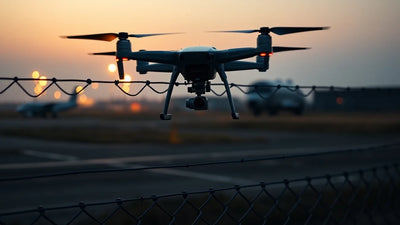
Autel Fights Back: FCC Covered List Challenge Reveals Industry Divide
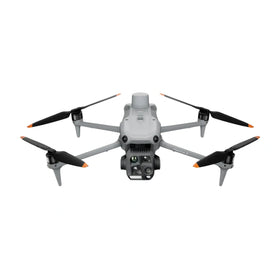
Autel Robotics is pushing back hard against the FCC’s decision to place its drones on the Covered List, arguing the agency relied on broad assumptions rather than company-specific evidence. The filing marks a significant escalation in the regulatory battle over Chinese-made drones and signals a strategic effort by Autel to separate itself from DJI. Here’s what this means for the commercial drone market and second-hand buyers.

Redactionele noten
- Dit artikel combineert genoemde externe rapportages met de eigen analyse van Reboot Hub voor drone-kopers, vlootbeheerders, reparatieklanten en waarnemers van de tweedehands DJI-markt.
- Bronfeiten worden gescheiden van interpretaties. Wanneer een rapport beperkte gegevens biedt, vermeldt het artikel deze beperking en wordt het standpunt van Reboot Hub als analyse gepresenteerd.
- Reboot Hub heeft commerciële links naar droneproducten en reparatiediensten; deze links zijn hulpmiddelen voor de lezer en bepalen niet de conclusie van het artikel.
On May 19, 2026, the commercial drone industry finds itself at a pivotal crossroads. Autel Robotics, one of the world’s largest drone manufacturers, has formally challenged the Federal Communications Commission’s (FCC) decision to place its products on the agency’s Covered List. In a sharply worded filing, the company argues that the FCC relied on broad, sweeping assumptions about Chinese-made telecommunications equipment rather than conducting a company-specific analysis of Autel’s operations and supply chains.
This regulatory confrontation is more than a legal spat. It represents a defining moment for the entire unmanned aerial systems (UAS) ecosystem, especially as the U.S. government continues to tighten restrictions on foreign-made drones. For commercial operators, enterprise fleet managers, and even hobbyists, the outcome of this challenge could reshape which drones are legally operable in the United States and how the secondary market for used equipment evolves.
Autel’s filing is particularly notable for what it does not do: it does not defend DJI. Instead, the company goes out of its way to distance itself from its larger Chinese rival, emphasizing that it operates with different supply chains, different software architecture, and a different corporate governance structure. This is a calculated move—one that seeks to preserve Autel’s access to the lucrative U.S. market while acknowledging the political reality that Chinese-made drones are under unprecedented scrutiny.
Operator checklist
Turn policy news into a safer fleet decision.
Before changing aircraft, compare repair paths, available DJI inventory, and trade-in timing against the rule change.

The FCC Covered List: What It Means for Drone Operators
The FCC’s Covered List is a formal designation that prohibits the use of federal funds to purchase or lease covered telecommunications equipment and services. For drones, this means that any model placed on the list cannot be sold to U.S. government agencies, including federal, state, and local law enforcement, fire departments, and public safety organizations. While the list does not immediately ban private ownership or commercial use, it creates a powerful chilling effect that cascades through the entire supply chain.
Autel’s inclusion on the Covered List was announced in early 2026, following a broader FCC review of Chinese-manufactured drone equipment. The agency cited national security concerns, including the potential for data exfiltration and remote control by foreign adversaries. However, Autel’s legal team argues that the FCC failed to provide any specific evidence linking Autel’s products to such risks. The filing states that the agency “relied on broad assumptions about Chinese companies generally, rather than conducting a company-specific analysis of Autel Robotics.”

This argument is not without precedent. In previous cases, U.S. courts have pushed back against government agencies that impose sweeping restrictions without individualized findings. If Autel succeeds, it could set a legal precedent that forces the FCC to conduct more rigorous evaluations before adding companies to the Covered List. For drone pilots, that could mean a more predictable regulatory environment—one where clear, evidence-based standards replace blanket prohibitions.
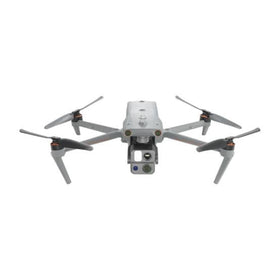
However, the immediate impact is already being felt. Public safety agencies that had invested in Autel’s EVO Max 4T and EVO II series drones are now uncertain about their ability to continue using them for federally funded operations. Some departments are pausing new purchases, while others are exploring alternative platforms. This uncertainty is also rippling into the second-hand market, where prices for used Autel drones have softened as buyers worry about future regulatory constraints.

For commercial operators who rely on Autel drones for mapping, inspection, and surveying, the situation is less dire but still concerning. While the Covered List does not prohibit private sales or commercial use, it does create reputational risk. Clients who work with federal contractors may begin to ask questions about the provenance of the drones being used on their projects. Over time, this could push some operators toward platforms with clearer regulatory standing.
Autel’s Strategic Pivot: Distancing from DJI
Ready to Upgrade Your Fleet?
Browse our collection of inspected pre-owned DJI drones — inspected, flight-tested, and backed by a 6-month warranty. Save up to 40% versus retail.
Perhaps the most strategically significant aspect of Autel’s filing is its explicit effort to separate itself from DJI. The document notes that Autel has “different corporate ownership, different supply chains, and different software architectures” than its larger competitor. This is a clear acknowledgment that the regulatory environment has shifted dramatically, and that guilt by association with DJI is a real business risk.
Ready to Upgrade Your Fleet?
Browse our collection of inspected pre-owned DJI drones — inspected, flight-tested, and backed by a 6-month warranty. Save up to 40% versus retail.
Autel’s strategy is not without risk. By publicly distancing itself from DJI, the company is implicitly validating the premise that some Chinese-made drones pose security risks. This could backfire if the FCC or other agencies decide that Autel’s own supply chains are not sufficiently transparent. Nevertheless, the move reflects a pragmatic calculation: the U.S. market is too important to lose, and the political environment is unlikely to change in the near term.
For drone pilots, this strategic pivot creates an interesting dynamic. On one hand, Autel is positioning itself as a more compliant alternative to DJI, which could lead to increased market share among government and enterprise buyers. On the other hand, the legal uncertainty surrounding the Covered List challenge means that any investment in Autel hardware today carries a degree of regulatory risk. Operators should closely monitor the progress of this case before committing to large fleet purchases.
Market Impact: The Ripple Effect on Second-Hand and Refurbished Drones
One of the most immediate consequences of the FCC’s Covered List designation is its impact on the used drone market. When a manufacturer is placed on the list, demand for new units from government buyers collapses, but existing units still need to find homes. This often leads to a flood of lightly used equipment entering the secondary market at discounted prices.
However, the calculus for second-hand buyers is more complex. A drone that is on the Covered List may be perfectly legal for private and commercial use today, but future regulations could change that. For example, the FCC could extend the list to include restrictions on private sales, or state and local governments could independently ban the use of listed equipment. Buyers in the used market must weigh these risks against the potential savings.
At Reboot Hub, we have observed a slight softening in prices for used Autel drones over the past several weeks, particularly for the EVO II Pro and EVO Max series. Sellers are eager to liquidate inventory before potential further restrictions, while buyers are adopting a wait-and-see approach. This dynamic creates opportunities for informed buyers who understand the regulatory landscape and are willing to accept some uncertainty in exchange for a discount.
For operators who are risk-averse, the safer play remains DJI equipment that is already well-established in the market. DJI’s dominance means that even if regulatory scrutiny intensifies, there is a vast ecosystem of parts, repair services, and resale channels. At Reboot Hub, we offer a wide selection of pre-owned DJI drones that have been thoroughly inspected and flight-tested, providing peace of mind for commercial operators who cannot afford regulatory surprises.
Additionally, the ongoing uncertainty around Autel’s legal status underscores the importance of having access to reliable professional DJI repair services. When regulatory winds shift, the ability to maintain and extend the life of existing equipment becomes a critical competitive advantage. Our repair center uses only genuine parts and employs certified technicians, ensuring that your fleet remains operational regardless of what happens in Washington.
What Comes Next: Timeline and Potential Outcomes
The FCC has 30 days to respond to Autel’s filing, which means a decision could come as early as mid-June 2026. If the agency denies the challenge, Autel could appeal to the U.S. Court of Appeals, a process that could take months or even years. Alternatively, the FCC could agree to reconsider its decision and conduct a more thorough company-specific review. In that scenario, Autel would be required to open its supply chains and software architecture to government auditors—a process that DJI has consistently resisted.
For the broader drone industry, this case is being watched closely. A victory for Autel could encourage other Chinese manufacturers, such as Hubsan or Yuneec, to challenge their own Covered List designations. A defeat, however, would solidify the FCC’s authority to impose broad restrictions and could accelerate efforts to ban Chinese-made drones entirely from U.S. airspace.
Legislatively, the Drone Security Act, which has been introduced in Congress, would codify many of the FCC’s current restrictions into law and expand them to cover private sales. While the bill has not yet passed, its bipartisan support suggests that the trend toward greater restrictions is unlikely to reverse. Drone operators should prepare for a future in which the regulatory landscape is more fragmented, with different rules for different manufacturers and different use cases.
In the meantime, the safest strategy for commercial operators is to diversify their fleets. Relying on a single manufacturer—especially one that is subject to regulatory uncertainty—creates operational risk. By maintaining a mix of platforms, including DJI drones that have a proven track record and a robust support ecosystem, operators can hedge against sudden regulatory changes.
Frequently Asked Questions
Does the FCC Covered List ban private ownership of Autel drones?
No. The Covered List currently only restricts the use of federal funds to purchase covered equipment. Private ownership and commercial use are still legal, although future regulations could expand these restrictions. Operators should monitor the FCC’s actions closely and consult with legal counsel if they have specific concerns.
Can I still buy a used Autel drone on the secondary market?
Yes, but with caution. The secondary market for Autel drones is currently experiencing price softening due to regulatory uncertainty. Buyers should verify the drone’s history, ensure it has not been reported stolen, and consider the potential for future restrictions before making a purchase. At Reboot Hub, we offer pre-owned DJI drones as a more stable alternative.
What should I do if I currently operate an Autel drone for commercial work?
Continue operating as normal, but begin planning for potential contingencies. Consider diversifying your fleet with platforms that have clearer regulatory standing. If you work with federal contractors, proactively communicate with your clients about the equipment you use. And ensure your existing drones are well-maintained by a professional DJI repair service to maximize their lifespan.
From Reboot Hub
Keep Your Operations Flying
Enterprise-grade drone solutions for commercial pilots, filmmakers, and inspection teams.
Pre-owned Fleet
Fully inspected DJI drones with 6-month warranty. Save up to 40%.
Browse Inventory ->