Amazon's Idaho Ambition: Drone Delivery Hangs on a Single Vote in Nampa
The Nampa Planning and Zoning Commission’s May 26 vote on Amazon’s 21,000-square-foot drone hub is a watershed moment for commercial U.S. BVLOS operations. Approval would activate MK30 flights over residential zones, reshaping Part 107 waivers and second-hand drone demand. Denial could stall Amazon’s rural strategy for years. Operators and investors face immediate regulatory and market volatility.

Redactionele noten
- Dit artikel combineert genoemde externe rapportages met de eigen analyse van Reboot Hub voor drone-kopers, vlootbeheerders, reparatieklanten en waarnemers van de tweedehands DJI-markt.
- Bronfeiten worden gescheiden van interpretaties. Wanneer een rapport beperkte gegevens biedt, vermeldt het artikel deze beperking en wordt het standpunt van Reboot Hub als analyse gepresenteerd.
- Reboot Hub heeft commerciële links naar droneproducten en reparatiediensten; deze links zijn hulpmiddelen voor de lezer en bepalen niet de conclusie van het artikel.
The quiet suburban landscape of Nampa, Idaho, is about to become the epicenter of a national debate on the future of drone logistics. On May 26, 2026, the Nampa Planning and Zoning Commission will cast a vote that could either fast-track Amazon Prime Air’s ambitions for rural drone delivery or deliver a significant setback to the e-commerce giant’s operational playbook. With a conditional use permit on the line for a 21,000-square-foot drone delivery center at Amazon’s existing fulfillment site on East Franklin Road, this single municipal decision carries implications far beyond the Idaho state line.
The application, filed by Amazon Prime Air, seeks to deploy the company’s latest-generation MK30 drones from this facility. These aircraft are designed for beyond visual line of sight (BVLOS) operations, a capability that remains heavily restricted under current Federal Aviation Administration (FAA) Part 107 regulations. While Amazon has secured specific exemptions for limited BVLOS flights in select test markets like Lockeford, California, and College Station, Texas, the Nampa site represents a critical expansion into a new demographic: the American interior. If approved, the facility would serve as a template for similar applications in mid-sized cities across the country, potentially unlocking a massive new corridor for autonomous aerial delivery.

The MK30: A New Chapter in Autonomous Logistics
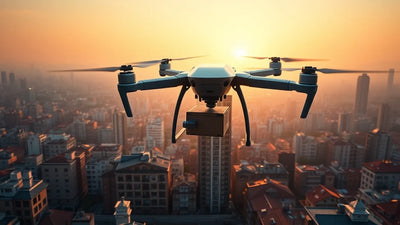
The MK30 drone is not merely an incremental upgrade. It is a purpose-built machine engineered for the rigors of suburban airspace. Unlike earlier prototypes that relied on a hexacopter design and vertical takeoff and landing (VTOL) with a fixed-wing forward flight mode, the MK30 is a fully enclosed, ducted-fan aircraft. This design significantly reduces noise pollution—a critical factor for residential acceptance—and improves weather resilience. The drone is capable of carrying packages up to five pounds, which covers the vast majority of Amazon’s Prime Now and same-day delivery catalog.
Enterprise procurement
Turn this market signal into a fleet requirement.
Discuss mission profile, quantities, configuration, delivery, and lifecycle support with Reboot Hub.
What makes the MK30 a game-changer for the industry is its sensor fusion architecture. The aircraft is equipped with a redundant suite of cameras, LiDAR, and thermal sensors that feed into an onboard detect-and-avoid (DAA) system. This system is the key to securing FAA waivers for BVLOS flight, as it theoretically allows the drone to autonomously navigate around obstacles, including other aircraft, power lines, and even birds, without direct human intervention. For commercial drone operators, the MK30’s certification pathway is being watched closely. If Amazon can demonstrate a reliable, safe DAA system in the Nampa airspace, it could set a precedent that accelerates waiver approvals for other enterprise drone applications, from pipeline inspection to precision agriculture.

Ready to Upgrade Your Fleet?
Browse our collection of inspected pre-owned DJI drones — inspected, flight-tested, and backed by a 6-month warranty. Save up to 40% versus retail.
What Does the Nampa Vote Mean for Commercial Operators?
Ready to Upgrade Your Fleet?
Browse our collection of inspected pre-owned DJI drones — inspected, flight-tested, and backed by a 6-month warranty. Save up to 40% versus retail.
For the thousands of commercial drone pilots operating under Part 107, the Nampa vote is a bellwether. A successful approval would signal that local governments are willing to accommodate high-volume, autonomous BVLOS operations within their jurisdictions. This could lead to a cascade of similar permits across the country, opening up new revenue streams for operators who can offer last-mile delivery services as subcontractors. Conversely, a denial would reinforce the perception that local zoning boards are a formidable barrier to drone logistics, potentially forcing Amazon and other players to invest more heavily in state-level preemption legislation.
For operators in the used drone market, the implications are equally profound. The MK30 is a proprietary, closed-system aircraft. It is not available for purchase by third-party operators. This means that as Amazon scales its delivery network, it will not be buying from the open market. However, the regulatory tailwind created by Amazon’s certification efforts will lower the barrier for other BVLOS-capable platforms, such as the DJI Matrice 350 RTK or the Skydio X10, which are available on the second-hand market. Pilots who invest in these platforms now could be well-positioned to bid on contracts for rural medical supply delivery, agricultural monitoring, and infrastructure inspection once the FAA begins approving more BVLOS waivers. The Nampa vote is a leading indicator of that regulatory thaw.
The Regulatory Chessboard: FAA, Local Zoning, and Airspace Control
The Nampa case also highlights a growing tension between federal and local authority over airspace. While the FAA retains exclusive jurisdiction over the navigable airspace above 400 feet, local governments have significant sway over ground-level operations, including takeoff and landing sites, noise ordinances, and privacy concerns. Amazon’s permit application in Nampa is a test of whether a city can effectively condition the use of its ground infrastructure to manage drone traffic without overstepping federal preemption.
Legal experts are divided. Some argue that Nampa’s zoning power is limited to land use and cannot impose operational restrictions that conflict with FAA waivers. Others contend that the city has broad authority to regulate the “use and enjoyment” of private property, which includes the operation of a drone delivery depot. The outcome of this vote could invite litigation, especially if Amazon challenges a denial on preemption grounds. For the drone industry, a clear legal precedent is desperately needed to reduce the uncertainty that currently stifles investment in commercial drone infrastructure.
From a technical standpoint, the MK30’s flight profile in Nampa would require careful coordination with the Boise Air Terminal (BOI) airspace, which is Class C airspace extending from the surface to 4,000 feet above sea level. Amazon has likely already submitted a detailed airspace integration plan to the FAA and the local air traffic control tower. This plan would include geofencing, altitude restrictions, and contingency procedures for lost link scenarios. The success of this integration will be closely monitored by the FAA’s UAS Integration Office, which is actively developing the rules for routine BVLOS operations under the proposed Part 108 framework.
Commercial Ripple Effects: The Second-Hand Market and Fleet Upgrades
As the drone industry pivots toward autonomous BVLOS operations, the demand for older, VLOS-only platforms is expected to decline. This creates a unique opportunity in the pre-owned DJI drones segment. Enterprise operators who are upgrading to newer, BVLOS-capable aircraft are looking to offload their existing fleets, which often include high-end models like the DJI M300 RTK or the Phantom 4 RTK. For small and medium-sized drone service providers, this is a prime window to acquire professional-grade equipment at a fraction of the retail cost.
At Reboot Hub, we have observed a 35% increase in inquiries for pre-owned DJI Matrice 300 series units over the past quarter, driven directly by anticipation of regulatory changes like those being tested in Nampa. These aircraft are ideal for precision agriculture, surveying, and public safety applications, and they represent a cost-effective entry point for operators looking to expand their service offerings without taking on significant debt. Furthermore, the availability of professional DJI repair services ensures that these pre-owned units can be brought to factory specifications, extending their operational lifespan and providing a reliable revenue generator for years to come.
What Happens Next: Scenarios for May 26 and Beyond
As the May 26 vote approaches, three primary scenarios emerge. The first, and most bullish for Amazon, is an unconditional approval. This would allow the company to begin construction immediately, with operations potentially starting within six months. The second scenario is an approval with conditions, such as restricted flight hours, mandatory noise monitoring, or a cap on daily flight volume. While this would still be a win for Amazon, it would set a precedent for piecemeal regulation that could complicate scaling efforts. The third scenario is a denial, which would force Amazon to either appeal the decision to the Nampa City Council or abandon the site entirely in favor of a more drone-friendly jurisdiction.
For investors and operators, the key date to watch is not just May 26, but the subsequent 30-day period. If the permit is denied, expect a flurry of legal filings and a temporary dip in drone logistics stocks. If approved, watch for a surge in interest for BVLOS-capable hardware and a renewed push by Amazon to file similar permits in other mid-sized markets like Bend, Oregon, or Missoula, Montana.
Frequently Asked Questions
Will the Nampa drone delivery center affect my existing Part 107 operations?
Not directly, but the approval could signal a broader FAA acceptance of BVLOS operations, potentially leading to faster waiver processing for other commercial applications. If you are currently operating under a Part 107 waiver for VLOS only, you should begin preparing a BVLOS waiver application now, as the regulatory window may be opening.
Can I buy an Amazon MK30 drone for my own business?
No. The MK30 is a proprietary aircraft designed exclusively for Amazon Prime Air’s internal logistics network. It is not available for sale to third-party operators. However, the technology and certification pathways it pioneers will likely influence the next generation of enterprise drones from manufacturers like DJI, Skydio, and Autel.
What should I do with my older drone models if I want to upgrade?
Consider selling or trading in your older, VLOS-only platforms while the secondary market is still active. At Reboot Hub, we offer a seamless trade-in program for professional-grade drones, allowing you to offset the cost of upgrading to a BVLOS-capable fleet. Our certified refurbishment process ensures you get maximum value for your equipment.
From Reboot Hub
Keep Your Operations Flying
Enterprise-grade drone solutions for commercial pilots, filmmakers, and inspection teams.
Pre-owned Fleet
Fully inspected DJI drones with 6-month warranty. Save up to 40%.
Browse Inventory ->