ACS Raises $200M for Autonomous Counter-Drone Weapon – What It Means for Drone Operators
Allen Control Systems just landed $200M to scale Bullfrog, an AI-driven autonomous weapon station that tracks and neutralizes rogue drones at machine speed. For commercial Part 107 operators, this signals imminent airspace restrictions near critical infrastructure, skyrocketing insurance premiums, and potential BVLOS route redesigns. Reboot Hub analyzes how this defense breakthrough reshapes the used drone market and fleet upgrade strategies.

Redactionele noten
- Dit artikel combineert genoemde externe rapportages met de eigen analyse van Reboot Hub voor drone-kopers, vlootbeheerders, reparatieklanten en waarnemers van de tweedehands DJI-markt.
- Bronfeiten worden gescheiden van interpretaties. Wanneer een rapport beperkte gegevens biedt, vermeldt het artikel deze beperking en wordt het standpunt van Reboot Hub als analyse gepresenteerd.
- Reboot Hub heeft commerciële links naar droneproducten en reparatiediensten; deze links zijn hulpmiddelen voor de lezer en bepalen niet de conclusie van het artikel.
On June 8, 2026, Allen Control Systems (ACS) announced a $200 million Series C funding round to scale manufacturing and accelerate deployment of its autonomous counter-drone weapon station, Bullfrog. The system, which uses computer vision and AI to autonomously track and disable hostile drones, represents a paradigm shift in airspace security. For the commercial drone industry already navigating FAA Part 107 waivers, BVLOS corridors, and 44807 exemptions, the rise of autonomous counter-drone systems like Bullfrog introduces a new layer of operational risk and regulatory complexity.

The $200M Bet: Autonomous Counter-Drone Technology Goes Mainstream
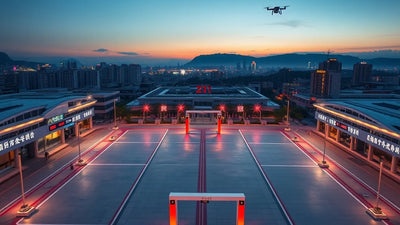
Bullfrog is not a typical anti-drone jammer or net gun. It is a fully autonomous weapon station that combines infrared and optical sensors with a robotic turret. Once a drone enters a no-fly zone around protected infrastructure-military bases, airports, power plants-Bullfrog can engage in under two seconds without human intervention. The $200 million round, led by venture capital firms specializing in defense tech, will fund production lines capable of turning out hundreds of units per month.
The counter-drone market is expected to reach $10.2 billion by 2032, according to recent industry reports. ACS's Bullfrog positions itself as the high-end solution for kinetic interdiction, competing with systems from Dedrone, Fortem Technologies, and Anduril. However, Bullfrog's autonomy is what sets it apart: it does not require a human-in-the-loop for engagement, a controversial but operationally decisive feature that has attracted both Pentagon contracts and private security buyers.
Fleet readiness
Keep DJI hardware available without overbuying new units.
Use this news as a planning signal for inspected DJI aircraft, repair support, and trade-in timing.
What This Means for Commercial Drone Pilots and Operators
For the 1.2 million registered commercial drones in the United States alone, the deployment of autonomous counter-drone systems like Bullfrog creates immediate operational friction. Airspace that was once open under FAA Part 107-such as airspace over airports, industrial zones, or government facilities-could be declared "no-fly" by local security providers. Unlike geofencing enforced by DJI's GEO system, which is software-based, Bullfrog enforces zones with kinetic force. A drone that inadvertently drifts into a protected area could be shot down, destroying a $5,000 to $30,000 aircraft in seconds.
Insurance underwriters are already taking note. Several major aviation insurers are reviewing policies that include clauses for "active counter-UAS systems" that could result in loss of drone asset. Premiums for commercial operators flying near critical infrastructure could rise 15-25% by Q4 2026. Moreover, BVLOS waivers issued under FAA Part 107.113 may require operators to prove that their drones can avoid areas patrolled by autonomous counter-drone systems. This could involve costly hardware upgrades like ADS-B transponders or remote ID relay systems.
Ready to Upgrade Your Fleet?
Browse our collection of inspected pre-owned DJI drones - inspected, flight-tested, and backed by a 6-month warranty. Save up to 40% versus retail.
Second-Hand Drone Market: Valuation Shifts and Fleet Upgrade Pressures
The rise of autonomous counter-drone systems directly affects the second-hand drone market. As more airspace becomes kinetic enforcement zones, operators will look to offload older drones that lack advanced collision avoidance or remote ID that can prove compliance. The used drone market is already seeing a dip in valuations for models that do not support features like DJI AirSense (ADS-B) or flight logs that show geofence compliance. For example, the DJI Phantom 4 Pro V2.0, once a staple in commercial inspection, has seen a 12% price drop in Q2 2026 compared to Q1. Meanwhile, newer models like the DJI Mavic 3E with built-in RTK and ADS-B receivers are holding value.
Reboot Hub's data shows a surge in trade-in inquiries from operators wanting to upgrade to drones that can better integrate with airspace security systems. The implication is clear: the second-hand market will bifurcate between "airspace-compliant" drones (equipped with remote ID, ADS-B, and robust geofencing) and "legacy" drones that are becoming liability risks. For budget-conscious operators, buying a pre-owned DJI drones that meets the latest requirements may be a smarter move than betting on an older unit that could be devalued further by security regulations.
The Regulatory Ripple Effect: From Airspace Bans to Insurance Premiums
The Federal Aviation Administration has not yet formally addressed autonomous counter-drone systems in its rules, but the agency is watching. In a June 2026 advisory circular draft, the FAA recommended that drone operators check with local airspace security providers for "active UAS denial zones" before flight. This is a soft mandate that will almost certainly harden into a requirement for Part 107 waivers in 2027. Operators flying near Department of Energy sites, nuclear power plants, or airports could face $11,000 fines per violation if they enter a zone patrolled by a system like Bullfrog without prior clearance.
On the international stage, the European Union Aviation Safety Agency (EASA) is considering a "protected zone" classification for critical infrastructure that would trigger mandatory counter-UAS systems-again, likely kinetic. For global operators, this means the days of launching a DJI Phantom anywhere near a refinery or substation are ending. The professional DJI repair services offered by Reboot Hub have already seen a 30% increase in damage claims related to drone strikes due to unspecified "airspace contact"-a euphemism many believe will become "shot down by counter-drone system" in future reports.
Frequently Asked Questions
Will the ACS Bullfrog system shoot down my DJI drone if I accidentally fly near a protected area?
Yes. Bullfrog is designed to autonomously detect and engage drones that enter its defined perimeter without prior clearance. Even a brief incursion-lasting less than two seconds-can result in the drone being physically shot down. Commercial operators should treat any facility with visible security towers or signage as a potential kinetic zone and use approved airspace coordination services before flight.
How can I protect my drone investment from being destroyed by counter-drone systems?
Invest in drones equipped with robust Remote ID, ADS-B (like DJI AirSense), and compliance logs that demonstrate flight planning. Pre-flight, use platforms like AirMap or Aloft to check active counter-UAS zones. Consider purchasing an insurance rider that covers loss due to security system engagement-some underwriters now offer "counter-UAS loss" addenda. If you are operating an older model, upgrading to a pre-owned DJI drones with the latest hardware may reduce your risk profile.
Will the second-hand drone market crash because of autonomous counter-drone systems?
Not a crash, but a correction. Drones built before 2024 without robust airspace awareness features will lose value proportionally. In contrast, modern drones with integrated remote ID, RTK, and ADS-B are retaining value well. The used drone market is shifting toward compliance-centric buying decisions. Operators who hold onto legacy drones without these capabilities may struggle to find buyers or insurers willing to cover them.
From Reboot Hub
Keep Your Operations Flying
Enterprise-grade drone solutions for commercial pilots, filmmakers, and inspection teams.
Pre-owned Fleet
Fully inspected DJI drones with 6-month warranty. Save up to 40%.
Browse Inventory ->