Hegseth’s Alarm: How the Pentagon’s Call for Asian Rearmament Reshapes the Drone Industry
Pentagon chief Pete Hegseth’s stark warning to Asian allies to boost defense spending against China’s military buildup is an immediate catalyst for the commercial drone sector. For Part 107 operators, this signals a potential tightening of export controls, new BVLOS restrictions near military zones, and a surge in demand for dual-use UAVs. The scramble for secure, non-Chinese supply chains is already disrupting the used drone market, creating both severe compliance penalties and unprecedented opportunities for operators with refurbishment-labeled fleets.

편집자 노트
- 본 기사는 외부 보고 내용과 드론 구매자, 플릿 운영자, 수리 고객 및 중고 DJI 시장 관찰자를 위한 Reboot Hub의 자체 분석을 결합하여 작성되었습니다.
- 소스 팩트는 해석과 분리됩니다. 보고서의 데이터가 제한적인 경우, 기사 내에 해당 제한 사항을 명시하고 Reboot Hub의 견해를 분석으로 정의합니다.
- Reboot Hub는 드론 제품 및 수리 서비스와 상업적 링크로 연결되어 있습니다. 해당 링크는 독자 리소스이며 기사의 결론을 결정짓지 않습니다.
WASHINGTON, D.C. — June 2, 2026 — In a blunt address delivered from the Pentagon briefing room, U.S. Secretary of Defense Pete Hegseth issued a stark “alarm” over the accelerating pace of China’s military modernization, directly urging Asian allies—including Japan, South Korea, the Philippines, and Australia—to dramatically ramp up their defense spending. For the global commercial UAV industry, this is not merely a geopolitical headline; it is a tectonic shift that will redefine airspace access, supply chain security, and the financial viability of drone operations from Sydney to San Diego.
Secretary Hegseth’s warning, framed around the need for a “credible deterrence” in the Indo-Pacific, lands at a moment when the drone industry is already grappling with the fallout from the National Defense Authorization Act (NDAA) and the ongoing scrutiny of Chinese-manufactured drones, particularly those from market leader DJI. The immediate implication for the estimated 500,000 commercial drone pilots operating under FAA Part 107 in the United States, and their counterparts in allied nations, is a new era of regulatory volatility. The Pentagon’s push for allied rearmament directly translates to increased military demand for airspace, which will inevitably compress the civil airspace available for commercial drone operations, especially for long-range BVLOS (Beyond Visual Line of Sight) missions.
From Geopolitical Rhetoric to Airspace Reality: The Immediate Impact on Drone Operators
The core of Secretary Hegseth’s message was a demand for burden-sharing. “The United States cannot be the sole guarantor of stability in the Indo-Pacific,” he stated, echoing themes from previous administrations but with a new sense of urgency. For the drone industry, this translates into a concrete operational challenge. As allied nations increase their defense budgets, their air forces will require more training airspace, more restricted zones, and more sophisticated air defense systems. This will directly impact the flight corridors available for commercial drone applications, from precision agriculture and infrastructure inspection to logistics and emergency response.
Enterprise procurement
Turn this market signal into a fleet requirement.
Discuss mission profile, quantities, configuration, delivery, and lifecycle support with Reboot Hub.
Consider the implications for a company conducting long-distance linear infrastructure inspections, such as power lines or pipelines, across the Philippines or Japan. The expansion of military airspace and the implementation of new counter-UAS (C-UAS) systems will force operators to re-route flights, invest in more sophisticated deconfliction technology, and potentially face longer mission times and higher operational costs. The era of assuming uncontested airspace for commercial drones in the Asia-Pacific region is effectively over. Operators must now integrate geopolitical risk into their flight planning software.
Furthermore, the Pentagon’s alarm is a powerful signal to allied governments that reliance on Chinese drone technology is a national security liability. This is not a new argument, but it is one that now carries the weight of a formal, high-level demand from the U.S. defense establishment. We can expect to see accelerated adoption of the “Blue UAS” list and similar frameworks in allied nations, effectively creating a two-tier market: a premium, secure tier for defense and government work, and a consumer/commercial tier that may face increasing restrictions. This bifurcation is a massive opportunity for companies specializing in the de-risking of drone fleets.
Ready to Upgrade Your Fleet?
Browse our collection of inspected pre-owned DJI drones — inspected, flight-tested, and backed by a 6-month warranty. Save up to 40% versus retail.
What Does Hegseth’s Speech Mean for the Second-Hand and Refurbished Drone Market?
This is where the news becomes intensely relevant for the core audience of Reboot Hub. The Pentagon’s stance creates a powerful, immediate driver for the used drone market. Here is the direct commercial analysis:
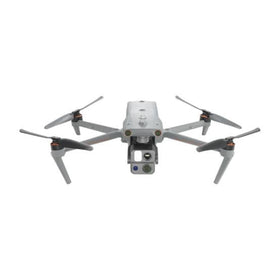
Supply Chain Shock: As allied nations scramble to secure non-Chinese supply chains, the demand for high-end, enterprise-grade drones—such as the Autel Robotics EVO Max series, the Skydio X10, and the Freefly Astro—will spike. These manufacturers cannot instantly scale production to meet this new surge in military and government demand. The lead times for new orders will extend from weeks to months. This directly benefits the secondary market. Operators and government agencies looking for immediate fleet expansion will turn to inspected pre-owned units as the only viable path to rapid capability acquisition.
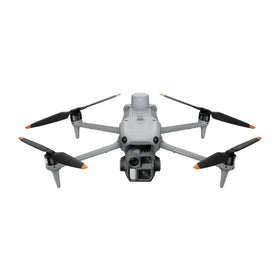
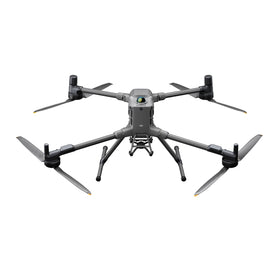
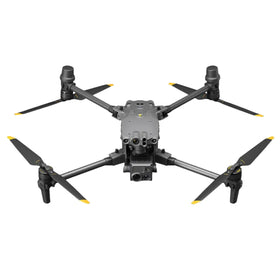
Price Volatility for DJI Equipment: The "alarm" Hegseth sounded will accelerate the phase-out of DJI drones from government and critical infrastructure workflows in allied nations. This creates a glut of used DJI equipment—Matrice 300 RTKs, Mavic 3 Enterprise models, and Phantom 4 RTKs—coming off lease or out of government service. While this depresses prices for basic consumer models, it creates a unique arbitrage opportunity for high-spec, low-flight-time enterprise units. The key is rigorous inspection and certification. An operator who can buy a decommissioned Matrice 350 RTK at a discount and have it professionally recertified can offer a compelling value proposition to commercial agricultural or surveying firms that are not subject to the same government restrictions.
The Compliance Premium: The most significant shift will be the “compliance premium.” In a world where the Pentagon is actively pressuring allies to avoid Chinese drones, a drone that is not only hardware-verified but also comes with a documented, secure supply chain history will command a higher price. This is where a platform like Reboot Hub, with its focus on rigorous inspection, genuine parts, and transparent history, becomes indispensable. The market is moving away from "caveat emptor" (buyer beware) and towards "caveat venditor" (seller beware). Sellers of used drones will need to provide verifiable proof of origin, flight logs, and maintenance records to command top dollar.
Navigating the New Regulatory Landscape: A Guide for Commercial Operators
For the commercial drone pilot, the path forward requires a strategic pivot. The days of simply buying the most capable drone for the job are over. The question is no longer just about sensor payloads and flight time; it is about provenance, security, and regulatory compliance. The Pentagon’s pressure on allies will inevitably lead to stricter enforcement of existing rules, such as the FAA’s Remote ID requirements, and the potential for new, more granular airspace restrictions near military installations, which are often co-located with the infrastructure that drone pilots need to inspect.
Q: How should a Part 107 operator prepare for these changes?
A: First, audit your fleet. Identify any drones that may be subject to future restrictions in your operational area. Second, diversify your supplier base. Do not rely on a single manufacturer. Third, invest in fleet management software that can track not just flight hours, but also component provenance and repair history. Fourth, and most critically, build a relationship with a repair and refurbishment partner that uses genuine parts and provides documented certification. This is no longer a luxury; it is a requirement for accessing the most lucrative contracts.
The financial stakes are immense. The global drone market is projected to exceed $50 billion by 2030, with the defense and government segment being the fastest-growing. Operators who are locked into a single, now-stigmatized platform will find themselves excluded from the most profitable work. Those who have built a flexible, compliant, and verifiable fleet will thrive.
Strategic Implications for the Global Drone Supply Chain
Hegseth’s speech is a clear signal that the U.S. is willing to use its diplomatic and economic leverage to reshape the global drone supply chain. This goes beyond banning a single company. It is about creating an ecosystem of trusted hardware. We are likely to see increased investment in domestic drone manufacturing in allied nations, particularly in Japan and South Korea, which have strong electronics and robotics sectors. This will create new opportunities for component suppliers and software developers, but it will also create a fragmented market with different certification standards.
For the second-hand market, this fragmentation is both a risk and an opportunity. A drone certified under the Japanese Ministry of Defense’s standards may not be easily resold to a civilian operator in Australia. This will increase the value of platforms that are “platform-agnostic” and that can be easily recertified for different use cases. The ability to perform a deep, professional-level inspection and recertification—precisely the service offered by professional DJI repair services—will become a critical value-add.
Furthermore, the push for rearmament will inevitably lead to a surge in demand for drone-based training and simulation, as well as for counter-drone technology. This creates a parallel market for used drones that are perfectly adequate for target practice or electronic warfare testing. A drone that is no longer compliant for commercial mapping in a sensitive airspace is still a valuable asset for a defense contractor developing C-UAS systems. This creates a new, highly specialized niche for the secondary market.
The bottom line from today’s news is clear: the era of the drone industry as a purely commercial, apolitical enterprise is over. Geopolitics is now the primary driver of market dynamics. For the savvy operator, the message is not one of fear, but of preparation. The assets you own today—your DJI Matrice, your Autel EVO, your Skydio—are not just tools. They are assets whose value is now directly tied to the trajectory of international relations.
At Reboot Hub, we understand this new reality. Our mission is to provide the transparency, certification, and security that the modern drone market demands. Whether you are looking to upgrade your fleet with pre-owned DJI drones that offer a clear and compliant provenance, or you need to ensure your existing equipment meets the highest standards of airworthiness, our platform is designed for the new era of drone operations. We don’t just sell drones; we provide the trust and verification that is now the most valuable commodity in the industry.
The alarm has been sounded. The question is not whether the industry will change, but whether you will be ready. The time to audit, diversify, and certify your fleet is now. The window of opportunity to acquire high-quality, de-risked assets at a favorable price is closing as the defense spending taps are opened. Act decisively.
FAQ: Understanding the Impact of Hegseth's Speech on Your Drone Operations
Q: Does this mean I can no longer fly my DJI drone commercially?
A: Not immediately, but the risk is increasing. This speech does not ban DJI drones outright. However, it signals to allied governments that they should actively phase out reliance on Chinese technology for sensitive applications. If you fly for critical infrastructure inspection (power grids, pipelines, telecom towers) or near military installations, you should proactively plan a transition to a compliant platform. For general commercial work like real estate photography or basic agriculture, the immediate risk is lower, but the long-term trend is clear: non-compliant platforms will face increasing operational friction and insurance costs.
Q: How will this affect the resale value of my current drone?
A: The market is bifurcating. High-flight-time, older consumer models (e.g., Mavic Air 2, Phantom 4 Pro V2) will likely see a continued depreciation as supply increases from government sell-offs. However, well-maintained, low-flight-time enterprise models (e.g., Matrice 300 RTK, Matrice 350 RTK) with documented service history may actually hold value better than anticipated, as commercial operators in non-sensitive sectors seek bargains. The key to maximizing resale value is documentation. A drone with a verifiable flight log and a professional inspection certificate will command a significant premium over a "as-is" unit.
Q: What is the single most important action I should take today?
A: Audit your fleet and your operational contracts. Determine which of your drones are used for work that could be classified as "critical infrastructure" or "government-adjacent." If any of your contracts contain clauses about data security or equipment origin, you need to address compliance immediately. Next, secure a reliable partner for professional DJI repair services and fleet certification. The market is moving towards verifiable trust, and having a certified supply chain is your best insurance against regulatory disruption.
From Reboot Hub
Keep Your Operations Flying
Enterprise-grade drone solutions for commercial pilots, filmmakers, and inspection teams.
Pre-owned Fleet
Fully inspected DJI drones with 6-month warranty. Save up to 40%.
Browse Inventory ->