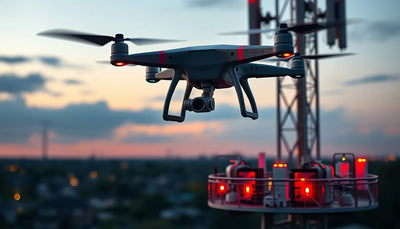
DroneShield Opens Adelaide R&D Hub to Expand Counter-Drone Work
DroneShield has opened a new research and development hub in Adelaide to accelerate Australian counter-drone and electronic warfare technology. The expansion signals growing defense demand for detection and defeat systems, with wider implications for commercial drone operators and the pre-owned DJI market.

Quick answer
DroneShield has opened a new Adelaide research and development hub focused on accelerating Australian counter-drone and electronic warfare technology, according to SUAS News.
- The facility expands DroneShield's counter-UAS and electronic warfare development capacity in Australia.
- The move reflects growing defense demand for drone detection and defeat systems.
- Commercial operators should watch how counter-drone procurement affects airspace access and fleet planning.
- The announcement may influence long-term defense technology supply chains in the Asia-Pacific region.
Evidence: SUAS News · AeroVironment unmanned systems solutions · Defense.gov official source
Fleet readiness
Keep DJI hardware available without overbuying new units.
Use defense and fleet news as a planning signal for repair support, inspected pre-owned aircraft, and replacement timing.

DroneShield, the Australian counter-drone and electronic warfare company listed on the ASX under the ticker DRO, has opened a new research and development hub in Adelaide, according to a report published by SUAS News on September 23, 2026. The facility is positioned to accelerate the next generation of Australian defence technology, with a focus on counter-UAS and electronic warfare solutions. The announcement is the latest signal that demand for drone detection and defeat systems continues to strengthen across defense markets.
For commercial drone operators, fleet managers, and buyers in the pre-owned DJI market, the expansion carries a quieter but real message. Counter-drone capability is no longer a niche military concern. It is becoming institutional infrastructure, and its growth shapes how airspace is managed, how enterprise drone programs are evaluated, and how procurement teams think about security alongside operations.
What the Adelaide R&D hub signals about defense demand
DroneShield's decision to expand its Adelaide footprint points to sustained investment in counter-UAS technology. The company describes itself as a global leader in counter-drone and electronic warfare solutions, and the new hub is framed as a platform for faster development of Australian defence technology. SUAS News reports that the facility is intended to accelerate next-generation capabilities, though specific program details, staffing figures, and investment amounts were not included in the source report.
From a market perspective, this is consistent with a broader pattern: defense agencies are treating unauthorized or hostile drone activity as a persistent operational risk rather than a temporary problem. That shift has commercial consequences. Airports, critical infrastructure sites, public events, and government facilities increasingly deploy detection and mitigation systems. Drone operators flying near those environments should expect more frequent encounters with counter-drone sensors and, in some cases, operational restrictions tied to security postures.
How counter-drone growth affects commercial operators
The expansion of counter-drone infrastructure changes the operational environment for legitimate pilots. Detection systems do not distinguish between a hostile drone and a commercial mapping flight unless the operator is visible, authorized, and compliant. As more facilities adopt counter-UAS tools, the practical burden on commercial operators rises: airspace authorizations, flight notifications, and visible compliance become more important, not less.
Fleet managers should treat counter-drone awareness as part of mission planning. A construction survey, utility inspection, or agricultural mapping flight near a protected site may now intersect with active RF monitoring or mitigation equipment. The sensible response is not to avoid those areas entirely, but to ensure that operations are documented, permissions are current, and flight profiles are predictable. The same logic applies to buyers evaluating used DJI platforms: a drone with a clear operational history and verified airframe condition is easier to integrate into a compliance-heavy environment than an undocumented unit.
What this means for drone owners and the market
The defense sector's growing appetite for counter-UAS technology does not directly change DJI hardware pricing or spare parts availability. But it does reinforce a market structure in which security concerns and commercial drone use coexist, sometimes uneasily. Buyers in the pre-owned DJI market should pay attention to how defense procurement trends influence public policy, airspace rules, and enterprise risk assessments. A drone that is inexpensive to buy can become expensive to operate if the surrounding regulatory or security environment shifts.
For owners and prospective buyers, the practical takeaway is to prioritize documented condition, genuine OEM spare parts, and professional repair support when evaluating a used platform. As counter-drone systems become more common, operators who can demonstrate airworthiness, maintenance history, and compliant ownership are better positioned to keep flying without friction. Readers can use the Drone Wiki to check model-specific ownership and maintenance considerations before committing to a purchase or repair decision. For owners evaluating service and lifecycle risk, Drone Wiki explains the relevant repair, parts, resale, or operational path.
The wider commercial signal for the drone industry
DroneShield's Adelaide expansion is one data point in a larger trend: defense and security budgets are flowing into drone-related technology on both sides of the equation. On one side, militaries and agencies buy drones for logistics, surveillance, and strike roles. On the other, they buy systems to detect and defeat drones. Both spending streams validate the commercial drone ecosystem, but they also accelerate the professionalization of airspace management.
For commercial operators, this means the era of flying without considering security infrastructure is ending. For repair customers and pre-owned buyers, it means the market will continue to reward platforms that are well-maintained, clearly documented, and supported by genuine parts. The Adelaide hub itself is a defense story, but the second-order effects reach civilian operators, procurement teams, and the resale market in ways that are easy to overlook.
This article is market commentary for drone operators and buyers, not investment advice. Reboot Hub does not recommend securities transactions.
FAQ
Frequently asked questions
What did DroneShield announce?
According to SUAS News, DroneShield opened a new research and development hub in Adelaide focused on accelerating Australian counter-drone and electronic warfare technology.
Does this affect commercial drone pilots?
Indirectly, yes. As counter-drone systems become more common around airports, critical infrastructure, and public sites, commercial pilots should expect more scrutiny and should keep flight documentation and authorizations current.
Should drone buyers change their purchasing approach?
Buyers should continue to prioritize verified condition, genuine OEM parts, and documented maintenance history. A well-supported pre-owned platform is easier to operate in an environment where security and compliance demands are rising.
Which sources support this update?
The visible evidence links identify SUAS News and AeroVironment unmanned systems solutions and Defense.gov official source; each source is used only for the claim it directly supports.
What remains subject to change?
Retail pricing, availability, product bundles and regulatory timelines can change. Readers should verify the latest terms with the named retailer, manufacturer or regulator before acting.
How should buyers or operators use this analysis?
Use the verified facts as a starting point, then compare mission fit, lifecycle support, maintenance needs and current procurement terms before making a purchase or fleet decision.
참고 문헌
- SUAS News - primary source
- AeroVironment unmanned systems solutions - official company source
- Defense.gov official source - official government source
Reboot Hub 편집팀은 드론 소유자를 위해 구매, 수리, 재판매 및 운영 분석을 제공합니다. 오류를 발견하신 경우, 편집 정책에 따라 수정 검토를 요청해 주시기 바랍니다.