Custom BYD Sharks to Launch AI Security Drones in South Africa
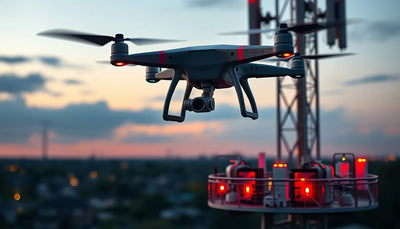
Custom BYD Shark vehicles are being deployed as mobile launch platforms for AI-powered security drones across South Africa. The development signals growing demand for vehicle-integrated drone response in private security, with direct implications for fleet planning, maintenance, and the pre-owned DJI market.

Quick answer
Custom BYD Shark vehicles are being outfitted to launch AI-powered security drones across South Africa, according to MyBroadband reporting.
- Custom BYD Shark pickups will serve as mobile launch platforms for AI security drones
- The deployment targets security operations across South Africa
- The report comes from MyBroadband, a South African technology publication
- Vehicle-integrated drone response is expanding in the private security sector
Verified facts
Fleet readiness
Keep DJI hardware available without overbuying new units.
Use defense and fleet news as a planning signal for repair support, inspected pre-owned aircraft, and replacement timing.

What the available evidence confirms
| Aspect | Reported detail |
|---|---|
| Vehicle platform | Custom BYD Shark pickups |
| Drone capability | AI-powered security drones |
| Region | South Africa |
| Primary reporting source | MyBroadband |
Custom BYD Shark vehicles are being prepared as mobile launch platforms for AI-powered security drones across South Africa, according to reporting by MyBroadband. The development points to a notable shift in how private security operators are integrating unmanned aerial systems into ground vehicle fleets, moving beyond fixed-site drone deployments toward rapid-response, vehicle-launched aerial surveillance.
The report, identified through Google News DJI coverage focused on the Africa region, describes a deployment model in which modified BYD Shark pickups carry and launch AI-enabled security drones. While specific technical details remain limited in the source material, the central development is clear: vehicle-mounted drone response is becoming a practical operational concept in South African security markets, not merely a demonstration project.
What the source reports about the deployment
MyBroadband, a South African technology publication, is the primary reporting source for this development. The report indicates that custom BYD Shark vehicles are being outfitted to launch AI-powered security drones, positioning the vehicles as mobile command and launch units for aerial security operations. The BYD Shark, a plug-in hybrid pickup, has gained attention in markets including South Africa for its combination of utility capability and electrified powertrain architecture.
The source material does not specify the exact drone models being used, the number of vehicles involved, the security companies deploying the systems, or the timeline for full operational rollout. Reboot Hub analysis suggests that the use of AI-powered security drones from a vehicle platform implies integration of automated flight paths, object detection, or autonomous response features, but these operational specifics should be treated as source-limited interpretation rather than confirmed reporting.
For commercial drone operators and fleet managers, the significance lies in the vehicle-integration concept itself. A pickup-based launch platform changes the economics of drone security response: the drone travels with the response team, launches on arrival, and can provide immediate aerial situational awareness without waiting for a separate drone unit to reach the scene. This model has been explored in various markets, but the South African deployment reported by MyBroadband suggests commercial traction in a region with substantial private security demand.
Security drone demand and the African market context
South Africa's private security sector is among the largest in the world relative to population, driven by persistent demand for residential estate protection, commercial site monitoring, and rapid armed response. The integration of drones into this ecosystem has been gradual, constrained historically by regulatory requirements, battery limitations, and the cost of trained pilots. AI-powered systems address some of these constraints by reducing the pilot workload and enabling more autonomous operation.
The reported use of BYD Shark vehicles as launch platforms reflects a broader trend in security operations: the convergence of electric and hybrid vehicle fleets with unmanned aerial systems. Vehicle-mounted drone docks can provide charging, data transmission, and launch capability in a single mobile package. For security companies, this reduces the need for fixed drone infrastructure and allows aerial assets to be deployed wherever response vehicles travel.
Reboot Hub analysis notes that this development could accelerate demand for enterprise-grade drones with thermal imaging, autonomous flight modes, and rapid deployment capabilities. Security operators evaluating similar systems will need to consider maintenance intervals, battery replacement cycles, and spare parts availability for drones that are launched and recovered from moving or remote locations more frequently than typical commercial photography drones.
What this means for drone owners and the market
For individual drone owners and small commercial operators, the South African deployment is a signal that vehicle-integrated drone operations are moving from concept to commercial reality. This matters because it shifts the market's center of gravity toward enterprise and security applications, which typically require more robust hardware, more frequent maintenance, and a reliable supply of genuine OEM spare parts. Operators who currently use consumer or prosumer drones for occasional security or inspection work may find that client expectations are rising as dedicated security drone platforms become more visible.
Reboot Hub analysis: The pre-owned DJI market is likely to feel secondary effects. As security companies and fleet operators adopt newer, AI-capable platforms, their older enterprise drones may enter the second-hand market, creating supply for buyers who want capable drones at lower price points. At the same time, the parts and repair ecosystem becomes more important: drones used in security operations accumulate flight hours quickly, and their resale value depends heavily on documented maintenance and the availability of inspected pre-owned units and OEM-pulled parts. For anyone evaluating a used drone for commercial work, understanding the maintenance history and parts provenance is becoming a core due diligence step. The Drone Wiki provides reference material that can help buyers understand what to look for when assessing a pre-owned DJI drone for security or inspection use. For owners evaluating service and lifecycle risk, Drone Wiki explains the relevant repair, parts, resale, or operational path.
Fleet managers should watch this development closely. If vehicle-launched security drones prove effective in South Africa, the model could spread to other markets with large private security sectors, including parts of Latin America, Southeast Asia, and the Middle East. Procurement teams evaluating drones for security work should consider whether their chosen platforms can be integrated with vehicle launch systems, whether spare parts are readily available in their region, and whether local repair capacity exists for the specific models under consideration.
Repair, maintenance, and fleet planning implications
Drones launched from vehicles face different wear patterns than those operated from fixed locations. Repeated launch and recovery from a moving or stationary vehicle platform can stress landing gear, gimbal assemblies, and battery connectors. Dust, vibration, and temperature fluctuations during transport add further strain. Security operators adopting this model will need maintenance schedules that account for these conditions, and they will need access to genuine OEM spare parts rather than generic replacements that may not meet the same durability standards.
The source report does not specify which drone models are being used in the BYD Shark deployment, so Reboot Hub cannot provide model-specific maintenance guidance. However, the operational pattern described—frequent launches, security missions, vehicle transport—points toward enterprise-class drones with modular components that can be replaced individually. This is a key consideration for buyers in the pre-owned market: a drone that has been used in security operations may have high flight hours but also a documented service history, which can make it a better purchase than a lower-hour unit with unknown maintenance.
For repair customers, the takeaway is straightforward: as vehicle-integrated drone operations expand, the demand for professional DJI repair services and genuine OEM spare parts will grow. Drones used in commercial security cannot be sidelined for long periods, so repair turnaround time and parts availability become critical operational factors. Buyers and operators who plan ahead on maintenance are better positioned to keep their fleets flying.
FAQ
Frequently asked questions
What is the central development reported in the source?
MyBroadband reports that custom BYD Shark vehicles are being outfitted to launch AI-powered security drones across South Africa, creating mobile launch platforms for aerial security operations.
Which companies or entities are named in the report?
The source names BYD as the vehicle manufacturer and MyBroadband as the reporting outlet. Specific security companies, drone models, and deployment timelines are not identified in the available source material.
What should drone buyers and fleet operators do differently after reading this?
Buyers and fleet managers should evaluate whether their current or planned drone platforms can support vehicle-integrated operations, and they should prioritize maintenance planning and genuine OEM spare parts access as security drone deployments become more commercially common.
Which sources support this update?
The article distinguishes reported information from analysis and does not present an unverified source as official confirmation.
What remains subject to change?
Retail pricing, availability, product bundles and regulatory timelines can change. Readers should verify the latest terms with the named retailer, manufacturer or regulator before acting.
How should buyers or operators use this analysis?
Use the verified facts as a starting point, then compare mission fit, lifecycle support, maintenance needs and current procurement terms before making a purchase or fleet decision.
참고 문헌
- MyBroadband via Google News - primary source
발행 시점에 이용 가능한 추가 공식 문서는 없었습니다.
Reboot Hub 편집팀은 드론 소유자를 위해 구매, 수리, 재판매 및 운영 분석을 제공합니다. 오류를 발견하신 경우, 편집 정책에 따라 수정 검토를 요청해 주시기 바랍니다.