Reboot Hub Drone Intelligence
Advertisement
News  /  산업 핫스팟 분석  /  BRINC Raises $125M to Place 911 Drones on...
Defense

BRINC Raises $125M to Place 911 Drones on 80,000 Police Roofs

BRINC secured $125 million led by Motorola Solutions to deploy its 911 response drone on up to 80,000 first responder station rooftops. The investment signals a major shift toward dedicated airborne emergency response platforms and has implications for public safety drone procurement and fleet planning.

BRINC Raises $125M to Place 911 Drones on 80,000 Police Roofs

BRINC, a drone manufacturer focused on public safety applications, has closed a $125 million financing round led by Motorola Solutions. According to a report by DroneXL, the company plans to use the capital to deploy its 911 response drone on up to 80,000 first responder station rooftops across the United States. For drone buyers, fleet operators, and repair professionals, this is not just a fundraising headline—it is a signal about the direction of emergency response infrastructure, procurement patterns, and the evolving relationship between purpose-built drones and established platforms like DJI.

The round, led by a globally recognized communications and emergency-response technology company, indicates that institutional investors see a long-term market for dedicated aerial first-response hardware. Unlike general-purpose consumer or enterprise drones, BRINC’s aircraft is designed to integrate directly with 911 dispatch systems, autonomously launch from fixed rooftop berths, and carry payloads such as cameras, speakers, and potentially medical supplies. The scale—80,000 rooftops—points to an ambition that could reshape how police, fire, and EMS agencies budget for drone programs.

The investment details and what they reveal about market confidence

The $125 million figure is substantial for the drone industry, especially for a company that does not sell recreational or commercial photography drones. Motorola Solutions’ participation is key: the company already supplies radio networks, body cameras, and dispatch software to thousands of public safety agencies. By leading this round, Motorola is effectively betting that drones will become a standard component of emergency response infrastructure, much like two-way radios or patrol vehicles.

Fleet readiness

Keep DJI hardware available without overbuying new units.

Use defense and fleet news as a planning signal for repair support, inspected pre-owned aircraft, and replacement timing.

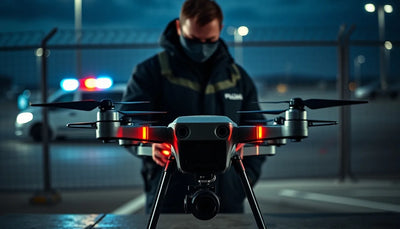
BRINC Raises $125M to Place 911 Drones on 80,000 Police Roofs - Reboot Hub editorial image
Reboot Hub editorial image for this drone industry analysis.

BRINC’s plan to put a drone on 80,000 station roofs suggests a model where every fire station or police precinct has a drone permanently stationed on its roof, ready to launch within seconds of a 911 call. This contrasts with the current approach where many agencies own one or two portable drones stored in a vehicle or office. The deployment model requires not just drones, but docking stations, power management systems, and central dispatch integration. For fleet operators, this represents a shift from “drone as tool” to “drone as infrastructure.”

From a commercial perspective, this investment will likely accelerate demand for rooftop docking hardware, spare batteries, payload modules, and specialized repair services. Agencies that adopt BRINC’s system will require ongoing maintenance support, and the scale of 80,000 units implies a long-term service ecosystem. While BRINC is not DJI, its growth will affect the broader drone repair and parts supply chain, especially for operators who currently use DJI platforms for search-and-rescue or incident response.

What this means for drone buyers

For drone buyers evaluating fleet purchases over the next 12 to 24 months, the BRINC announcement introduces a new variable in procurement planning. Public safety agencies that have historically relied on DJI Mavic or Matrice series drones—often purchased through grant funding or departmental budgets—now have a purpose-built alternative that promises tighter integration with 911 dispatch and less pilot workload. That does not mean DJI platforms are obsolete, but it does mean buyers should weigh the total cost of ownership of a general-purpose drone versus a dedicated first-response system.

Reboot Hub analysis: Fleet operators who manage mixed-use drones—used for inspections one day, search-and-rescue the next—may still prefer the flexibility of modular DJI platforms. But for agencies whose primary mission is rapid emergency response, the dedicated rooftop model could reduce launch times and simplify training. Buyers should also consider that BRINC’s infrastructure model may lead to vendor lock-in: once a docking station and dispatch software are installed, switching to another drone brand could require significant rework. This is the moment to audit current drone programs and decide whether an integrated system or a flexible fleet is the right long-term strategy.

Reboot Hub analysis: For the pre-owned DJI market, this news could create opportunities. As some agencies shift to BRINC systems for primary response, they may sell off existing DJI drones used for backup, training, or secondary roles. These aircraft—often well-maintained and regularly updated—can become valuable additions for commercial operators who need proven platforms at a lower cost. If you are a buyer looking at second-hand drones, it is worth monitoring public safety auction listings over the next year. For sellers, the trade-in window for DJI drones used in public safety roles may shorten as dedicated systems gain traction, so timing your upgrade or drone trade-in plan could affect residual value.

Implications for repair services and spare parts availability

BRINC’s capital raise and its relationship with Motorola Solutions will likely influence the drone repair landscape, especially for public safety agencies. Motorola has extensive field service and repair networks for its communication equipment, and it may extend similar support to BRINC hardware. That could mean dedicated repair contracts, faster turnaround times, and certified service centers for BRINC drones—something many agencies currently lack for their drone fleets, often relying on third-party shops or OEM direct repair.

For the DJI repair ecosystem, the announcement serves as a reminder that public safety agencies may increasingly look for service-level agreements and guaranteed repair timelines. If BRINC and Motorola offer rapid repair through established channels, it could raise expectations for all drone manufacturers. Repair professionals who currently service DJI drones for police and fire departments might consider expanding their capabilities to include other brands, or at minimum, ensure they can offer comparable service speeds. The repair market benefits from multiple viable platforms, as competition drives better service options.

Another practical implication: the scale of 80,000 rooftop stations would create demand for spare parts, not just for the drones but also for docking stations, charging pads, and payloads. Currently, the spare parts supply chain for public safety drones is relatively fragmented. If BRINC’s rollout materializes, a new tier of OEM-pulled parts and genuine components will emerge, potentially expanding the professional DJI repair services market as well, since both brands will serve overlapping customer bases. Repair shops should stay informed about BRINC’s parts distribution model.

What operators should do now: a practical checklist

Based on the information available, here are actionable steps for drone operators, fleet managers, and repair customers:

  • Assess your current drone’s emergency response role. If your primary use is rapid 911 dispatch, evaluate whether a dedicated rooftop system would reduce response times and training burden. If your fleet is multi-purpose, generalist platforms may remain more cost-effective.
  • Monitor public safety drone auctions. As agencies migrate to integrated systems, lightly used DJI drones may enter the pre-owned market at attractive prices. Check listings from government surplus outlets and consider pre-owned DJI drones as a way to expand capacity without full-price investment.
  • Review repair service agreements. Ensure your current repair provider can meet turnaround times comparable to what an integrated system like BRINC/Motorola may offer. Discuss spare parts inventory and warranty processes now, rather than during a crisis.
  • Plan for infrastructure changes. If your agency operates from multiple stations, consider whether rooftop drone berths are feasible and how they would integrate with dispatch software. Early planning could smooth a future transition.

The BRINC investment is not a direct threat to DJI’s position in the broader commercial drone market, but it does establish a new benchmark for purpose-built public safety drones. For drone buyers, the message is clear: the era of one-size-fits-all drone procurement is ending. Buyers must now choose between generalist flexibility and specialist integration, and that choice will affect everything from spare parts inventory to repair costs and resale value.

Frequently asked questions

Will this funding affect DJI drone prices in the second-hand market?

It could indirectly. If public safety agencies begin to offload DJI fleets after adopting BRINC systems, increased supply may lower prices for pre-owned DJI drones. Commercial operators looking to buy should monitor these changes, while sellers may want to time their trade-ins before inventory overshoots demand.

Should I wait to buy a drone if I am a public safety operator?

Not necessarily. The BRINC system is early-stage and not yet widely deployed. If you need a drone now for missions, a proven DJI platform remains a reliable choice. However, if you are planning a long-term fleet refresh, it is worth requesting a demonstration from BRINC and evaluating integration costs alongside your current workflow.

Does this mean DJI will lose its public safety market share?

Not automatically. DJI drones have been used for years in emergency response due to their reliability, camera quality, and ecosystem. The BRINC model targets a specific niche: automated rooftop launch with deep dispatch integration. For agencies that do not need that level of automation, DJI remains a strong option. Market share will likely shift only if BRINC proves superior in mission-critical response times and sustainment costs.

Advertisement
Advertisement

About Reboot Hub Editorial

Drone reporting with operator context

Reboot Hub Editorial Desk reviews public reporting, company announcements, regulatory updates, and market signals, then adds practical analysis for DJI buyers, repair customers, and fleet operators. Commercial links are separated from editorial claims, and corrections can be sent through Contact Us.

Sources consulted

Additional official documentation was not available at publication time.

Reboot Hub Editorial adds buyer, repair, resale, and operational analysis for drone owners. If you spot an error, contact us for correction review through our editorial policy.

Defense Drone industry analysis
Advertisement