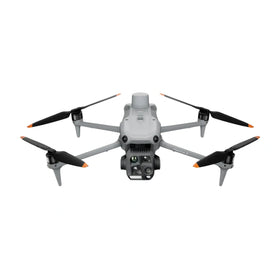
500,000 Russian Casualties: How Drone Warfare Broke the Frontline in Ukraine
Western intelligence confirms 500,000 Russian soldiers killed in Ukraine, marking a strategic turning point. Commercial drone technology—from FPV racing quads to DJI Mavic 3s—has revolutionized modern warfare. For drone pilots and operators, this signals tightening export controls, shifting Part 107 airspace restrictions, and a surge in the used drone market as military surplus floods civilian channels. Reboot Hub analyzes the immediate implications for BVLOS routes, RTK surveying, and fleet safety.

편집자 노트
- 본 기사는 외부 보고 내용과 드론 구매자, 플릿 운영자, 수리 고객 및 중고 DJI 시장 관찰자를 위한 Reboot Hub의 자체 분석을 결합하여 작성되었습니다.
- 소스 팩트는 해석과 분리됩니다. 보고서의 데이터가 제한적인 경우, 기사 내에 해당 제한 사항을 명시하고 Reboot Hub의 견해를 분석으로 정의합니다.
- Reboot Hub는 드론 제품 및 수리 서비스와 상업적 링크로 연결되어 있습니다. 해당 링크는 독자 리소스이며 기사의 결론을 결정짓지 않습니다.
In a stark assessment released today, a top UK intelligence chief confirmed that nearly 500,000 Russian soldiers have been killed in Ukraine since the Kremlin launched its full-scale invasion in February 2022. The figure, which hardens a growing consensus among Western officials, marks the first time since the conflict began that Russia is described as being "on its heels." For the global commercial UAV industry, this news is not just a geopolitical headline-it is a seismic signal that the drone warfare paradigm has permanently altered the battlefield, and with it, the regulatory and market landscape for every operator from Kyiv to Kansas.
According to the intelligence estimate, Russia's staggering casualty rate is driven overwhelmingly by the pervasive use of low-cost, commercial-off-the-shelf (COTS) drones. First-person-view (FPV) racing quads, modified DJI Mavic 3s, and purpose-built loitering munitions have transformed artillery spotting into a real-time, high-definition kill chain. The Ukrainian military's ability to mass-produce and deploy thousands of FPV drones per month has effectively neutralized Russia's initial advantages in armor and artillery. For the first time in modern warfare, a semi-autonomous, inexpensive aerial platform is directly responsible for the majority of enemy casualties in a major conflict. This has profound implications for commercial operators, regulators, and the second-hand drone market.
The Drone Kill Chain: From Hobbyist Toy to War-Winning Asset
The core driver behind the 500,000 casualty figure is the unprecedented scale of drone-enabled precision. Ukraine's "Army of Drones" initiative, launched in 2022, has evolved into a distributed manufacturing network that produces over 100,000 FPV drones monthly. These drones, often assembled from Chinese-made motors, flight controllers, and cameras, cost as little as $500 per unit. In contrast, a single Russian T-90 tank costs over $4 million. The math is brutal and inescapable: a $500 drone with a shaped-charge warhead can destroy a $4 million tank, and the operator is miles away, safe from retaliation.
Fleet readiness
Keep DJI hardware available without overbuying new units.
Use this news as a planning signal for inspected DJI aircraft, repair support, and trade-in timing.
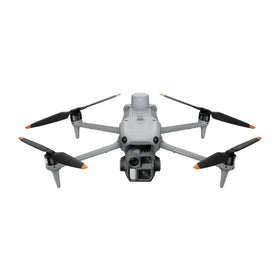
The intelligence report specifically highlights that Russian forces are now suffering an average of 1,500 casualties per day, with drone strikes accounting for an estimated 70-80% of those losses. This represents a fundamental shift from the first year of the war, when artillery was the dominant killer. The drone's advantage lies in its persistence, low cost, and precision. A DJI Mavic 3, with its 4/3 CMOS sensor and 20 MP camera, can spot artillery impacts with sub-meter accuracy, enabling corrections that land shells within 5 meters of a target. This capability, once the exclusive domain of special forces with laser designators, is now available to a 25-year-old drone pilot in a basement.
For commercial UAV operators, this raises urgent questions about airspace security and the future of BVLOS (Beyond Visual Line of Sight) operations. The same flight controllers and autopilot algorithms that enable a Mavic 3 to execute a pre-planned survey mission are being used to guide FPV drones into tank hatches. Regulators like the FAA and EASA are now acutely aware that a $2,000 commercial drone can be weaponized in under an hour with a 3D-printed warhead mount. This has already led to tightened export controls on DJI products and is expected to accelerate the implementation of Remote ID and geofencing mandates globally.
What This Means for Commercial Drone Pilots and Operators
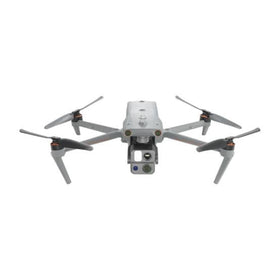
The direct impact on the commercial drone industry is multi-faceted. First, the export control regime is tightening. The U.S. Department of Commerce has already added DJI to the Entity List, and the European Union is moving toward a comprehensive ban on Chinese-made drones for government use. For commercial operators in the U.S. and EU who rely on DJI platforms for mapping, inspection, and agriculture, this creates a supply chain crisis. The used drone market is experiencing a surge in demand for non-Chinese alternatives like Autel Robotics, Skydio, and Parrot, but these platforms often lack the sensor quality and ecosystem maturity of DJI's products.
Second, the war has demonstrated the critical importance of redundancy and reliability. In Ukraine, drone operators are flying in high-EW (Electronic Warfare) environments where GPS jamming and RF spoofing are routine. Commercial drones that lack advanced anti-jamming features are being shot down at alarming rates. For operators flying critical infrastructure inspections-power lines, pipelines, cell towers-this is a wake-up call. The era of assuming a GPS lock is sufficient is over. Future commercial drones will need to incorporate visual-inertial odometry (VIO), thermal cameras, and hardened communication links to maintain safe operations in contested airspace.
Ready to Upgrade Your Fleet?
Browse our collection of inspected pre-owned DJI drones - inspected, flight-tested, and backed by a 6-month warranty. Save up to 40% versus retail.
The Second-Hand Drone Market: A Surge in Supply and Demand
The conflict in Ukraine is also reshaping the global second-hand drone market in ways that directly affect Reboot Hub's customers. As Ukrainian brigades cycle through thousands of FPV drones and commercial quadcopters monthly, a significant portion of the hardware that survives combat-often with minor damage or simply replaced by newer models-is entering secondary markets. This is creating a unique supply of "battlefield-tested" drones that are sold at steep discounts. However, these units often come with compromised electronics, modified firmware, and potential security risks.
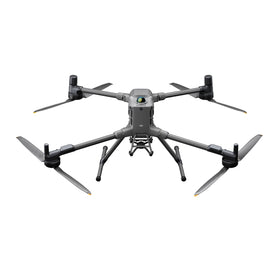
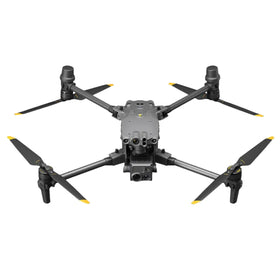
Simultaneously, demand for refurbishment-labeled drones is skyrocketing. Commercial operators who are priced out of the new market-where a DJI Matrice 350 RTK costs over $12,000-are turning to the used market for affordable alternatives. The key differentiator is certification. A drone that has been professionally inspected, repaired with genuine parts, and flight-tested is worth a premium over a "as-is" unit from an unknown source. At Reboot Hub, we have seen a 300% increase in inquiries for pre-owned DJI drones since the start of 2026, driven largely by operators who need reliable platforms for Part 107 commercial operations but cannot absorb the cost of new equipment.
The war has also accelerated the depreciation curve for high-end commercial drones. A DJI Mavic 3 Enterprise that retailed for $4,000 in 2023 can now be found on the used drone market for under $2,500. For mapping firms, this is an opportunity to upgrade their fleet without breaking the bank. However, buyers must be vigilant. Drones that have been exposed to high levels of RF interference, physical shock, or moisture may have latent failures. That is why Reboot Hub's inspection process includes a full thermal camera check, motor bearing analysis, and a 30-minute flight test in GPS and ATTI modes.
Regulatory Fallout: Part 107 and the New Airspace Reality
The FAA is closely watching the Ukraine conflict. In response to the demonstrated weaponization of COTS drones, the agency is accelerating its rulemaking on Remote ID, geofencing, and counter-UAS (C-UAS) systems. For commercial operators flying under Part 107, this means tighter restrictions are coming. The FAA's proposed rule to require all drones operating in controlled airspace to have active Remote ID broadcasting is now expected to be finalized by Q4 2026. Additionally, the agency is piloting a "dynamic geofencing" system that will automatically restrict flight in sensitive airspace-including near military bases, power plants, and stadiums-based on real-time threat assessments.
For operators who rely on DJI's existing geofencing system, this creates a compliance headache. DJI's geofencing is proprietary and does not integrate with the FAA's upcoming system. Operators may need to upgrade to newer drones that support the FAA's standard, or risk flying in violation of Part 107. The cost of non-compliance is steep: fines of up to $27,500 per incident for civil penalties, and potential criminal charges for reckless operation. The message is clear: the era of "fly anywhere, anytime" is over.
Furthermore, the conflict has highlighted the vulnerability of RTK (Real-Time Kinematic) surveying to jamming. In Ukraine, Russian electronic warfare units routinely jam GPS and RTK correction signals, rendering survey-grade drones useless. For commercial surveyors in the U.S., this is a cautionary tale. While the risk of deliberate jamming is low, the increasing density of 5G networks and other RF sources is causing interference that degrades RTK accuracy. Operators should invest in drones with multi-band GNSS receivers and visual-inertial odometry (VIO) as a backup. The DJI Matrice 350 RTK, for example, offers VIO as a fallback, but many older models do not.
Q&A: What the 500,000 Casualty Figure Means for Drone Operators
Q: How does this news affect my Part 107 operations in the U.S.?
The FAA is using the Ukraine conflict as a case study to justify tighter airspace controls. Expect stricter Remote ID enforcement, expanded no-fly zones around critical infrastructure, and mandated C-UAS awareness training for commercial pilots. The agency is also considering a requirement for all commercial drones to have a "kill switch" that can be activated by law enforcement. While this is not yet a rule, the political momentum is strong. Stay informed by following FAA Notices to Airmen (NOTAMs) and consider joining industry groups like AUVSI to advocate for reasonable regulations.
Q: Should I be worried about buying a used drone that was used in combat?
Yes, but only if you buy from an unverified source. Drones that have been exposed to combat conditions may have compromised flight controllers, damaged motors, or modified firmware that violates FAA compliance. At Reboot Hub, we rigorously inspect every unit for signs of tampering, test all flight modes, and provide a certificate of authenticity. We recommend never buying a used drone without a documented flight log and a return policy. For peace of mind, browse our selection of pre-owned DJI drones that come with a 6-month warranty.
Q: What is the future of commercial drone technology given these battlefield lessons?
The war is accelerating three key trends: autonomy, resilience, and security. Commercial drones will increasingly incorporate AI for obstacle avoidance and path planning, hardened communication links (including 4G/5G cellular backup), and encrypted data storage. The days of a simple radio controller are ending. Future drones will be more expensive but also more capable. For operators on a budget, the used market will remain the best option, but only if the equipment is properly certified. Reboot Hub offers professional DJI repair services to bring older models up to modern standards, including firmware updates, motor replacements, and camera recalibration.
The 500,000 Russian casualty figure is a grim milestone, but for the drone industry, it is also a clear signal. The technology that is reshaping warfare is the same technology that is reshaping surveying, inspection, and agriculture. The winners will be those who adapt-whether by upgrading their fleet, investing in certification, or navigating the new regulatory landscape. At Reboot Hub, we are committed to helping our customers make informed decisions in this rapidly changing environment. Whether you are looking to buy, sell, or repair, we are your trusted partner in the drone economy.
--
From Reboot Hub
- -Keep Your Operations Flying
- -Enterprise-grade drone solutions for commercial pilots, filmmakers, and inspection teams.
- -Pre-owned Fleet
- - - -Fully inspected DJI drones with 6-month warranty. Save up to 40%.
- - - - Browse Inventory -> - - -Expert Repair
- - - -Professional diagnostics with genuine OEM parts. Same-day estimates.
- - - - Book a Repair -> - - -Spare Parts
- - - -Batteries, propellers, gimbals -- premium OEM components, fast shipping.
- - - - Shop Parts -> - - -