UK Ministry of Defence Explores Electric Flying Taxis for Battlefield Logistics
The UK Ministry of Defence is in talks to deploy silent electric “flying taxis” for front-line supply and officer transport. This signals growing military confidence in eVTOL technology, with potential spillover effects on commercial drone fleet planning and pre-owned DJI market demand for mission-capable platforms.

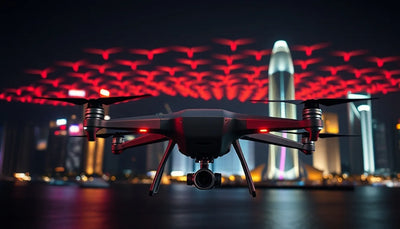
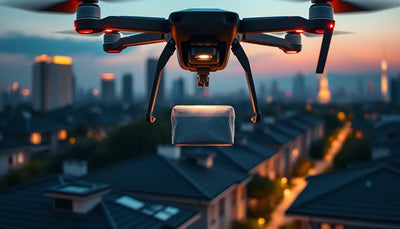
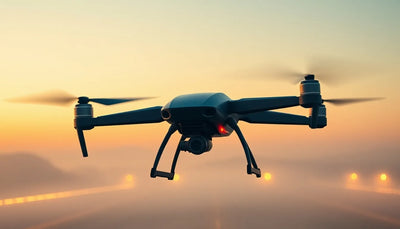
The UK Ministry of Defence is in active discussions to introduce near-silent electric “flying taxis” for frontline logistics and senior officer movement, according to a report published by Yahoo Finance on July 4, 2026. The proposal, which involves adapting electric vertical takeoff and landing (eVTOL) aircraft originally designed for urban air mobility, marks a significant step toward integrating advanced drone-like platforms into conventional military supply chains. For commercial drone buyers, fleet operators, and second-hand market participants, this development signals a broader validation of electric VTOL technology that may reshape procurement expectations, repair service demands, and the value perception of pre-owned platforms capable of similar missions.
While the report does not specify which eVTOL manufacturers are involved or provide exact platform details, the involvement of defence chiefs indicates that the technology has passed preliminary feasibility assessments. The concept draws directly from the civilian “flying taxi” sector, which has matured rapidly over the past three years, and applies it to contested logistics environments where noise signature, fuel independence, and rapid deployment are critical. This convergence of civilian eVTOL progress with military requirements carries direct implications for anyone invested in drone technology, repair parts availability, and the second-hand market for high-end aerial platforms.
Background and Source Detail: What the MoD is Considering
According to the source, defence chiefs are in talks to use near-silent electric “flying taxis” to carry supplies and senior officers to the front line. The core operational benefit is near-silent electric propulsion, which offers a tactical advantage over traditional rotorcraft in terms of acoustic signature. The ability to move personnel and critical cargo without alerting enemy sensors could prove decisive in future conflicts. The report does not disclose a timeline, budget, or specific aircraft model, but the fact that formal discussions are underway suggests that the UK Ministry of Defence sees eVTOL as a viable near-term capability rather than a distant concept.
Fleet readiness
Keep DJI hardware available without overbuying new units.
Use defense and fleet news as a planning signal for repair support, inspected pre-owned aircraft, and replacement timing.

This is not the first time military organisations have looked at eVTOL for logistics. The US Department of Defense has run experiments with electric air taxis for medical evacuation and resupply, but a NATO member’s active procurement talks add weight to the trend. For commercial UAV analysts, the key source detail is the phrase “near-silent electric.” This highlights noise reduction as a primary driver—something that enterprise drone operators in noise-sensitive environments (urban deliveries, survey near wildlife, agricultural monitoring) already value highly. The practical implication is that defence endorsement could accelerate investment in quiet electric propulsion technologies, which may eventually filter down to the commercial drone market. We may see more OEMs offering low-noise upgrades or retrofit kits for existing platforms, and that in turn could affect the resale value of older, louder drone models.
Technology Implications for the UAV and eVTOL Ecosystem
Although no technical specifications are provided in the source, the concept of a “flying taxi” implies a payload capacity sufficient for a person or significant cargo, likely exceeding 100 kg, and a flight endurance optimised for short tactical hops rather than long-duration loiter. This distinguishes it from smaller multirotor drones commonly used in consumer or enterprise settings. However, the underlying technologies—electric propulsion, battery management, autonomous routing, and redundant flight control—are directly shared with high-end drone platforms such as the DJI Matrice series or custom industrial UAVs. For fleet operators, this means that as military applications validate larger eVTOL airframes, the supply chain for high-voltage batteries, motors, and lightweight airframe materials may become more robust and more competitively priced.
Another implication is maintenance and repair. Military-grade eVTOLs will require specialised service centres, and the personnel trained to maintain them will likely also be able to service advanced commercial drones. This could expand the pool of qualified repair technicians globally, reducing turnaround times for professional DJI repair services. Additionally, if militaries contract with civilian eVTOL makers, those companies may later offer commercial variants, creating a direct pipeline of used or surplus airframes into the second-hand market. While that is speculative, it is a logical outcome if production scales. For now, operators should monitor how the UK MoD’s talks evolve, as any procurement contract will set a precedent for eVTOL military logistics worldwide.
One practical step for commercial drone buyers is to consider how noise reduction technology might affect future resale value. If quiet operation becomes a baseline requirement for many commercial missions, then pre-owned DJI drones equipped with silent propeller kits or motor upgrades may command a premium. The MoD’s emphasis on near-silent operation reinforces that acoustic performance is becoming a key differentiator, not just a nice-to-have.
What this means for drone buyers
The UK Ministry of Defence’s move to explore eVTOL flying taxis is directly relevant to anyone purchasing or selling pre-owned drone equipment today. First, it validates the long-term viability of electric vertical flight for demanding applications. This should give buyers more confidence that the technology they invest in now—whether new or pre-owned DJI drones—will not become obsolete quickly. Military adoption drives standardisation, and standardisation improves parts availability and aftermarket support.
Second, the focus on silent operation may influence fleet composition. If your current drones are noisy and you operate in noise-restricted areas, their resale value could decline as quieter alternatives become more common. Now may be a good time to evaluate a drone trade-in toward a lower-noise platform. Similarly, if you are a repair customer, expect that future repair parts for high-end commercial UAVs will be influenced by eVTOL component designs—motor bearings, propellers, and battery management systems that meet military specifications are likely to be more durable and easier to source.
Third, for fleet managers, this development suggests that the gap between drone logistics and traditional aircraft logistics is narrowing. If the MoD can trust eVTOLs to carry senior officers, then commercial operators should feel more confident using higher-end drones for critical supply chain roles. The pre-owned DJI market may see increased interest in heavy-lift platforms like the Matrice 600 or 350 RTK, as they are the closest civilian equivalents to these military concepts. Buyers should inspect such platforms carefully for flight hours and battery health, as heavy-lift use accelerates wear. Overall, the prudent action is to stay informed about military procurement programs, as they often signal where the commercial market is headed.
Broader Market Trends in Military-Civilian Drone Convergence
The UK MoD’s interest in electric flying taxis is part of a wider pattern of militaries adopting civilian drone and eVTOL technologies rather than reinventing them. This trend has already been seen with small reconnaissance drones like the DJI Mavic series being used by armed forces globally, and now it is scaling up to logistics. For the second-hand drone market, this convergence means that military surplus may become a source of high-quality, well-maintained pre-owned platforms. However, military contracts often include strict end-of-life disposal terms, so the flow may be indirect.
Another trend is the growing emphasis on electric propulsion for all military ground and air vehicles. The near-silent characteristic is not just a tactical advantage; it also aligns with carbon reduction targets many defence departments have adopted. This could push more funding into battery research, charging infrastructure, and swappable battery standards—all of which benefit commercial operators. For example, if the MoD settles on a common battery interface for its eVTOLs, that standard may be adopted by commercial drone manufacturers, making it easier to find replacement batteries or upgrade older airframes.
For shareholders and investors in the drone space, the Yahoo source notes EVTL (likely a reference to a publicly traded eVTOL company, though not explicitly stated as such). The involvement of defence contractors in these talks often leads to share price volatility, but for operators, the important point is that the technology is gaining credibility. When planning purchases, look for platforms that share DNA with these military projects—such as those from companies that already supply defence agencies—as they will have better long-term support. Conversely, if you are selling pre-owned drones, highlighting any features that align with military-grade durability or low noise can help justify a higher asking price.
In summary, the UK Ministry of Defence’s exploration of electric flying taxis for battlefield logistics is not just a defence story. It is a barometer for where the entire electric aviation industry is heading. Commercial drone buyers should use this signal to inform their fleet strategies, repair decisions, and pre-owned market timing. The near-silent electric future is arriving faster than many anticipated.
Will this move affect the prices of pre-owned DJI drones?
Likely yes, but indirectly. If military validation increases overall demand for high-end electric VTOL platforms, buyers may shift toward heavy-lift pre-owned DJI models like the Matrice series, which share some component technology. Conversely, older, louder models may depreciate faster. It is a good time to assess your fleet’s acoustic profile if you plan to sell in the near term.
Should I consider a pre-owned drone for military-style logistics missions?
If your commercial missions involve cargo transport, surveillance, or rapid deployment in noise-sensitive areas, a well-maintained pre-owned DJI platform with appropriate payload capacity can be a cost-effective choice. Ensure you can source genuine OEM spare parts and access professional repair services to maintain reliability.
How can I future-proof my drone fleet against military-inspired technology shifts?
Focus on platforms with modular designs, strong aftermarket support, and upgradeable components. Fleets built around widely used models will retain value longer. Also consider establishing a relationship with a professional DJI repair service that stocks genuine parts and stays current with emerging standards influenced by military eVTOL programs.
参照ソース
- The Telegraph UK MoD flying taxis report - primary reporting source
- LBC MoD flying taxis report - secondary reporting source
- UK Ministry of Defence - official government source
- Vertical Aerospace official site - official company source
Reboot Hub編集部は、ドローン所有者のために購入、修理、再販、および運用の分析を提供します。誤りを発見した場合は、編集方針に基づき修正レビューを依頼してください。