Hivemind Swarm Upgrade Turns LUCAS Kamikaze Drone Into a Deadly Networked Hunter
Shield AI’s hivemind software transforms the combat-proven LUCAS loitering munition into a networked killer swarm. This leap in autonomous cooperative engagement signals a new era for tactical drones—and a seismic shift for defense contractors, commercial operators eyeing BVLOS autonomy, and the used drone market. Read how this changes the UAV threat calculus and what it means for your fleet strategy.

編集ノート
- この記事は、指定された外部レポートとReboot Hub独自の分析を組み合わせ、ドローン購入者、フリートオペレーター、修理依頼客、および中古DJI市場の監視者に提供するものです。
- ソースとなる事実は解釈から分離されています。レポートのデータが限定的な場合は、その制限を明記した上で、Reboot Hubの見解を分析として提示します。
- Reboot Hubはドローン製品および修理サービスへの商用リンクを掲載していますが、これらは読者のためのリソースであり、記事の結論を決定付けるものではありません。
In a development that signals a fundamental shift in the architecture of aerial warfare, the U.S. military’s LUCAS loitering munition—a combat-proven “kamikaze” drone—is being upgraded with a hivemind swarming capability powered by Shield AI. The announcement, first reported by The War Zone on May 23, 2026, confirms that the era of single-drone, single-target strikes is giving way to networked, autonomous cooperative engagement. For defense analysts, commercial UAV operators, and second-hand drone market participants, this is not just a weapons story—it is a technology inflection point with far-reaching implications for autonomy, airspace integration, and fleet economics.
The LUCAS, originally developed as a tube-launched, expendable drone for dismounted infantry, has proven itself in real-world combat as a precision loitering munition. Now, with Shield AI’s Hivemind software stack, a single operator will be able to launch and coordinate multiple LUCAS drones that communicate, share sensor data, and dynamically assign targets among themselves. This cooperative swarming capability effectively multiplies the lethality of each drone by enabling the collective to execute complex tactics—such as simultaneous multi-axis attacks, electronic warfare masking, and adaptive target re-prioritization—without constant human input.

What Is the LUCAS Kamikaze Drone and Why Does Swarming Matter?
The LUCAS (Loitering Unmanned Casualty Assessment System) is a man-portable, tube-launched loitering munition designed for rapid deployment by small tactical units. It carries a high-explosive warhead and can loiter over a target area for extended periods before striking. Its combat pedigree includes real-world deployments in contested environments, where it has been used to destroy high-value targets with minimal collateral damage. The drone’s existing capabilities—day/night sensors, GPS and inertial navigation, and a two-way data link—make it a proven platform. What it lacked until now was the ability to coordinate with other LUCAS units in real time.
Fleet readiness
Keep DJI hardware available without overbuying new units.
Use this news as a planning signal for inspected DJI aircraft, repair support, and trade-in timing.
Shield AI’s Hivemind software changes that. Originally developed for the company’s V-BAT vertical takeoff and landing drone, Hivemind is a neural-network-based autonomy stack that enables multiple unmanned aircraft to operate as a cohesive team. Unlike traditional “swarm” concepts that rely on pre-programmed behaviors or centralized ground control, Hivemind uses distributed intelligence: each drone runs the same AI, and they negotiate tasks among themselves using a shared tactical picture. This makes the swarm resilient to communication jamming or the loss of individual nodes. For the LUCAS, this means a single soldier could launch a half-dozen drones, and the swarm would autonomously identify, prioritize, and engage targets—all while adapting to enemy countermeasures.

The strategic importance of this upgrade cannot be overstated. In modern peer-to-peer conflicts, electronic warfare and air defense systems make it extremely dangerous for manned aircraft to operate near the front lines. A swarm of low-cost, expendable LUCAS drones can saturate defenses, force the enemy to expend expensive interceptors, and strike multiple targets simultaneously. The hivemind capability effectively turns each LUCAS from a “smart bomb” into a “smart teammate.”

Ready to Upgrade Your Fleet?
Browse our collection of inspected pre-owned DJI drones — inspected, flight-tested, and backed by a 6-month warranty. Save up to 40% versus retail.
What Does This Mean for Defense Contractors and Commercial UAV Operators?
Ready to Upgrade Your Fleet?
Browse our collection of inspected pre-owned DJI drones — inspected, flight-tested, and backed by a 6-month warranty. Save up to 40% versus retail.
For defense contractors, the LUCAS hivemind upgrade validates a broader trend: the convergence of loitering munitions and autonomous swarming is no longer theoretical. Shield AI’s success with Hivemind on the V-BAT and now the LUCAS positions the company as a key player in the Pentagon’s Replicator initiative, which aims to field thousands of attritable autonomous systems by 2027. Competitors—including Anduril, AeroVironment, and Kratos—will need to accelerate their own swarming software efforts or risk being locked out of a rapidly growing market segment.
For commercial UAV operators, the implications are more nuanced but equally significant. The underlying technology—distributed AI for multi-vehicle coordination, resilient communications, and autonomous decision-making—is directly transferable to civilian applications. Precision agriculture, infrastructure inspection, and logistics companies are already exploring multi-drone operations for tasks like crop health monitoring over large farms, bridge and pipeline inspections, and last-mile delivery. The LUCAS hivemind upgrade demonstrates that the software to manage such fleets is maturing rapidly. Within three to five years, we can expect commercial equivalents of Hivemind to become available for platforms like the DJI Agras series or the Matrice 350 RTK, enabling coordinated BVLOS (Beyond Visual Line of Sight) operations with minimal human supervision.
However, this also raises regulatory and safety concerns. The FAA’s Part 107 rules currently require a visual observer for each drone, and BVLOS waivers are granted only on a case-by-case basis. A fully autonomous swarm of commercial drones would require a complete rethinking of airspace management. The FAA’s proposed Remote ID and UAS Traffic Management (UTM) frameworks are steps in this direction, but they are not yet ready for the complexity of swarming operations. Commercial operators should monitor the military’s progress with Hivemind as a bellwether for future civilian autonomy standards—and prepare their fleets accordingly.
How the LUCAS Hivemind Upgrade Reshapes the Second-Hand Drone Market
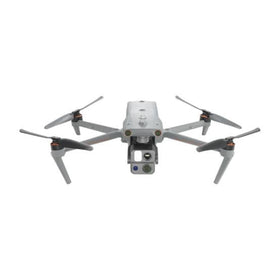
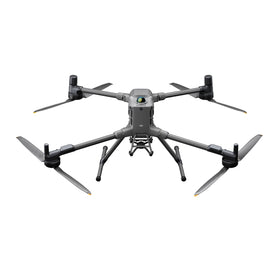
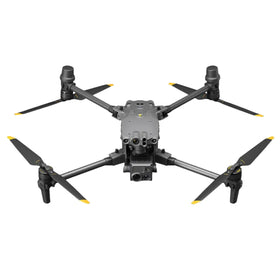
For participants in the used drone market, the LUCAS news carries a clear signal: autonomous swarming is coming to a wider range of platforms, and older drones that lack the processing power or communication bandwidth to support distributed AI will see their resale value decline. Conversely, drones with modular payload bays, open SDKs, and powerful onboard computers—such as the DJI M300 RTK, M350 RTK, or the Autel EVO Max 4T—will command a premium as potential testbeds for swarming experiments.
We are already seeing this trend in the pre-owned DJI drones market at Reboot Hub. Enterprise customers who previously purchased a single high-end drone for manual inspection are now asking about multi-unit fleet packages with integrated docking stations and cloud-based fleet management. The LUCAS hivemind upgrade validates their intuition: the future belongs to coordinated, autonomous fleets, not isolated single-aircraft sorties. For budget-conscious operators, buying pre-owned DJI drones from a trusted source like Reboot Hub allows them to build a multi-unit fleet without the capital expenditure of buying new. With a 6-month warranty and professional inspection, these inspected pre-owned drones offer a path to swarming readiness without breaking the bank.
Additionally, the repair ecosystem will need to evolve. Swarming operations put more flight hours on more airframes, increasing the need for reliable professional DJI repair services. At Reboot Hub, we are seeing a steady increase in repair requests for gimbal assemblies, propulsion systems, and communication modules—precisely the components that are most stressed in multi-drone coordinated flights. The lesson for commercial operators is clear: invest in fleet maintenance infrastructure as you expand your autonomous capabilities.
Geopolitical and Regulatory Ramifications
The LUCAS hivemind upgrade also has significant geopolitical implications. The U.S. military is not the only actor pursuing autonomous swarming—China, Russia, Turkey, and Israel all have active programs. The DJI brand, which dominates the global commercial drone market, is often cited as a potential platform for swarming experiments by state actors. This has led to increased scrutiny of DJI products under the NDAA and other defense authorization acts. For commercial operators flying DJI drones in regulated airspace, the line between civilian and military technology is becoming increasingly blurred.
Regulators are taking notice. The FAA’s recent Notice of Proposed Rulemaking on remote identification and tracking for unmanned aircraft systems includes provisions for “coordinated flight operations” that could lay the groundwork for swarming regulations. The European Union Aviation Safety Agency (EASA) has similarly published a concept of operations for U-space, the European UTM framework, that envisions automated deconfliction between multiple drones. The LUCAS hivemind upgrade provides a concrete example of what is technically possible, putting pressure on regulators to catch up with technology.
Frequently Asked Questions
What is the LUCAS drone and who makes it?
The LUCAS (Loitering Unmanned Casualty Assessment System) is a tube-launched, man-portable loitering munition developed for the U.S. military. It is manufactured by a partnership involving multiple defense contractors, with Shield AI now providing the Hivemind autonomy software for swarming capability.
How does Shield AI’s Hivemind software enable swarming?
Hivemind uses distributed neural-network-based intelligence, allowing each drone to run the same AI software and negotiate tasks—such as target prioritization, flight path coordination, and attack timing—among themselves without a central ground controller. This makes the swarm resilient to jamming and node loss.
What does the LUCAS hivemind upgrade mean for commercial drone operators?
It signals that multi-drone autonomous coordination is moving from experimental to operational. Commercial operators should prepare for BVLOS swarming capabilities within 3–5 years, invest in fleet management software, and consider upgrading to drones with sufficient onboard processing power. The second-hand market will see increased demand for modular, high-compute platforms like the DJI M350 RTK.
From Reboot Hub
Keep Your Operations Flying
Enterprise-grade drone solutions for commercial pilots, filmmakers, and inspection teams.
Pre-owned Fleet
Fully inspected DJI drones with 6-month warranty. Save up to 40%.
Browse Inventory ->