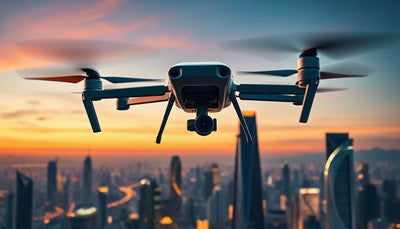
Florida Dentist Accused of Drone Stalking Ex-Wife and Hiding the Drone
A Palm Beach County dentist faces a felony evidence tampering charge after deputies reportedly traced a drone from his ex-wife's yard back to him. The case highlights how consumer drones create new legal exposure for private owners and resale buyers.

Quick answer
Palm Beach County deputies reported tracing a drone from a woman's backyard to her ex-husband, a Florida dentist, who faces a felony charge for allegedly hiding the drone.
- The only felony charge reported is evidence tampering, not the stalking allegation itself
- Deputies say they followed the drone from the ex-wife's yard to the suspect
- The case shows how post-flight conduct can create separate legal exposure
- DroneXL.co is the primary reporting source for this development
Evidence: DroneXL.co · FAA UAS official guidance
Operator checklist
Turn policy news into a safer fleet decision.
Before changing aircraft, compare repair paths, available DJI inventory, and trade-in timing against the rule change.

Palm Beach County deputies say they followed a drone from a woman's backyard to her ex-husband, a Florida dentist, and the only felony charge in the case accuses him of hiding the aircraft. The reporting comes from DroneXL.co, which published the account on November 19, 2026. The development matters for commercial operators and private owners because it shows how a consumer drone incident can escalate into separate legal exposure that has little to do with how the aircraft was flown.
The reported sequence is straightforward. According to the source, deputies responded after the woman reported a drone over her yard. They then traced the aircraft back to the ex-husband. The stalking allegation is part of the broader narrative, but the felony charge that has been reported is evidence tampering, meaning the accusation centers on what happened after the flight rather than the flight itself. That distinction is important for anyone who owns, operates, or resells consumer drones.
What the reported evidence tampering charge signals
The central reported fact is that the only felony charge involves hiding the drone, not the alleged stalking conduct. If accurate, that means the legal risk shifted from the airspace to the evidence room. A pilot who flies a drone near a residence may face nuisance, privacy, or harassment claims depending on local law. But a pilot who conceals or disposes of an aircraft after law enforcement begins asking questions can face a separate obstruction or tampering charge that is often easier to prove.
For commercial operators, this is a reminder that post-incident behavior is part of the compliance picture. Fleet managers should have a clear protocol for what happens when law enforcement requests access to an aircraft, flight logs, or storage records. Deleting flight data, moving equipment, or failing to produce an aircraft can turn a civil complaint into a criminal matter. The source does not provide details on what evidence deputies gathered or how the drone was allegedly hidden, so operators should treat those specifics as unconfirmed.
Why consumer drone incidents affect the pre-owned market
Cases like this rarely stay local. When a consumer drone is tied to a reported stalking or evidence tampering case, it reinforces a broader perception that small camera drones are surveillance tools first and photography tools second. That perception can influence local ordinances, homeowner association rules, and buyer hesitation in the pre-owned market. A prospective buyer who reads about a Florida dentist accused of using a drone to monitor an ex-wife may think twice about how neighbors will react to a drone in their own yard.
The pre-owned DJI market is especially sensitive to this kind of news because most consumer drones in circulation are DJI models. Buyers evaluating an inspected pre-owned drone often focus on battery health, gimbal condition, and flight hours. But the legal history of a specific serial number is harder to assess. If an aircraft was involved in a law enforcement matter, that history may not appear in a standard resale listing. This is one reason documentation matters. A seller who can show a clean service record, original purchase details, and a professional inspection gives a buyer more confidence than a listing with no paper trail.
What this means for drone owners and the market
The practical takeaway for any drone owner is that the aircraft itself is now a piece of potential evidence in many jurisdictions. If law enforcement asks about a flight, the drone, the controller, and the stored flight logs all matter. Owners should not assume that deleting an app or moving a drone will resolve the situation. The reported Florida case suggests that concealment can become the more serious charge. For fleet operators, that means training pilots to preserve data and cooperate with lawful requests. For private owners, it means treating the drone as a documented asset rather than a disposable gadget.
There is also a resale angle. A drone with an unclear history can be harder to sell, and a buyer who inherits a disputed aircraft may face questions they cannot answer. That is why buyers in the second-hand market increasingly look for inspected pre-owned DJI drones with verifiable condition reports and clean ownership records. For readers evaluating their options, the Drone Wiki offers a reference point for understanding how drone ownership, maintenance, and resale documentation fit together. The Florida case is still developing, and the source does not confirm a conviction or final outcome, but the reported charge alone is enough to change how some owners think about custody of their aircraft. For owners evaluating service and lifecycle risk, Drone Wiki explains the relevant repair, parts, resale, or operational path.
What operators should watch next
The reported case is a local law enforcement matter, but it touches on themes that regulators and insurers watch closely. Privacy complaints involving consumer drones have driven local restrictions in several U.S. markets. Evidence handling and data preservation are also becoming standard topics in commercial drone training. If the Florida case proceeds, the evidence tampering charge may receive more attention than the original stalking allegation because it is the reported felony.
Operators should watch for any detail about how deputies identified the drone or linked it to the suspect. That information could clarify whether Remote ID, flight logs, or witness testimony played a role. The source does not provide that level of detail, so any discussion of identification methods would be speculative. What is not speculative is that the case reinforces a simple rule: the aircraft is an asset with legal significance, and how an owner handles it after an incident can matter as much as how it was flown.
FAQ
Frequently asked questions
What is the main charge in the reported Florida drone case?
According to DroneXL.co, the only felony charge reported is evidence tampering, based on an accusation that the drone was hidden. The stalking allegation is part of the narrative but is not the reported felony.
Why does evidence tampering matter for drone owners?
Evidence tampering is a separate legal issue from the flight itself. If law enforcement requests access to a drone and an owner conceals or disposes of it, that conduct can create a new criminal charge even if the original flight was not illegal.
How could this case affect the pre-owned drone market?
High-profile consumer drone incidents can increase buyer caution and local restrictions. Buyers may place more value on documented ownership history, professional inspections, and clean service records when evaluating pre-owned DJI drones.
Which sources support this update?
The visible evidence links identify DroneXL.co and FAA UAS official guidance; each source is used only for the claim it directly supports.
What remains subject to change?
Retail pricing, availability, product bundles and regulatory timelines can change. Readers should verify the latest terms with the named retailer, manufacturer or regulator before acting.
How should buyers or operators use this analysis?
Use the verified facts as a starting point, then compare mission fit, lifecycle support, maintenance needs and current procurement terms before making a purchase or fleet decision.
参照ソース
- DroneXL.co - primary source
- FAA UAS official guidance - official regulator source
Reboot Hub編集部は、ドローン所有者のために購入、修理、再販、および運用の分析を提供します。誤りを発見した場合は、編集方針に基づき修正レビューを依頼してください。