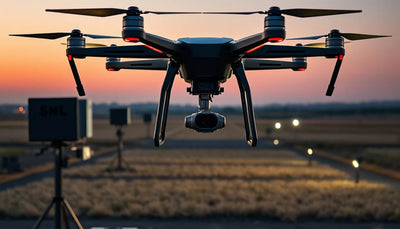
Firefighting eVTOLs Emerge as a Safety Anchor for Urban Air Mobility
Sina Finance reports that Guoanda is positioning firefighting eVTOLs as a safety anchor for flying cars. The development signals how emergency-response airframes may shape early urban air mobility demand, certification paths, and commercial service models.

Quick answer
Sina Finance reports that Guoanda is positioning firefighting eVTOLs as a safety anchor for flying cars, framing emergency-response use cases as a foundational entry point for urban air mobility.
- The report frames firefighting eVTOLs as a safety anchor for the broader flying car market.
- Guoanda is identified as the company advancing this positioning logic.
- The development suggests emergency-response missions may become an early commercial path for eVTOL platforms.
- Source-limited reporting: operational details, certifications, and timelines were not provided in the source summary.
Sina Finance reports that Guoanda is positioning firefighting eVTOLs as a safety anchor for flying cars, framing emergency-response airframes as a foundational layer for the broader urban air mobility market. The report, surfaced through Google News, is limited in operational detail, but the strategic signal is clear: companies are beginning to treat specialized public-safety missions as a credible entry point for electric vertical takeoff and landing platforms.
Market context
Turn market news into a buy, repair, or trade-in decision.
Compare pre-owned availability, resale timing, and repair economics before the market moves again.

Reboot Hub analysis: For commercial drone operators, fleet buyers, and repair customers, this matters more than it might first appear. Early eVTOL demand will not be shaped only by passenger transport. Emergency response, inspection, and utility missions are likely to drive the first repeatable service contracts, maintenance workflows, and certification benchmarks. Understanding which use cases anchor early adoption helps operators anticipate where parts demand, training investment, and resale value will concentrate.
The positioning logic behind firefighting eVTOLs
Sina Finance frames Guoanda's argument around a simple premise: before flying cars become routine passenger transport, they need a credible safety function. Firefighting eVTOLs offer that function. A platform that can reach high-rise fires, operate in dense urban corridors, or support emergency logistics provides a public-safety justification that passenger mobility alone does not yet command.
This is a commercially intelligent framing. Emergency-response airframes typically face more defined mission requirements, more predictable procurement cycles, and stronger institutional demand than consumer or early passenger use cases. For a manufacturer, that can mean steadier early revenue and clearer feedback loops for airframe durability, battery cycling, and component wear. For the broader market, it means the first wave of eVTOL maintenance and parts demand may come from municipal and industrial operators rather than air taxi fleets.
Reboot Hub analysis: the source does not provide Guoanda's specific airframe specifications, certification status, or delivery timelines. Readers should treat the report as a strategic positioning signal rather than a confirmed operational deployment.
Why emergency-response airframes shape early adoption
The source summary highlights firefighting as the anchor use case, but the underlying logic extends to other public-safety and industrial missions. Emergency-response platforms tend to operate under more structured regulatory review, which can accelerate the development of maintenance documentation, inspection intervals, and spare parts catalogs. Those are the same operational building blocks that commercial drone fleets already depend on.
For fleet managers, the implication is that early eVTOL service models may look less like airline operations and more like specialized utility fleets. That means demand for trained technicians, battery health monitoring, and component-level repair will likely emerge before passenger-carrying certification matures. Operators who already maintain inspection drones, thermal imaging payloads, or industrial airframes may find their existing repair and logistics experience transfers more directly than expected.
The source does not confirm whether Guoanda's firefighting eVTOL platform shares components with commercial drone supply chains. However, the broader market pattern is familiar: specialized airframes create demand for OEM-pulled parts, documented repair procedures, and second-hand asset channels once early units cycle out of frontline service.
What this means for drone owners and the market
For commercial drone owners and buyers, the Guoanda report is a reminder that air mobility markets do not develop evenly. Passenger eVTOLs capture attention, but emergency-response and utility platforms may generate the first stable demand for maintenance, parts, and resale infrastructure. That has direct consequences for how operators plan fleet lifecycles and where they expect residual value to hold.
Pre-owned DJI drone owners should watch this space carefully. DJI's enterprise ecosystem already supports thermal inspection, search-and-response, and industrial mapping workflows that overlap with the mission logic behind firefighting eVTOLs. As emergency-response airframes mature, the operational standards and repair documentation developed for larger platforms often influence expectations across the broader drone service market. Operators who keep their airframes well-documented and professionally maintained are better positioned as those standards tighten. For readers evaluating repair and parts options, the Drone Wiki provides a useful reference for understanding how maintenance decisions affect long-term asset value. For owners evaluating service and lifecycle risk, Drone Wiki explains the relevant repair, parts, resale, or operational path.
Fleet planners should also consider the procurement angle. If municipal and industrial buyers begin funding firefighting eVTOL programs, they will need supporting ground infrastructure, charging systems, and inspection workflows. That creates secondary demand for smaller drones used in pre-incident site assessment, thermal verification, and post-incident documentation. Operators who already serve municipal or industrial clients may see new service opportunities before passenger air taxi routes become commercially viable.
Source-limited reporting and what remains uncertain
Sina Finance is the primary reporting source for this development, and the available summary is limited. It does not include Guoanda's specific airframe model, payload capacity, range figures, certification status, or production timeline. It also does not confirm whether any firefighting eVTOL has entered operational service or secured municipal procurement contracts.
That uncertainty matters for commercial decision-making. Buyers and fleet operators should avoid treating firefighting eVTOLs as an immediate revenue category. The strategic signal is meaningful, but the operational timeline is unverified. Reboot Hub analysis suggests the near-term impact will be felt in market sentiment, investment attention, and early regulatory discussion rather than in immediate parts demand or resale pricing.
For repair customers and pre-owned buyers, the practical takeaway is to focus on what is verifiable today. Documented maintenance history, genuine OEM spare parts, and professional inspection standards remain the most reliable ways to protect asset value. New air mobility categories may shift long-term demand, but they do not replace the fundamentals of responsible fleet ownership.
FAQ
Frequently asked questions
What did Sina Finance report about Guoanda and firefighting eVTOLs?
Sina Finance reported that Guoanda is positioning firefighting eVTOLs as a safety anchor for flying cars, suggesting emergency-response missions may serve as an early foundation for urban air mobility adoption.
Why should commercial drone operators care about firefighting eVTOLs?
Emergency-response airframes could drive the first stable demand for eVTOL maintenance, parts, and inspection workflows, creating secondary opportunities for drone operators who already serve municipal or industrial clients.
Does the report confirm that firefighting eVTOLs are already in service?
No. The source summary does not confirm operational deployment, certification status, or production timelines. Readers should treat the report as a strategic positioning signal rather than a confirmed market rollout.
Which sources support this update?
The article distinguishes reported information from analysis and does not present an unverified source as official confirmation.
What remains subject to change?
Retail pricing, availability, product bundles and regulatory timelines can change. Readers should verify the latest terms with the named retailer, manufacturer or regulator before acting.
How should buyers or operators use this analysis?
Use the verified facts as a starting point, then compare mission fit, lifecycle support, maintenance needs and current procurement terms before making a purchase or fleet decision.
参照ソース
- Source material - primary source
公開時点で、追加の公式ドキュメントは入手できませんでした。
Reboot Hub編集部は、ドローン所有者のために購入、修理、再販、および運用の分析を提供します。誤りを発見した場合は、編集方針に基づき修正レビューを依頼してください。