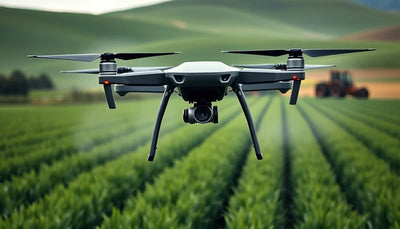
DJI Pushes Heritage Site 3D Scanning for Commercial Drone Pilots
DJI is encouraging commercial drone pilots to turn heritage sites into 3D flythroughs, signaling fresh demand for mapping and inspection workflows. The move could reshape service offerings and equipment choices for operators, fleet buyers, and repair customers.

Quick answer
DJI is encouraging commercial drone pilots to create 3D flythroughs of heritage sites, as reported by DroneDJ.
- The initiative points to growing commercial demand for heritage mapping and 3D documentation workflows.
- Operators may see new service opportunities around cultural sites, tourism, and preservation projects.
- Fleet buyers and repair customers could face shifting demand for mapping-capable DJI platforms and OEM spare parts.
Evidence: DJI ROMO official robot vacuum page · DJI Support ROMO beginner guide
Market context
Turn market news into a buy, repair, or trade-in decision.
Compare pre-owned availability, resale timing, and repair economics before the market moves again.

DJI is steering commercial drone pilots toward a new application: turning heritage sites into 3D flythroughs. The development was reported by DroneDJ, which said the drone maker wants pilots to document cultural and historical locations using aerial mapping and photogrammetry workflows. The report frames the push as an expansion of commercial drone use beyond construction, agriculture, and infrastructure inspection.
For operators, the signal matters because it suggests DJI sees heritage preservation and cultural site documentation as a viable commercial niche. That could translate into new client categories, fresh service bundles, and a different set of equipment and maintenance demands. While the source report is limited on operational specifics, the direction is clear enough to shape near-term planning for pilots and fleet managers.
What the heritage site push signals about DJI's commercial strategy
DroneDJ's report indicates that DJI is actively encouraging pilots to apply 3D flythrough techniques to heritage sites. The concept involves capturing detailed aerial imagery that can be processed into navigable three-dimensional models, giving preservation teams, tourism operators, and researchers a new way to document and present historical locations.
Reboot Hub analysis suggests this is less about a single product launch and more about expanding the perceived utility of existing DJI mapping-capable platforms. By promoting heritage work, DJI can broaden the addressable market for its commercial ecosystem without necessarily introducing new hardware. For pilots, that means the value of mapping-ready drones may hold steady or increase, even as older consumer-focused models depreciate.
The heritage angle also aligns with public-sector and institutional budgets. Cultural ministries, museums, archaeological teams, and tourism boards often have funding cycles that differ from private construction clients. Operators who diversify into heritage documentation could smooth out revenue seasonality and reduce dependence on volatile real estate or infrastructure demand.
What this means for drone owners and the market
For existing drone owners, the heritage site trend reinforces the importance of keeping mapping-capable platforms in reliable condition. Photogrammetry work is time-intensive and often requires repeated flights over the same structure. A drone that is grounded for repair or waiting on a slow spare part delivery can delay an entire documentation project. Operators should review their maintenance schedules and parts availability before committing to heritage contracts.
The pre-owned DJI market could also feel the effect. As heritage and preservation work grows, more operators may look for inspected pre-owned mapping platforms to expand capacity without paying full retail prices. Reboot Hub has observed that commercial buyers often evaluate pre-owned DJI drones and genuine OEM spare parts as a way to keep fleet costs predictable, especially when entering a new service segment. For pilots considering heritage work, a well-maintained pre-owned unit with a documented repair history may be a practical entry point. For owners evaluating service and lifecycle risk, Drone Wiki explains the relevant repair, parts, resale, or operational path.
Fleet managers should also consider payload and sensor requirements. Heritage documentation often benefits from high-resolution imaging and consistent flight behavior. Without verified specification context for this article, Reboot Hub cannot confirm which specific DJI models or camera payloads are best suited to the task. Operators should verify sensor compatibility and mapping software support directly with DJI or an authorized dealer before purchasing equipment for heritage contracts.
Practical considerations for pilots entering heritage documentation
Heritage sites come with operational constraints that differ from typical construction or agricultural jobs. Many cultural locations have restricted airspace, fragile structures, or strict access rules. Pilots should expect to coordinate with site managers, local authorities, and possibly aviation regulators before flying. The DroneDJ report does not detail regulatory requirements, but the nature of heritage work implies a heavier planning burden than routine mapping.
Insurance and liability are also worth reviewing. Flying close to irreplaceable structures raises the stakes for equipment failure or pilot error. Operators may want to confirm that their coverage includes heritage or cultural property work, and that their drones have recent maintenance records. A documented service history using OEM-pulled parts can support both safety and insurance conversations.
From a commercial standpoint, heritage documentation may reward operators who can deliver polished 3D flythroughs rather than raw image sets. Clients in tourism and preservation often value presentation quality. Pilots who invest in post-processing skills and reliable hardware could differentiate themselves in a market that is still forming.
The broader outlook for commercial drone services
DJI's heritage site push is part of a larger pattern: the commercial drone industry keeps finding new verticals for mapping and inspection technology. Each new application expands the pool of potential clients and reinforces the value of versatile, well-maintained equipment. For repair providers and parts suppliers, that means steady demand for the components that keep mapping fleets airborne.
Reboot Hub analysis: The pre-owned DJI market is likely to benefit from this diversification. As more operators test heritage, tourism, and preservation work, some will seek cost-effective ways to add capacity. Pristine pre-owned units and professional DJI repair services offer a lower-risk path than committing to a full retail fleet expansion. Reboot Hub expects this dynamic to support healthy secondary market activity for mapping-capable platforms.
Still, operators should approach the heritage niche with realistic expectations. The DroneDJ report describes a directional push, not a guaranteed revenue stream. Pilots who already serve mapping clients may find heritage work to be a natural extension. Those without photogrammetry experience should treat it as a skill-building investment rather than an immediate profit center.
FAQ
Frequently asked questions
What did DJI announce about heritage sites?
According to DroneDJ, DJI is encouraging drone pilots to turn heritage sites into 3D flythroughs using aerial mapping and photogrammetry techniques. The report frames this as an expansion of commercial drone applications into cultural and historical documentation.
How could heritage site scanning affect drone demand?
Heritage documentation could increase demand for mapping-capable DJI platforms, OEM spare parts, and professional repair services. Operators may also seek inspected pre-owned drones to add capacity for new heritage contracts without paying full retail prices.
What should a drone operator do before taking heritage work?
Operators should verify equipment condition, sensor compatibility, and mapping software support before accepting heritage projects. They should also confirm airspace access, insurance coverage, and site permissions, since cultural locations often carry stricter operational rules.
Which sources support this update?
The visible evidence links identify DJI ROMO official robot vacuum page and DJI Support ROMO beginner guide; each source is used only for the claim it directly supports.
What remains subject to change?
Retail pricing, availability, product bundles and regulatory timelines can change. Readers should verify the latest terms with the named retailer, manufacturer or regulator before acting.
How should buyers or operators use this analysis?
Use the verified facts as a starting point, then compare mission fit, lifecycle support, maintenance needs and current procurement terms before making a purchase or fleet decision.
参照ソース
- DroneDJ via Google News - primary source
- DJI ROMO official robot vacuum page - official product page
- DJI Support ROMO beginner guide - official support guide
Reboot Hub編集部は、ドローン所有者のために購入、修理、再販、および運用の分析を提供します。誤りを発見した場合は、編集方針に基づき修正レビューを依頼してください。