Chinese Tourist Pleads Guilty in NASA Kennedy Drone Flight Case
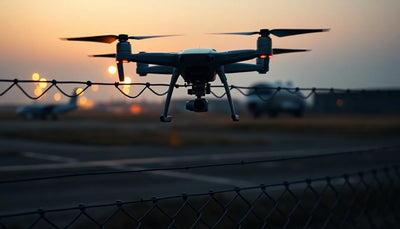
A Chinese tourist has pleaded guilty over a 12-minute drone flight near Kennedy Space Center, according to DroneXL.co. The case adds another data point on how U.S. restricted-airspace enforcement is playing out for foreign visitors and commercial operators alike.

Quick answer
Xiaodong He pleaded guilty over a 12-minute drone flight near NASA Kennedy Space Center, according to DroneXL.co reporting, and now faces up to a year in custody.
- The plea stems from a drone flight near Kennedy Space Center, a highly restricted area
- DroneXL.co reports the flight lasted roughly 12 minutes
- Two earlier cases are cited as possible sentencing benchmarks
- The case highlights enforcement risk for foreign visitors and unfamiliar pilots
Evidence: DroneXL.co
Market context
Turn market news into a buy, repair, or trade-in decision.
Compare pre-owned availability, resale timing, and repair economics before the market moves again.

Verified facts
What the available evidence confirms
| Case detail | Reported fact |
|---|---|
| Defendant | Xiaodong He |
| Plea | Guilty |
| Flight duration | Approximately 12 minutes |
| Location | Near NASA Kennedy Space Center |
| Potential penalty | Up to one year |
DroneXL.co reported on September 19, 2026, that Xiaodong He, a Chinese tourist, pleaded guilty over a 12-minute drone flight near NASA Kennedy Space Center. The plea places He in a small but growing group of foreign visitors whose recreational drone use has collided with U.S. restricted-airspace enforcement, and it gives commercial operators a fresh data point on how prosecutors and courts are treating these cases.
The central facts are narrow: a guilty plea, a flight duration of roughly 12 minutes, a location near one of the most sensitive aerospace facilities in the United States, and a potential sentence of up to one year. DroneXL.co notes that two earlier cases may offer a preview of what sentencing could look like, though the report does not specify exact outcomes in those prior matters.
Why Kennedy Space Center airspace is different
Kennedy Space Center sits inside one of the most tightly controlled airspace environments in the country. For drone operators, the practical distinction is not whether the area is merely restricted, but how aggressively violations are investigated once a flight is detected. According to the DroneXL.co report, the flight at issue lasted only about 12 minutes, yet that was enough to produce a criminal case and a guilty plea.
For commercial pilots and fleet managers, the takeaway is that flight duration is not a reliable measure of exposure. A short recreational flight near a high-value federal site can trigger the same enforcement machinery as a longer, more deliberate intrusion. Operators who work near ports, military installations, energy infrastructure, or federal research facilities should treat even brief airspace incursions as high-risk events.
What this means for drone owners and the market
The case matters beyond the individual defendant because it reinforces a pattern: enforcement is not limited to U.S. citizens or to pilots with commercial intent. A foreign tourist with a consumer drone can become a federal case, and the plea in this matter suggests that defendants sometimes accept responsibility rather than contest the charge. For the broader market, that dynamic supports continued demand for airspace-awareness tools, geofencing compliance, and pre-flight authorization workflows.
For buyers and repair customers, the operational lesson is that a drone is only as compliant as the airspace it is flown in. A well-maintained aircraft flown into restricted airspace creates legal exposure that no amount of hardware upkeep can offset. Operators evaluating pre-owned DJI drones or OEM-pulled parts should also be evaluating their own flight planning habits, because enforcement outcomes like this one show that the pilot, not the platform, is the primary risk variable. Readers tracking repair and ownership costs can find relevant context in the Drone Wiki. For owners evaluating service and lifecycle risk, Drone Wiki explains the relevant repair, parts, resale, or operational path.
There is also a market signal here for training and compliance services. As more travelers carry compact drones into the United States, the gap between consumer hardware capability and operator awareness becomes a recurring liability. DroneXL.co's reporting does not detail what specific model was flown, but the case type is familiar: a visitor, a consumer aircraft, and a restricted zone that was either unknown or ignored.
Sentencing benchmarks and enforcement trends
DroneXL.co points to two earlier cases as potential indicators of what sentencing could look like for He. The report does not provide specific sentences from those cases, so Reboot Hub cannot compare exact penalties. What is clear is that the court has discretion up to one year, and that prior prosecutions are being used as reference points by observers.
For fleet operators and enterprises, this is a reminder that enforcement patterns are cumulative. Each guilty plea adds to the body of cases that prosecutors, judges, and defense attorneys will cite in future matters. A commercial operation that wants to understand its own risk should not look only at the statute, but at how similar cases are actually resolving. The direction of travel, based on this report, is toward accountability rather than dismissal.
Repair shops and resellers may also see indirect effects. If enforcement becomes more visible, some owners may sell drones rather than risk further flights, which can shift pre-owned inventory. Others may seek firmware updates or geofencing checks before flying near unfamiliar locations. Neither outcome is stated in the source, but both are consistent with the compliance pressure this case illustrates.
What operators should do differently now
The single most useful response for a buyer, pilot, or fleet manager is to verify airspace status before every flight, even when the flight is expected to last only a few minutes. The Kennedy Space Center case involved a 12-minute flight, and that brevity did not prevent a guilty plea. Operators should treat airspace authorization as a mandatory pre-flight step, not a best practice.
For those managing multiple pilots, the case supports a policy of documented pre-flight checks and logged airspace approvals. For individual owners, it supports the habit of checking current restrictions through official sources before takeoff. The source report does not detail which tools or apps were used in this case, so Reboot Hub is not recommending a specific platform. The point is procedural: the check must happen, and it must happen before the aircraft leaves the ground.
The commercial drone market is still absorbing what consistent enforcement means for pricing, insurance, and resale value. A drone that is flown responsibly retains more of its operational value, while an aircraft tied to an enforcement action becomes a liability. That is a quiet but real factor in the pre-owned market, where buyers increasingly want to know not just the condition of the hardware, but the history of how it was flown.
FAQ
Frequently asked questions
What happened in the NASA Kennedy drone case?
According to DroneXL.co, Xiaodong He, a Chinese tourist, pleaded guilty over a roughly 12-minute drone flight near NASA Kennedy Space Center and faces up to one year in custody.
Why does this matter for commercial drone operators?
The case shows that even short flights near restricted federal sites can lead to criminal charges, so operators should treat pre-flight airspace verification as mandatory regardless of flight duration.
Could this affect the pre-owned drone market?
While the source does not state a direct market impact, visible enforcement can make buyers more cautious about flight history and compliance, which may influence how pre-owned aircraft are evaluated and sold.
Which sources support this update?
The visible evidence links identify DroneXL.co; each source is used only for the claim it directly supports.
What remains subject to change?
Retail pricing, availability, product bundles and regulatory timelines can change. Readers should verify the latest terms with the named retailer, manufacturer or regulator before acting.
How should buyers or operators use this analysis?
Use the verified facts as a starting point, then compare mission fit, lifecycle support, maintenance needs and current procurement terms before making a purchase or fleet decision.
参照ソース
- DroneXL.co - primary source
公開時点で、追加の公式ドキュメントは入手できませんでした。
Reboot Hub編集部は、ドローン所有者のために購入、修理、再販、および運用の分析を提供します。誤りを発見した場合は、編集方針に基づき修正レビューを依頼してください。