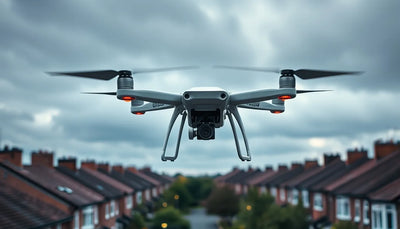
Beijing Moves to Ban Drone Ownership, Opens Buyback Program
Beijing is reportedly moving to prohibit private drone ownership and offering a buyback program for existing units. The policy shift could reshape resale values, repair demand, and fleet planning for operators with equipment in the region.

Quick answer
Beijing has reportedly announced a ban on private drone ownership and is offering to buy back drones from residents before a November 15 deadline, according to DroneXL.
- The reported policy would prohibit private drone possession in Beijing.
- A buyback program is said to let owners sell drones back rather than face non-compliance.
- The November 15 date appears to function as a compliance deadline.
- Commercial operators and resellers should watch for official confirmation and scope details.
Verified facts
Operator checklist
Turn policy news into a safer fleet decision.
Before changing aircraft, compare repair paths, available DJI inventory, and trade-in timing against the rule change.

What the available evidence confirms
| Aspect | Reported detail | Operational relevance |
|---|---|---|
| Policy action | Ban on private drone ownership in Beijing | May force asset disposal or relocation for owners in the region |
| Buyback mechanism | Government offers to purchase existing drones | Creates a potential exit path but may set price expectations |
| Deadline | November 15 mentioned in reporting | Owners need clarity on compliance timing and logistics |
Beijing has reportedly moved to prohibit private drone ownership and is offering to buy back drones already held by residents, according to a September 13 report from DroneXL. The report describes a policy shift that would make possession itself a compliance problem, not just flight activity. For commercial operators, repair customers, and anyone holding DJI equipment in the region, the immediate question is not whether the policy is enforceable, but how it changes asset planning, resale value, and demand for service.
The central claim, as reported by DroneXL, is that Beijing will ban owning a drone and has opened a buyback channel with a November 15 date attached. The source does not provide a full text of the regulation, enforcement guidance, or an official agency statement. Reboot Hub has not independently confirmed the scope, penalties, or exemptions. What matters for market participants is that even a credible report of a possession ban can move prices and behavior before formal rules are published.
What the reported policy actually says
DroneXL reports that Beijing is targeting drone ownership, not just unauthorized flight. That distinction is important. Many existing rules restrict where and how drones can be flown, but a possession ban would affect equipment sitting in a case, on a shelf, or in a repair queue. The report also says the city is offering to buy drones back from owners, which suggests authorities want to reduce the installed base rather than simply issue fines.
The November 15 date appears in the source as part of the buyback framing. Without an official document, operators should treat that date as a planning assumption, not a confirmed legal deadline. The practical implication is that owners in Beijing may have a narrow window to decide whether to sell into the buyback, move equipment elsewhere, or hold and wait for clarification.
What this means for drone owners and the market
A possession ban in a major city would create a forced-sale dynamic for some owners. When a government offers to buy back equipment, the buyback price becomes a reference point for the entire local resale market. Private sellers may struggle to get more than the official offer, while buyers outside the region could see an influx of used units if owners choose to export or sell remotely instead of surrendering equipment. For the pre-owned DJI market, that kind of supply shift can compress prices on common consumer models even in markets far from Beijing.
Repair demand is also sensitive to this kind of policy. Owners who plan to comply with a buyback are unlikely to pay for repairs, batteries, or OEM-pulled parts on drones they are about to surrender. Shops that serve Beijing-area customers may see a short-term drop in service work, while operators who relocate equipment to other provinces could generate demand elsewhere. Fleet managers with units in the region should review their asset registers now and separate drones that are active, repairable, or already slated for disposal. For buyers and repair customers tracking policy risk, the Reboot Hub Drone Wiki provides a reference point for understanding how regulatory changes affect pre-owned DJI equipment and service decisions. For owners evaluating service and lifecycle risk, Drone Wiki explains the relevant repair, parts, resale, or operational path.
The buyback mechanism also raises a valuation question. If the reported program sets a flat rate by model or weight class, it may undervalue pristine pre-owned units with recent service history. Owners who have invested in genuine OEM spare parts or professional repairs could find that the official offer does not reflect that condition. That is a familiar problem in any forced-buyback or trade-in program, and it argues for documenting maintenance records before deciding whether to participate.
Commercial operators should separate rumor from compliance risk
For enterprise and commercial operators, the first step is to confirm whether the reported ban applies to private individuals only or also to registered commercial entities. The DroneXL report does not clarify that boundary. Many cities that restrict consumer drones still permit approved commercial operations, infrastructure inspection, or public safety flights. If Beijing follows that pattern, fleet operators with proper authorizations may face new paperwork rather than a total prohibition.
Still, the direction of policy matters. A city willing to ban possession is signaling that drones are viewed as a security liability, not just an airspace management issue. That posture can spread to procurement rules, insurance requirements, and repair logistics. Operators who fly in multiple Chinese cities should map which jurisdictions are tightening rules and build that into route planning and asset deployment. A drone parked in a restrictive city is a depreciating asset with rising compliance risk.
What buyers, pilots, and repair customers should do differently
Buyers in the pre-owned market should ask sellers where a drone has been operated and whether any local possession rules affect its legal status. A unit coming out of Beijing during a buyback window may be priced aggressively, but the buyer should confirm that the sale is legitimate and that the drone is not subject to a surrender order. Documentation matters more when policy is shifting quickly.
Pilots who own drones in the region should avoid panic selling before the official rule text is available. A reported ban is not the same as an enacted regulation. At the same time, waiting until the last minute before a November 15 deadline could reduce options. The sensible move is to gather proof of ownership, recent service records, and current market values for each unit, then decide with a clear head.
Repair customers should delay non-essential work on drones that may be surrendered or relocated. Spending on a gimbal repair or battery replacement makes little sense if the unit is headed into a buyback program. Conversely, drones being moved to a compliant region may need pre-transport inspections and firmware checks, which is exactly the kind of service work that remains valuable during a policy transition.
FAQ
Frequently asked questions
Is the Beijing drone possession ban confirmed by an official source?
The ban is reported by DroneXL, but Reboot Hub has not independently confirmed an official regulation, enforcement guidance, or agency statement. Operators should treat the report as a credible signal and wait for published rule text before making irreversible decisions.
What should I do if I own a drone in Beijing right now?
Gather proof of ownership, maintenance records, and current resale values. Decide whether to sell into the reported buyback, relocate the drone, or hold for clarification. Avoid panic selling, but do not wait until the last moment before the November 15 date mentioned in the source.
How could this affect pre-owned DJI drone prices outside China?
If Beijing owners sell into a buyback or export units to avoid surrender, the supply of used consumer drones could rise, putting downward pressure on prices for common models. Buyers should watch for unusually cheap units from the region and verify their legal status before purchasing.
Which sources support this update?
The article distinguishes reported information from analysis and does not present an unverified source as official confirmation.
What remains subject to change?
Retail pricing, availability, product bundles and regulatory timelines can change. Readers should verify the latest terms with the named retailer, manufacturer or regulator before acting.
How should buyers or operators use this analysis?
Use the verified facts as a starting point, then compare mission fit, lifecycle support, maintenance needs and current procurement terms before making a purchase or fleet decision.
参照ソース
- DroneXL via Google News - primary source
公開時点で、追加の公式ドキュメントは入手できませんでした。
Reboot Hub編集部は、ドローン所有者のために購入、修理、再販、および運用の分析を提供します。誤りを発見した場合は、編集方針に基づき修正レビューを依頼してください。