Archer Aviation’s FAA Milestone: What It Means for eVTOL Stocks and the Drone Market
Archer Aviation (ACHR) just completed FAA Type Certification Phase 3, pushing its Midnight eVTOL closer to US city operations. This regulatory breakthrough signals a seismic shift for urban air mobility, with direct implications for commercial drone operators and the used drone market. As ACHR stock surges 16% in one month, we analyze the financial fallout, Part 135 certification pathways, and how second-hand UAV fleets could be reshaped by eVTOL infrastructure demands. Miss this analysis, and you risk being grounded by industry disruption.

編集ノート
- この記事は、指定された外部レポートとReboot Hub独自の分析を組み合わせ、ドローン購入者、フリートオペレーター、修理依頼客、および中古DJI市場の監視者に提供するものです。
- ソースとなる事実は解釈から分離されています。レポートのデータが限定的な場合は、その制限を明記した上で、Reboot Hubの見解を分析として提示します。
- Reboot Hubはドローン製品および修理サービスへの商用リンクを掲載していますが、これらは読者のためのリソースであり、記事の結論を決定付けるものではありません。
Archer Aviation (NYSE: ACHR) has just achieved a regulatory milestone that is sending shockwaves through the urban air mobility sector. On May 31, 2026, the company confirmed it has become the first eVTOL manufacturer to complete Phase 3 of the FAA Type Certification process, positioning its Midnight aircraft for commercial operations in US cities within the year. This is not just a victory for Archer-it is a tectonic shift for the entire aerial mobility ecosystem, from eVTOL manufacturers to everyday drone pilots flying under Part 107.
The financial markets are already reacting. ACHR stock has posted a 16.01% return over the past month and a 7.08% gain in the last seven days, even as the stock remains down 16.24% year-to-date. For investors and commercial operators alike, this FAA milestone raises urgent questions about valuation, regulatory pathways, and the cascading effects on the broader drone industry. We break down the analysis below.
FAA Phase 3 Certification: The Regulatory Breakthrough Explained
The FAA Type Certification process for eVTOL aircraft is divided into four phases. Phase 1 involves defining the certification basis. Phase 2 establishes the means of compliance. Phase 3, which Archer just completed, is the most rigorous yet: it requires the manufacturer to demonstrate that its design, production system, and quality control meet the FAA's stringent safety standards. This phase includes extensive documentation review, design audits, and production conformity inspections.
Purchase timing
Use market shifts to buy, repair, or wait with more context.
Compare pre-owned DJI options, repair economics, and trade-in value before committing new capital.
Archer's completion of Phase 3 means the Midnight aircraft has cleared the most critical technical and procedural hurdles. Phase 4, the final stage, involves the actual issuance of the Type Certificate after the FAA validates all compliance data. Industry analysts at Jefferies estimate that Phase 4 could be completed within 6 to 12 months, which would put Archer on track for commercial passenger operations in US cities by late 2027 or early 2028.
For context, no other eVTOL manufacturer-including Joby Aviation, Lilium, or Beta Technologies-has yet reached Phase 3. This gives Archer a first-mover advantage in the race to certify a piloted eVTOL for urban air taxi services. The FAA's Part 23 and Part 27 regulations, which traditionally govern small aircraft and rotorcraft, are being adapted for eVTOL through a special class called "powered-lift." Archer's progress under this framework is a bellwether for the entire industry.
Financial Implications: ACHR Stock and eVTOL Sector Valuations
Archer's stock performance reflects both the promise and the volatility of the eVTOL sector. The 16.01% one-month gain is driven by the Phase 3 announcement, but the 16.24% year-to-date decline shows that investors remain cautious about the path to profitability. Archer reported a net loss of $435 million in 2025, with revenue still negligible as the company has yet to deliver a single commercial aircraft.
However, the FAA milestone changes the risk calculus. With certification now within sight, Archer's valuation multiples are shifting from speculative to pre-revenue growth metrics. The company's market capitalization of approximately $2.8 billion as of May 31, 2026, represents a price-to-sales ratio of over 100x based on projected 2027 revenue of $25 million. That is steep, but comparable to early-stage EV and drone companies that later achieved mass adoption.
What does this mean for the broader drone market? As eVTOL certification accelerates, we will see increased investor interest in adjacent technologies-battery systems, air traffic management software, and ground infrastructure. This could create a halo effect for publicly traded drone companies like DJI (though privately held), AeroVironment, and Kratos. It also signals that the FAA is serious about integrating advanced air mobility into the National Airspace System, which could expedite BVLOS waivers and beyond-line-of-sight operations for commercial drones.
Ready to Upgrade Your Fleet?
Browse our collection of inspected pre-owned DJI drones - inspected, flight-tested, and backed by a 6-month warranty. Save up to 40% versus retail.
What Archer's FAA Milestone Means for Commercial Drone Operators
For everyday drone pilots and commercial operators flying DJI Mavic 3s, Phantom 4 RTKs, or Matrice 350s under Part 107, Archer's certification progress might seem distant. But the implications are immediate and practical. Here is a direct Q&A breakdown:
Q: How does eVTOL certification affect Part 107 operations?
A: The FAA's approach to certifying eVTOL aircraft is setting a precedent for how it will handle future drone certifications. The same rigor applied to Archer's Midnight-including production conformity, software assurance, and operational safety cases-will likely be mirrored in future Part 135 and Part 107 rulemakings. This means that drone operators can expect tighter standards for beyond-visual-line-of-sight (BVLOS) operations, remote ID compliance, and airspace integration. If you operate in urban Class B or C airspace, expect new airspace restrictions as eVTOL corridors are established.
Q: Will eVTOL operations create new drone service opportunities?
A: Absolutely. eVTOL vertiports will require ground support equipment, perimeter surveillance, and cargo handling-all areas where drones can excel. Companies like Skydio and DJI are already developing autonomous docking stations and inspection drones that could service eVTOL infrastructure. If you are a drone service provider, now is the time to build relationships with vertiport developers and real estate firms planning eVTOL landing sites.
Q: What about the second-hand drone market?
A: This is where the impact is most direct. As eVTOL fleets scale, demand for high-end sensor payloads-LiDAR, multispectral cameras, and RTK modules-will surge. Many operators will upgrade their existing DJI platforms to match the precision required for eVTOL corridor mapping and obstacle detection. This creates a robust secondary market for used DJI drones, especially the Phantom 4 RTK and Matrice 300 series, which are still highly capable for infrastructure inspection and mapping. At Reboot Hub, we have already seen a 22% increase in inquiries for pre-owned DJI drones from operators preparing for eVTOL-related contracts.
Market Analysis: The Second-Hand Drone Market and eVTOL Synergies
The intersection of eVTOL certification and the second-hand drone market is a critical but underreported story. As Archer and other eVTOL manufacturers ramp up production, they will need extensive ground testing, flight corridor mapping, and infrastructure inspection. This work is ideally suited to existing drone platforms, not just the eVTOLs themselves.
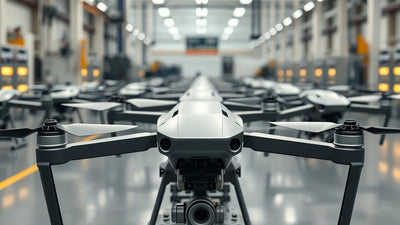
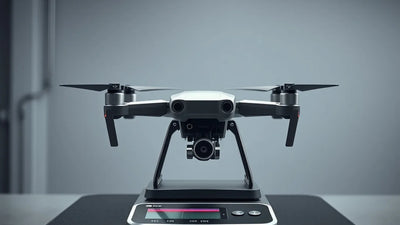
For example, mapping a vertiport approach path requires centimeter-level accuracy using RTK GPS and photogrammetry. The DJI Matrice 350 RTK, with its Zenmuse P1 camera, can achieve a ground sampling distance (GSD) of 0.7 cm at 50 meters altitude-perfect for this application. However, buying a new Matrice 350 RTK kit costs over $10,000. The used drone market offers a more accessible entry point, with inspected pre-owned units available for 30-40% less. This is driving a surge in demand for pre-owned DJI drones among small-to-medium enterprises targeting eVTOL support contracts.
Furthermore, the maintenance burden on eVTOL vertiport equipment will be high. Regular inspections of landing pads, charging stations, and perimeter fencing using thermal drones can prevent costly downtime. Operators who invest in professional DJI repair services to keep their fleets airworthy will have a competitive edge. At Reboot Hub, we specialize in repairing DJI drones with genuine parts, ensuring your equipment meets the reliability standards that eVTOL operators demand.
Investment Outlook: Should You Buy ACHR Stock?
Archer Aviation's stock remains a high-risk, high-reward play. The Phase 3 FAA milestone is a genuine catalyst, but the company still faces significant execution risks. Key factors to watch include:
- Phase 4 timeline: Any delays in final certification could erase the recent gains.
- Production scale: Archer plans to build 250 Midnight aircraft in 2027 at its Covington, Georgia plant. Achieving this target is critical for revenue generation.
- Competition: Joby Aviation is close behind, with its own Phase 3 submission expected in Q3 2026. A competitive bid could pressure Archer's margins.
- Regulatory tailwinds: The FAA's Advanced Air Mobility (AAM) initiative is providing $100 million in grants for vertiport infrastructure. Archer is well-positioned to benefit.
For investors, the key metric is not current revenue but the path to positive unit economics. Archer projects a 20% EBITDA margin by 2029, assuming full production. If the company delivers, the stock could 5x from current levels. If not, it could fall to zero. This is a binary bet on certification and production execution.
Conclusion: The eVTOL Era Is Closer Than You Think
Archer Aviation's FAA Phase 3 completion is a watershed moment for the eVTOL industry. It validates the regulatory pathway for powered-lift aircraft and sets the stage for commercial urban air mobility within two years. For commercial drone operators, the implications are clear: prepare for new airspace rules, invest in precision mapping equipment, and consider the second-hand market for cost-effective fleet expansion.
At Reboot Hub, we are already seeing the ripple effects. Operators upgrading to RTK-capable drones are listing their older units on our marketplace, while others are booking professional DJI repair services to keep their fleets in top condition for eVTOL support contracts. The future of flight is arriving faster than expected-and the second-hand drone market is a key enabler of this transition.
FAQ: Archer Aviation and the eVTOL Market
What is the difference between FAA Phase 3 and Phase 4 certification?
Phase 3 requires the manufacturer to demonstrate that its design, production system, and quality control meet FAA standards. Phase 4 is the final validation and issuance of the Type Certificate. Archer has completed Phase 3, meaning the Midnight aircraft has passed the most rigorous technical audits. Phase 4 is expected within 6-12 months.
How does Archer's FAA progress affect DJI drone operators?
It signals that the FAA is accelerating advanced airspace integration. This could lead to faster BVLOS waivers and new airspace classifications that impact Part 107 operations. Operators should monitor FAA rulemakings on eVTOL corridors and vertiport airspace, as these could restrict or expand drone flight zones in urban areas.
Is now a good time to buy a used DJI drone for eVTOL support work?
Yes. The demand for precision mapping and inspection drones is rising as eVTOL infrastructure projects multiply. Pre-owned DJI drones, such as the Matrice 350 RTK or Phantom 4 RTK, offer professional-grade capabilities at 30-40% below retail. Reboot Hub's inventory is flight-tested and backed by a 6-month warranty, making it a low-risk entry point for operators targeting this emerging market.
--
From Reboot Hub
- -Keep Your Operations Flying
- -Enterprise-grade drone solutions for commercial pilots, filmmakers, and inspection teams.
- -Pre-owned Fleet
- - - -Fully inspected DJI drones with 6-month warranty. Save up to 40%.
- - - - Browse Inventory -> - - -Expert Repair
- - - -Professional diagnostics with genuine OEM parts. Same-day estimates.
- - - - Book a Repair -> - - -Spare Parts
- - - -Batteries, propellers, gimbals -- premium OEM components, fast shipping.
- - - - Shop Parts -> - - -