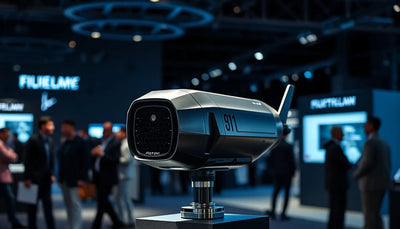
A2Z Drone Delivery Launches Longtail Dual for BVLOS Urban Missions
A2Z Drone Delivery has introduced the Longtail Dual, a dual-battery commercial aircraft designed for beyond-visual-line-of-sight urban missions. The platform stays under the 55-pound commercial ceiling and maintains control on a single battery if one fails, with direct implications for fleet redundancy planning and maintenance workflows.

Quick answer
A2Z Drone Delivery unveiled the Longtail Dual on August 31, 2026, a dual-battery commercial drone designed for BVLOS urban missions that stays under the 55-pound commercial ceiling and holds full control on a single battery if one fails.
- The aircraft carries two batteries with true redundancy for continued control after a single battery failure.
- It maintains a one-to-one flight-to-charge ratio when used with A2Z AirDocks.
- The platform remains under the 55-pound (25 kg) commercial operating ceiling.
- The launch was announced from Torrance, California, according to DRONELIFE.
Evidence: DRONELIFE
Operator checklist
Turn policy news into a safer fleet decision.
Before changing aircraft, compare repair paths, available DJI inventory, and trade-in timing against the rule change.

Verified facts
What the available evidence confirms
| Feature | Reported detail | Operational relevance |
|---|---|---|
| Battery configuration | Two batteries with true redundancy | Full control retained on a single battery if one fails |
| Flight-to-charge ratio | One-to-one on A2Z AirDocks | Supports continuous or near-continuous mission cycling |
| Weight class | Under 55-pound (25 kg) commercial ceiling | Avoids heavier aircraft regulatory thresholds |
| Launch origin | Torrance, California, August 31, 2026 | Announced by A2Z Drone Delivery per DRONELIFE |
A2Z Drone Delivery has introduced a new dual-battery commercial aircraft aimed at beyond-visual-line-of-sight urban operations. According to a report published by DRONELIFE on August 31, 2026, the Longtail Dual was unveiled from Torrance, California, and is positioned as a multi-mission platform with true battery redundancy.
The central engineering claim reported by DRONELIFE is that the Longtail Dual holds full control on a single battery if one fails. That is a meaningful distinction in a commercial segment where power loss typically means mission termination or a controlled descent. The aircraft also stays under the 55-pound, or 25-kilogram, commercial ceiling, which keeps it inside a widely recognized operating weight class for commercial drone work.
What the Longtail Dual launch signals for BVLOS operations
BVLOS urban missions place unusual stress on power systems. A drone operating beyond the visual range of its pilot cannot rely on immediate human observation to catch a sagging battery or an early thermal warning. The Longtail Dual's reported dual-battery architecture speaks directly to that risk profile. DRONELIFE's reporting describes the platform as carrying two batteries with true redundancy, meaning the aircraft can continue controlled flight even if one power source fails.
For fleet operators evaluating BVLOS programs, this changes the conversation around acceptable failure modes. A single-battery aircraft that loses power mid-route may require a recovery plan, a chase vehicle, or a lost-aircraft contingency. A dual-battery platform that retains control on one pack reduces the likelihood that a battery fault becomes a hull loss. That is not just a safety argument; it is a maintenance and insurance argument. Operators can plan for battery replacement rather than aircraft replacement in more failure scenarios.
Flight-to-charge ratio and the AirDock advantage
The second reported operational detail is the one-to-one flight-to-charge ratio on A2Z AirDocks. In practical terms, that means the aircraft can spend roughly as much time flying as it spends charging when paired with the company's docking infrastructure. For high-frequency urban delivery or inspection routes, that ratio supports tighter mission scheduling and less idle time per airframe.
This matters commercially because BVLOS economics are sensitive to aircraft utilization. A drone that sits on a charger for two hours after every 30-minute flight requires more airframes to cover the same route density. A platform designed around a one-to-one ratio can reduce the number of aircraft needed for a given mission volume, which lowers capital cost and simplifies spare parts planning. Reboot Hub analysis suggests that operators evaluating this class of aircraft should also model battery cycle life and replacement cadence, since dual-battery platforms double the number of cells in service per airframe.
What this means for drone owners and the market
The Longtail Dual enters a commercial market where weight class, power redundancy, and charging infrastructure are becoming procurement filters rather than afterthoughts. The reported sub-55-pound design keeps the aircraft within a familiar regulatory envelope, while the dual-battery system addresses a failure mode that has historically limited BVLOS approvals. For drone buyers and fleet managers, the launch is a signal that redundancy is moving from premium feature to baseline expectation in urban BVLOS platforms.
For owners in the broader commercial drone ecosystem, including those managing pre-owned DJI fleets, the Longtail Dual is not a direct competitor to small camera drones. But it does reinforce a market trend toward purpose-built commercial airframes with serviceable, replaceable power modules. That trend has downstream effects on repair workflows, battery inventory management, and resale value. Operators who understand their battery health data and keep documented maintenance records will be better positioned as commercial platforms become more modular. Readers tracking repair and ownership implications across drone categories can consult the Drone Wiki for reference material on power systems, airframe maintenance, and pre-owned DJI ownership considerations. For owners evaluating service and lifecycle risk, Drone Wiki explains the relevant repair, parts, resale, or operational path.
The practical takeaway for a buyer or fleet manager is to treat battery architecture as a core procurement criterion, not a peripheral spec. If a platform cannot maintain control after a single battery failure, its BVLOS utility is limited regardless of range or payload claims. The Longtail Dual's reported design suggests that A2Z Drone Delivery is betting on redundancy as a differentiator, and operators should evaluate competing platforms against the same standard.
Regulatory context and commercial ceiling discipline
The Longtail Dual's reported weight of under 55 pounds is not incidental. The 55-pound threshold is a common commercial operating boundary in multiple regulatory frameworks, and staying beneath it can simplify certification, registration, and operational approval pathways. DRONELIFE's report frames the aircraft as staying under that ceiling, which suggests deliberate design discipline rather than a marginal compliance claim.
For operators, weight class affects everything from pilot certification requirements to airspace authorization complexity. A platform that creeps above 55 pounds may trigger different operational rules, additional training burdens, or different insurance pricing. The Longtail Dual's reported positioning inside the commercial ceiling means fleet planners can evaluate it without immediately confronting heavier-aircraft regulatory overhead. That said, operators should still verify local requirements, since BVLOS approvals remain jurisdiction-specific and are not automatically granted by airframe design alone.
Reboot Hub analysis notes that the regulatory angle here is indirect. The source report does not state that any specific aviation authority has certified or approved the Longtail Dual for BVLOS operations. The launch is a product announcement, not a regulatory milestone. Operators should treat the redundancy and weight claims as design characteristics that may support future approvals, not as evidence that approvals have been granted.
FAQ
Frequently asked questions
Does the Longtail Dual have official BVLOS certification?
The DRONELIFE report describes the Longtail Dual as designed for BVLOS urban missions, but it does not state that any aviation authority has granted BVLOS certification or approval for the aircraft. Operators should verify certification status directly with A2Z Drone Delivery or the relevant regulator before planning missions.
How does the dual-battery system affect maintenance planning?
A dual-battery platform doubles the number of battery cells in service per airframe, which means maintenance teams should plan for more frequent battery health checks, cycle tracking, and replacement scheduling. The reported redundancy also means a single battery failure may not end a mission, but it still requires inspection and likely replacement after landing.
Is the Longtail Dual relevant to pre-owned DJI drone owners?
The Longtail Dual is a commercial BVLOS platform and not a direct competitor to small DJI camera drones. However, its modular, serviceable power architecture reflects a broader commercial trend toward maintainable airframes, which reinforces the value of documented maintenance records and battery health data for owners across drone categories.
Which sources support this update?
The visible evidence links identify DRONELIFE; each source is used only for the claim it directly supports.
What remains subject to change?
Retail pricing, availability, product bundles and regulatory timelines can change. Readers should verify the latest terms with the named retailer, manufacturer or regulator before acting.
How should buyers or operators use this analysis?
Use the verified facts as a starting point, then compare mission fit, lifecycle support, maintenance needs and current procurement terms before making a purchase or fleet decision.
参照ソース
- DRONELIFE - primary source
公開時点で、追加の公式ドキュメントは入手できませんでした。
Reboot Hub編集部は、ドローン所有者のために購入、修理、再販、および運用の分析を提供します。誤りを発見した場合は、編集方針に基づき修正レビューを依頼してください。