Joby Aviation Stock Dips Below $10: A Buying Opportunity or a Warning for the eVTOL Market?
Joby Aviation’s stock has plunged over 30% in 2026, trading below the critical $10 mark. As the eVTOL pioneer grapples with FAA certification delays and production scale-up challenges, commercial drone operators and investors face a critical question. Is this a prime entry point for a long-term hold, or a signal of deeper turbulence in the advanced air mobility sector? We analyze the financials, regulatory hurdles, and the implications for the broader unmanned aircraft market, including the second-hand drone trade.

Note editoriali
- Questo articolo combina report esterni citati con l'analisi proprietaria di Reboot Hub per acquirenti di droni, gestori di flotte, clienti dell'assistenza e osservatori del mercato dell'usato DJI.
- I fatti riportati dalle fonti sono separati dall'interpretazione. Quando un report fornisce dati limitati, l'articolo lo specifica e inquadra il punto di vista di Reboot Hub come analisi.
- Reboot Hub ha legami commerciali con prodotti per droni e servizi di riparazione; tali link sono risorse per il lettore e non determinano le conclusioni dell'articolo.
On May 23, 2026, the financial landscape for advanced air mobility (AAM) is at a crossroads. Joby Aviation, once the darling of the eVTOL (electric vertical takeoff and landing) sector, has seen its stock price plummet over 30% in 2026, dipping decisively below the psychologically significant $10 threshold. For investors, commercial drone operators, and industry analysts alike, this triggers a fundamental question: is this a rare buying window before a transformative technology takes flight, or a warning siren of deeper, systemic challenges in the AAM sector?
The decline is not an isolated event. It comes amid a broader reassessment of the eVTOL industry's timeline, with key players like Archer Aviation and Lilium also facing significant headwinds. However, Joby's position as a frontrunner-with its high-profile partnerships with Toyota, Delta Air Lines, and the U.S. Department of Defense-makes its stock performance a bellwether for the entire market. This analysis at Reboot Hub dissects the core factors driving the sell-off, the real-world implications for commercial drone operators, and what this means for the secondary market for high-end unmanned aircraft.

The Anatomy of the 30% Decline: Certification Delays and Cash Burn
The primary catalyst for Joby's stock decline is the protracted timeline for Type Certification from the Federal Aviation Administration (FAA). While Joby has made significant progress, including completing the first three of five stages of the FAA's certification process, the final stages are proving to be more complex and time-consuming than initially projected. In early 2026, the company signaled that commercial passenger service, initially targeted for late 2025, is now realistically expected in 2027 or even 2028. For a growth-stage company valued on future revenue, any delay is a severe headwind.
Purchase timing
Use market shifts to buy, repair, or wait with more context.
Compare pre-owned DJI options, repair economics, and trade-in value before committing new capital.
Compounding this is the relentless cash burn. Developing a certified eVTOL aircraft is a capital-intensive endeavor. Joby reported a net loss of over $500 million in 2025, and while it maintains a strong cash position (bolstered by Toyota's continued investment), the market is increasingly focused on the path to profitability. Without a certified aircraft generating revenue, the company is essentially a high-stakes R&D project. The recent stock price action reflects a market that is repricing risk, moving from a speculative "blue sky" valuation to a more conservative, timeline-driven assessment.

Furthermore, the broader macroeconomic environment in mid-2026 is less forgiving. With interest rates remaining elevated and investor appetite for pre-revenue companies waning, the "growth at all costs" narrative has been replaced by a demand for tangible milestones. Joby's failure to launch commercial operations by its initial guidance has bruised investor confidence, leading to a re-rating of the entire AAM sector.

What Joby's Stock Plunge Means for Commercial Drone Pilots and Operators
Ready to Upgrade Your Fleet?
Browse our collection of inspected pre-owned DJI drones - inspected, flight-tested, and backed by a 6-month warranty. Save up to 40% versus retail.
While Joby is an eVTOL manufacturer, its struggles have direct and indirect consequences for the broader unmanned aircraft ecosystem, particularly commercial drone operators. The most immediate impact is a cooling of the hype cycle that has inflated costs for advanced drone technology. When capital is abundant, manufacturers can command premium prices for new hardware. When the market tightens, we see a surge in the availability and value of high-quality used equipment.
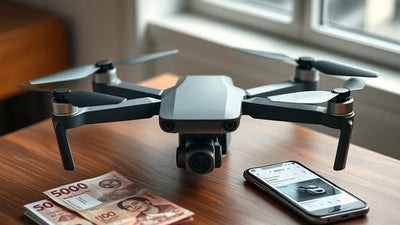
For a commercial operator flying a pre-owned DJI drones, this environment is favorable. The secondary market for platforms like the DJI Matrice 350 RTK or the Mavic 3 Enterprise is becoming more liquid. As enterprise budgets tighten, more companies are turning to the used market to acquire the payloads and airframes they need for critical missions-surveying, mapping, inspection, and public safety-without the capital expenditure of buying new. The Joby narrative reinforces a key trend: the drone industry is decoupling from speculative AAM hype and returning to fundamentals of operational efficiency and cost management.
Moreover, the regulatory pathway for eVTOLs has a trickle-down effect. The FAA's rigorous certification process for Joby is a double-edged sword. It sets a high bar for safety, which ultimately legitimizes all forms of advanced unmanned flight. However, it also consumes FAA resources, potentially slowing down other rulemaking efforts critical to drone operators, such as the expansion of BVLOS (Beyond Visual Line of Sight) waivers and the finalization of remote ID enforcement protocols. Operators should watch Joby's certification timeline as a proxy for the FAA's bandwidth and regulatory appetite for new concepts of operations.
Ready to Upgrade Your Fleet?
Browse our collection of inspected pre-owned DJI drones - inspected, flight-tested, and backed by a 6-month warranty. Save up to 40% versus retail.
Is Joby Aviation a Buy? A Technical and Fundamental Analysis
From a purely technical perspective, a stock dropping 30% in a few months often presents a "buy the dip" opportunity. However, value traps are common in speculative industries. The key metrics to watch are not just the stock price but the company's cash runway and certification milestones. Joby ended Q1 2026 with approximately $1.1 billion in cash and equivalents. At its current burn rate, this provides a runway into late 2027 or early 2028. This is critical: the company has enough capital to reach its revised certification target without needing to raise dilutive capital at a depressed stock price.
Fundamentally, the thesis for Joby remains intact. The company has a certified production line in Marina, California, a partnership with Toyota for manufacturing expertise, and a firm order book from Delta Air Lines and the U.S. military. The technology-a six-rotor, tilt-propeller design-is widely considered among the most mature in the industry. The risk is not technological failure but timeline execution. For investors with a 3-5 year horizon, the current price may indeed be attractive. For those seeking short-term gains, the volatility is likely to persist until a major catalyst, such as the commencement of Part 135 air carrier operations or a major military contract award.
It is also worth noting the strategic value of Joby's defense work. The company has been an active participant in the U.S. Air Force's Agility Prime program, and its aircraft is being evaluated for logistics and personnel transport roles. A significant defense contract could act as a powerful catalyst, decoupling the stock from the commercial certification timeline and providing a revenue stream independent of passenger travel. This is a factor that many retail investors underestimate.
The Ripple Effect: How the eVTOL Slowdown Impacts the Second-Hand Drone Market
The turbulence at Joby has a direct, if subtle, impact on the used drone market. As institutional and retail investors pull back from high-risk AAM plays, capital flows back into proven, revenue-generating drone applications. This means more enterprise budget is allocated to practical tools like the DJI M30T for thermal inspection or the Phantom 4 RTK for mapping, rather than speculative future aircraft.
We are observing a "flight to quality" in the drone hardware market. The demand for rugged, reliable, and inspected pre-owned equipment is rising. Operators are increasingly choosing to invest in high-end, refurbished platforms that offer immediate utility-conducting pipeline inspections, surveying construction sites, or supporting emergency response-over waiting for the next generation of eVTOL technology. This is a rational market response. Why wait for a 2028 passenger service when you can deploy a pre-owned DJI drones today to generate revenue from a Part 107 operation?
Furthermore, the Joby story highlights the importance of aftermarket support. As companies delay new hardware purchases, they extend the life of their existing fleets. This drives demand for professional DJI repair services and component upgrades. At Reboot Hub, we are seeing a significant increase in orders for battery replacements, gimbal repairs, and RTK module upgrades from operators who are choosing to maintain and optimize their current gear rather than buying new. This is a cyclical trend that benefits the secondary market ecosystem.
Q&A: What Does the Joby Stock Slump Mean for You?
Q: Should I buy Joby Aviation stock at its current price?
A: This is not financial advice, but a framework for evaluation. The current price reflects significant pessimism about near-term timelines. If you believe Joby will achieve FAA Part 135 certification by 2027-2028 and secure substantial defense contracts, the risk/reward ratio may be favorable. However, be prepared for continued volatility. The company's success is binary in the near term: either they certify the aircraft, or they don't. There is little middle ground. Monitor their quarterly cash burn and any announcements regarding the FAA's Stage 4 certification review.
Q: How does this affect my commercial drone operation?
A: In the short term, very little. Your Part 107 operations, mapping flights, and inspection jobs are unaffected by Joby's stock price. However, in the medium term, a successful eVTOL industry would open up new airspace management paradigms and potentially create a larger ecosystem for all unmanned aircraft. For now, the practical implication is market-driven: the cost of high-end used drone equipment may become more favorable as enterprise budgets tighten. This is an excellent time to consider upgrading your fleet through the inspected pre-owned market.
Q: What are the key milestones I should watch in the next 12 months?
A: For Joby, the critical milestones are: 1) Completion of the FAA's Stage 4 certification (the final phase of aircraft design approval). 2) The start of Part 135 on-demand air taxi operations, even on a limited route (e.g., New York City to JFK). 3) Any significant contract award from the U.S. Department of Defense. For the broader drone market, watch for the FAA's final ruling on BVLOS operations, which would be a massive catalyst for commercial drone adoption. A delay in Joby's certification could signal a more cautious FAA, which would be a headwind for BVLOS rulemaking.
The story of Joby Aviation in May 2026 is not a story of failure, but of a market adjusting its expectations from speculative fantasy to operational reality. For the savvy commercial drone operator, this reality check is a strategic opportunity. It reinforces the value of proven, deployable technology over future promises. As you navigate this market, remember that the most reliable drone is the one you can fly today. Whether you are looking to expand your fleet or maintain your current one, the secondary market offers a pragmatic path forward. Reboot Hub remains your partner in navigating this dynamic landscape, providing the hardware and expertise to keep your operations airborne.
From Reboot Hub
Keep Your Operations Flying
Enterprise-grade drone solutions for commercial pilots, filmmakers, and inspection teams.
Pre-owned Fleet
Fully inspected DJI drones with 6-month warranty. Save up to 40%.
Browse Inventory ->