Ukraine Codifies Queen Hornet: First Large Multipurpose FPV Drone
Ukraine’s Ministry of Defense has officially codified the Queen Hornet, the country’s first large multipurpose FPV drone. The move signals a shift toward standardized, modular combat drones and offers lessons for commercial fleet operators.

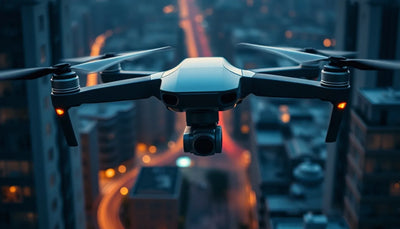
Ukraine’s Ministry of Defense has taken a notable step in unmanned systems procurement by official codification of the Queen Hornet, described as the country’s first large multipurpose first-person-view (FPV) drone. The move, reported by the Ukrainian media outlet Цензор.НЕТ, effectively places the Queen Hornet on a formal register of approved military equipment. For fleet operators and drone buyers outside the defense sector, the codification of a large FPV platform signals a maturation of drone design that extends far beyond hobbyist quadcopters. The Queen Hornet is not simply another small racing FPV frame; its designation as “large multipurpose” implies a platform built for payload flexibility, endurance, and field interchangeability—traits that directly overlap with commercial enterprise drone needs.
The announcement also carries weight for the pre-owned DJI market and professional repair ecosystem. Military codification typically involves stringent testing for durability, ease of maintenance, and parts commonality. When such standards are applied to a modular FPV design, they validate a broader principle: that drones should be repairable and upgradable over time, not disposable. This aligns closely with the philosophy behind Reboot Hub’s inspected pre-owned DJI drones and OEM-pulled spare parts services, where value is preserved through transparent condition reporting and genuine component replacement. The Queen Hornet story is ultimately a story about standardisation, and that matters whether you are operating a fleet of Matrice 30s in agricultural spraying or flying a single Mavic 3 for utility inspections.
Codification and what it means for procurement
Codification by a Ministry of Defense is not a trivial paperwork exercise. It means that the Queen Hornet has passed a formal evaluation process covering operational suitability, interoperability with existing systems, and logistics supportability. In the Ukrainian context, where battlefield demands accelerate field testing, codification signals that the drone has proven itself under real-world constraints. The designation “first large multipurpose FPV drone” suggests that the Queen Hornet occupies a new category—larger than typical disposable FPV munitions yet still retaining the pilot’s real-time view and manual control essential for precision strikes or cargo delivery in contested environments.
Fleet readiness
Keep DJI hardware available without overbuying new units.
Use defense and fleet news as a planning signal for repair support, inspected pre-owned aircraft, and replacement timing.

For commercial fleet managers, the key takeaway is the emphasis on multipurpose design. A platform that can switch between observation, cargo, and kinetic roles demands modular hardpoints, standardised payload interfaces, and swappable electronics. These same attributes are increasingly desirable in enterprise operations where a single airframe might carry a thermal camera one day and a multispectral sensor the next. The codification process also accelerates the establishment of training programs, maintenance manuals, and spare-part supply chains—lessons that echo the needs of any organisation running a fleet of pre-owned DJI drones or managing professional DJI repair services. When a military body invests in formal logistics support, it validates the business case for aftermarket repair and component-level service, areas where Reboot Hub’s genuine OEM spare parts and trade-in programmes already provide equivalent value to civilian operators.
Implications for modular design and field repair
Modularity is the central engineering story behind the Queen Hornet. A large multipurpose FPV airframe, by definition, must allow quick swapping of payloads, batteries, and flight controllers. In the Ukrainian operational environment, where frontline units have limited access to depots, the ability to replace a damaged arm or motor without specialised tools becomes a force multiplier. The codification announcement indirectly confirms that the Queen Hornet meets these practical maintenance thresholds.
For repair customers and drone service centres, this principle reinforces the importance of using genuine OEM parts and following documented repair procedures. Field-repairable designs reduce downtime and lower total cost of ownership—exactly the value proposition that Reboot Hub’s inspected pre-owned drones and OEM-pulled spare parts offer to commercial clients. The Queen Hornet’s codification also suggests a growing acceptance of FPV architectures beyond racing and short-range tactical use. As large FPV platforms enter regulated airspace, they may drive demand for transmission redundancy, GPS-independent navigation, and robust failsafe modes—features that premium enterprise drones already provide and that aftermarket repair specialists must be prepared to service.
Fleet operators evaluating drone acquisition should add modularity to their checklist. A platform that can be upgraded with newer radios or sensors after two years retains higher resale value in the pre-owned market. The Queen Hornet precedent reinforces that modular design is not just a military requirement but a commercial asset, especially for organisations that plan to trade in used drones through structured programmes like Reboot Hub’s drone trade-in guide.
What this means for drone buyers
Drone buyers—whether purchasing for utility inspection, surveying, or security—should interpret the Queen Hornet codification as a validation of three principles: standardisation, serviceability, and long-term value. The Ukrainian Ministry of Defense has essentially said that a large FPV drone is worth integrating into formal inventory, which implies confidence in its reliability and support chain. Commercial buyers can adopt a similar mindset: prefer drones with published repair manuals, available OEM spare parts, and a track record of firmware stability.
The second-hand market for FPV drones, traditionally dominated by custom-built frames, may begin to shift toward more standardised models influenced by military designs. That could affect pricing and availability of pre-owned DJI drones, as enterprise operators who currently fly DJI Matrice and M30 series may find that a standardised FPV alternative meets specific mission needs at lower cost. For now, the Queen Hornet remains a defence-specific platform, but its design philosophy will trickle down to civilian products. Buyers should watch for future large FPV drones that emphasise multipurpose payload interfaces and field-swappable components—these traits will likely correlate with stronger resale value and lower maintenance costs.
For operators currently flying DJI enterprise fleets, the most immediate action is to review their maintenance and upgrade strategy. If a military unit can codify a drone around modular repair, a construction company or environmental survey firm can do the same. Working with a repair partner that uses genuine OEM parts and provides transparent condition reports—like Reboot Hub’s professional DJI repair services—extends the useful life of existing equipment and delays the need for new capital expenditure. Additionally, when it’s time to retire an airframe, a structured trade-in programme ensures captured value can fund future purchases, as outlined in Reboot Hub’s trade-in guide.
Market trends and the evolving role of FPV
The codification of the Queen Hornet reflects a broader market trend: FPV drones are moving from niche hobbyist tools to mainstream military and commercial equipment. Traditional FPV builds were often semi-disposable, with cheap frames and minimal redundancy. The Queen Hornet, by contrast, is a large, multipurpose system that likely includes redundant sensors, robust telemetry, and a more durable airframe. This evolution echoes what has already happened in the commercial drone sector, where DJI’s enterprise line, for example, introduced redundancy and IP-rated components.
For the pre-owned drone market, this trend means that FPV drones will soon join the inventory of tradeable, insurable assets. Buyers seeking pre-owned DJI drones today may later consider inspected pre-owned large FPV platforms as viable alternatives for certain missions—provided they are backed by OEM spare part availability and reputable repair infrastructure. The Queen Hornet codification also hints at a supply chain shift: as governments standardise drone types, component manufacturers will align production volumes around those standards, potentially lowering costs for civilian buyers of similarly designed products.
Fleet operators should begin evaluating FPV technology for tasks that benefit from manual flight control and low-latency video, such as structural inspection in confined spaces or rapid damage assessment in disaster zones. The Queen Hornet’s codification demonstrates that large FPV aircraft can meet the reliability bar set by traditional multirotors, which opens a new procurement category. As the second-hand market matures, buying a pre-owned large FPV drone may become a cost-effective way to add that capability without absorbing first-adopter depreciation.
What is the Queen Hornet drone and why was it codified?
The Queen Hornet is described in the source as Ukraine’s first large multipurpose FPV drone. Codification by the Ministry of Defense means it has passed formal evaluation for operational use, logistics support, and interoperability with existing military systems. This officially approves the platform for procurement and field deployment.
How does military drone codification affect commercial drone operators?
Military codification sets standards for modularity, repairability, and supply chain support that can influence civilian product design. Commercial operators can adopt similar procurement criteria—prioritising drones with available genuine spare parts and documented repair procedures—to lower long-term ownership costs. The trend also reinforces the value of inspected pre-owned drones and professional repair services in the commercial market.
Should I consider FPV drones for my commercial fleet after this news?
The Queen Hornet codification indicates that large FPV platforms can meet rigorous reliability and versatility standards. If your missions require manual flight control in confined or dynamic environments, a larger FPV airframe may be a viable supplement to your existing DJI fleet. Evaluate modular payload compatibility, transmission redundancy, and the availability of OEM-pulled spare parts before committing to a procurement path.
Konzultált források
- Source material - primary source
- DJI official product information - official company source
- Reboot Hub professional DJI repair services - official service context
- DJI Support - official support source
A Reboot Hub szerkesztősége vásárlási, javítási, viszonteladási és üzemeltetési elemzéseket nyújt dróntulajdonosok számára. Ha hibát észlel, kérjük, jelezze nekünk a szerkesztői irányelvünknek megfelelően a javítás érdekében.