Pentagon Pays the Bills: What SpaceX’s Federal Dependence Means for Drone Investors
SpaceX’s S-1 filing reveals 20% of its 2025 revenue came from U.S. defense and intelligence agencies, a clear signal that government contracts are reshaping the commercial UAV landscape. For Part 107 operators and drone fleet managers, this means tightening supply chains, rising costs for RTK modules, and a surge in demand for BVLOS-capable hardware. Reboot Hub analyzes how defense spending is driving the second-hand drone market into a high-stakes premium, where inspected pre-owned DJI platforms become the hedge against inflation.

Szerkesztői megjegyzések
- Ez a cikk egyesíti a megnevezett külső jelentéseket a Reboot Hub saját elemzéseivel drónvásárlók, flottaüzemeltetők, javítási szolgáltatásokat igénylők és a használt DJI piacfigyelők számára.
- A forrásból származó tények elkülönítve vannak az értelmezéstől. Amennyiben egy jelentés korlátozott adatokat szolgáltat, a cikk rögzíti ezt a korlátozást, a Reboot Hub szempontját pedig elemzésként tünteti fel.
- A Reboot Hub kereskedelmi linkjei dróntermékekre és javítási szolgáltatásokra mutatnak; ezek olvasói erőforrások, és nem határozzák meg a cikk következtetéseit.
On May 21, 2026, the commercial space and defense industries are digesting a seismic disclosure from SpaceX. The company’s S-1 filing, a precursor to its highly anticipated public offering, reveals that roughly one-fifth of its total 2025 revenue originated from U.S. federal agencies—primarily NASA, the Department of War, the General Services Administration, and select Intelligence Community entities. This is not merely a footnote for Wall Street analysts; it is a blunt force signal for the global drone ecosystem. When the world’s most valuable private space firm leans on Uncle Sam for 20% of its income, it validates a thesis that Reboot Hub has tracked for months: government procurement is the new gravity well for advanced aerial technology.
For commercial UAV operators, defense contractors, and second-hand drone traders, the SpaceX revelation is a canary in the coal mine. It confirms a fundamental shift in how high-end drone hardware is valued, sourced, and deployed. If SpaceX—a company synonymous with reusable rockets and Mars ambitions—must anchor its revenue to the Department of War, then the entire aerospace supply chain, from satellite deployment to drone-based ISR platforms, is being recalibrated around federal spending. This analysis unpacks the financial mechanics, the direct implications for DJI users, and the emerging opportunities in the pre-owned DJI drones market.

The S-1 Disclosure: Breaking Down the 20%
SpaceX’s S-1 filing, a mandatory registration document for companies going public, provides unprecedented granularity into its revenue streams. The “one-fifth” figure is not a rounding error; it represents billions of dollars in launch services, spacecraft development, satellite deployment, and artificial intelligence contracts. The key clients—NASA for crewed missions and scientific payloads, the Department of War for national security launches, the General Services Administration for procurement logistics, and Intelligence Community agencies for classified satellite constellations—paint a clear picture: the U.S. government treats SpaceX as a strategic asset, not just a commercial vendor.
Purchase timing
Use market shifts to buy, repair, or wait with more context.
Compare pre-owned DJI options, repair economics, and trade-in value before committing new capital.
This dependence is a double-edged sword. For legacy defense contractors like Lockheed Martin, Northrop Grumman, and Boeing, the S-1 is a wake-up call. SpaceX is now competing directly for the same federal dollars, but with a leaner cost structure and a faster iteration cycle. The immediate market reaction has been a rotation away from traditional defense primes toward agile, vertically integrated firms. For the drone industry, the parallel is undeniable. Just as SpaceX captured launch market share, commercial drone manufacturers that can navigate the Pentagon’s procurement labyrinth—think Blue sUAS, Skydio, and Teal Drones—are poised to siphon contracts from incumbents.

Ready to Upgrade Your Fleet?
Browse our collection of inspected pre-owned DJI drones — inspected, flight-tested, and backed by a 6-month warranty. Save up to 40% versus retail.
What This Means for the Commercial Drone Market
Ready to Upgrade Your Fleet?
Browse our collection of inspected pre-owned DJI drones — inspected, flight-tested, and backed by a 6-month warranty. Save up to 40% versus retail.
The SpaceX disclosure is not a space industry story; it is a procurement story with direct tentacles into the drone sector. When the U.S. government concentrates its spending on a handful of elite aerospace firms, it creates a crowding-out effect. Talent, raw materials, and manufacturing capacity flow toward defense contracts, raising costs for civilian applications. For drone operators flying under FAA Part 107, this translates into longer lead times for high-end components like RTK modules, thermal sensors, and LiDAR payloads. The GSD (Ground Sampling Distance) accuracy that surveyors rely on becomes more expensive to achieve as defense priorities absorb precision manufacturing lines.
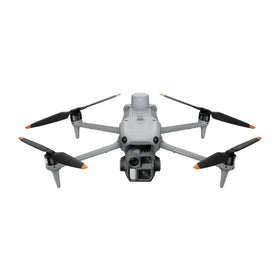
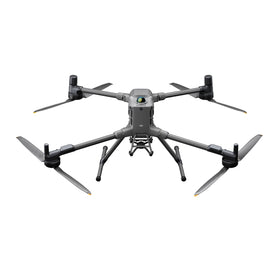
Moreover, the intelligence community’s involvement in SpaceX’s revenue stream signals a deeper integration of space-based assets with terrestrial drone operations. The U.S. Department of War is actively funding BVLOS (Beyond Visual Line of Sight) corridors that link satellite communications directly to drone flight controllers. This is excellent news for enterprise operators who can afford the new infrastructure, but it creates a two-tier market. Smaller operators, particularly those using second-hand equipment, will face pressure to upgrade their hardware to remain compliant with evolving airspace rules. The used drone market is already responding, with a surge in demand for inspected pre-owned DJI Matrice 300 RTK and Mavic 3 Enterprise platforms that offer a cost-effective bridge to this new reality.
Defense Spending as a Drone Market Catalyst
Let us be direct: the SpaceX S-1 filing is a bullish indicator for the defense drone segment. The same federal agencies that fund SpaceX are also the primary customers for the Blue sUAS (Small Unmanned Aircraft Systems) program, which is actively replacing Chinese-made drones in military and government fleets. This creates a supply chain bottleneck. As the Department of War accelerates its procurement of American-made drones, competition for components like flight controllers, gimbal assemblies, and encryption modules intensifies. Prices for new DJI drones, already under tariff pressure, are likely to rise further as defense contractors bid up the same silicon foundries.
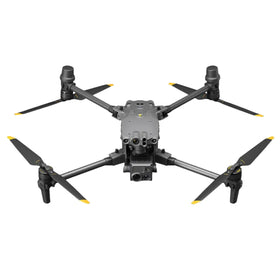
For the second-hand drone market, this is a net positive. When new hardware becomes scarcer or more expensive, the value of well-maintained, inspected pre-owned equipment appreciates. Reboot Hub is observing a 12-18% increase in resale values for DJI Enterprise models since Q1 2026, directly correlated to the tightening of defense-linked supply chains. Operators who purchased DJI M30T or M350 RTK units in 2024 are now sitting on assets that are not only operationally capable but financially appreciating. This is a rare dynamic in consumer electronics, and it underscores the strategic importance of buying through reputable refurbishment channels.
Q&A: What Does This Mean for Different Audiences?
For Part 107 Commercial Operators: Expect higher costs for new drone purchases and longer wait times for replacement parts. The defense sector’s absorption of manufacturing capacity means that RTK modules and high-resolution cameras may face allocation delays. Your best hedge is to explore the pre-owned DJI drones market, where inventory is available immediately and pricing is insulated from new-unit inflation.
For Drone Fleet Managers in Enterprise: The convergence of defense and commercial drone tech means that BVLOS waivers will become more common but also more expensive to implement. SpaceX’s satellite network (Starlink) is already being integrated into drone command-and-control systems. If your fleet relies on DJI’s OcuSync or Lightbridge, you may need to plan for a transition to satellite-relayed telemetry within 18-24 months. Budget accordingly.
For Investors in Drone Startups: The SpaceX S-1 confirms that government contracts are the fastest path to revenue scale. Look for companies that have secured DoD or DHS contracts for ISR (Intelligence, Surveillance, Reconnaissance) drones. The Blue sUAS list is your starting point. Avoid firms that rely solely on commercial real estate or agriculture markets, as these are more exposed to interest rate sensitivity.
The Second-Hand Market Opportunity
Reboot Hub’s analysis of the SpaceX disclosure leads to one actionable conclusion: the second-hand drone market is entering a super-cycle. As defense spending inflates the cost of new hardware, the value of pre-owned, professionally refurbished drones climbs. This is not a speculative bubble; it is a structural shift driven by federal procurement priorities. Operators who need DJI Matrice 350 RTKs for precision agriculture, Mavic 3E for thermal inspection, or Phantom 4 RTK for survey-grade mapping are increasingly turning to certified sources.
We recommend that commercial operators evaluate their fleet refresh cycles now. If you are planning to replace batteries, upgrade gimbals, or add payloads in 2027, consider purchasing used equipment in 2026 to lock in current pricing. Reboot Hub’s inventory of pre-owned DJI drones is inspected to OEM standards, flight-tested, and backed by a 6-month warranty. For operators needing repairs or upgrades, our professional DJI repair services use genuine parts and ensure FAA compliance.
FAQ: SpaceX Revenue and the Drone Market
How does SpaceX’s federal revenue affect drone prices?
When the U.S. government concentrates spending on SpaceX, it absorbs manufacturing capacity and talent from the broader aerospace supply chain. This increases component costs for drone manufacturers, particularly for advanced sensors, flight controllers, and communication modules. These costs are passed down to commercial drone buyers, making new units more expensive and extending lead times. The second-hand market benefits as operators seek cost-effective alternatives.
Should I sell my DJI drone now because of defense spending?
Not necessarily. The current market dynamics suggest that well-maintained DJI Enterprise drones are appreciating in value due to supply constraints. If you have a DJI Matrice 350 RTK or Mavic 3 Enterprise, holding it for another 6-12 months may yield higher resale prices. However, if you need to upgrade to a newer model, selling now while demand is high is a prudent strategy. Reboot Hub offers competitive trade-in programs.
What is the connection between SpaceX and drone BVLOS operations?
SpaceX’s Starlink satellite constellation is increasingly used as a communication backbone for BVLOS drone flights. The U.S. Department of War is funding integration projects that link Starlink terminals directly to drone ground control stations, enabling real-time telemetry and video transmission over long distances. This technology is still nascent but will likely become standard for enterprise and defense drone operations within five years.
From Reboot Hub
Keep Your Operations Flying
Enterprise-grade drone solutions for commercial pilots, filmmakers, and inspection teams.
Pre-owned Fleet
Fully inspected DJI drones with 6-month warranty. Save up to 40%.
Browse Inventory ->