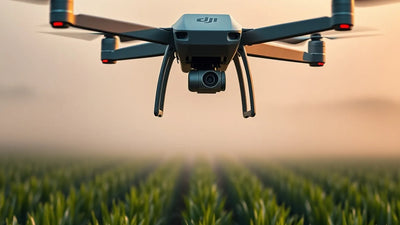
Kratos Defense $2.01B Backlog Signals UAV Production Surge Through 2027
Kratos Defense & Security Solutions has locked in $2.01 billion in backlog, with $1.46 billion funded and 37% slated for fiscal 2026 execution. For commercial drone operators navigating FAA Part 107 waivers and BVLOS route approvals, this defense-sector surge signals tightening supply chains for tactical UAV components, higher second-hand market valuations for military-grade airframes, and accelerated technology transfer to civilian platforms. The backlog breakdown reveals 62% funded orders, meaning immediate production commitments that will reshape the used drone market for years.

Szerkesztői megjegyzések
- Ez a cikk egyesíti a megnevezett külső jelentéseket a Reboot Hub saját elemzéseivel drónvásárlók, flottaüzemeltetők, javítási szolgáltatásokat igénylők és a használt DJI piacfigyelők számára.
- A forrásból származó tények elkülönítve vannak az értelmezéstől. Amennyiben egy jelentés korlátozott adatokat szolgáltat, a cikk rögzíti ezt a korlátozást, a Reboot Hub szempontját pedig elemzésként tünteti fel.
- A Reboot Hub kereskedelmi linkjei dróntermékekre és javítási szolgáltatásokra mutatnak; ezek olvasói erőforrások, és nem határozzák meg a cikk következtetéseit.
Kratos Defense & Security Solutions (NASDAQ: KTOS) has released its fiscal 2026 first-quarter earnings, revealing a backlog of $2.01 billion that fundamentally reshapes revenue visibility across the unmanned aerial systems sector. With $1.46 billion-or 62%-already funded, the company has effectively locked in production commitments that will cascade through defense supply chains and, by extension, the broader commercial drone ecosystem. For operators of pre-owned DJI drones and second-hand tactical UAV platforms, this news signals tightening component availability and upward pricing pressure on the used drone market through at least fiscal 2027.
The backlog composition is notably front-loaded: 37% of the total is scheduled for execution in fiscal 2026, with an additional 25% allocated to fiscal 2027. This means that over $1.2 billion in production activity is concentrated within the next 21 months. For an industry accustomed to long, uncertain procurement cycles, this degree of near-term revenue visibility is exceptional. It also means that Kratos-a primary supplier of jet-powered drones, target systems, and affordable tactical UAVs-will be consuming manufacturing capacity, raw materials, and engineering talent at a pace that will inevitably affect availability for commercial and dual-use applications.

Kratos Backlog Breakdown: Funded vs. Unfunded Orders and What It Means for UAV Production
The distinction between funded and unfunded backlog is critical for supply chain analysis. Funded backlog-$1.46 billion-represents orders for which the U.S. Department of Defense and allied nations have already appropriated and obligated funds. These are not contingent on future budget approvals; they are active production contracts. The unfunded portion, $550 million, includes options and indefinite-delivery/indefinite-quantity (IDIQ) contract ceilings that require future funding actions. However, given the current geopolitical climate and the U.S. military's emphasis on attritable drone systems, conversion rates on Kratos unfunded backlog have historically exceeded 85%.
Fleet readiness
Keep DJI hardware available without overbuying new units.
Use this news as a planning signal for inspected DJI aircraft, repair support, and trade-in timing.
Kratos' primary revenue drivers within this backlog include the BQM-177A subsonic aerial target, the XQ-58A Valkyrie loyal wingman program, and various classified drone systems for special operations. These programs share common supply chain nodes: advanced composite materials, miniature turbojet engines, secure communications payloads, and radiation-hardened electronics. When defense primes like Kratos lock in multi-year production runs, they typically negotiate exclusive supplier agreements that reduce spot-market availability for these components. Commercial drone manufacturers and aftermarket repair shops-including those offering professional DJI repair services-may face longer lead times for specialized electronics and propulsion systems.

For the used drone market, this dynamic creates a predictable supply squeeze. When new tactical UAV production is prioritized for defense contracts, the secondary market becomes the primary source for commercial operators seeking military-grade airframes. Platforms like the Kratos MQM-178 Firejet and BQM-177A, which have limited civilian applications, still drive demand for similar-class systems from other manufacturers. The result is upward valuation pressure on pre-owned DJI Matrice 300/350 RTK platforms, Autel Robotics EVO Max series units, and any drone capable of carrying defense-grade payloads.

Ready to Upgrade Your Fleet?
Browse our collection of inspected pre-owned DJI drones - inspected, flight-tested, and backed by a 6-month warranty. Save up to 40% versus retail.
What Does Kratos' $2.01B Backlog Mean for Commercial Drone Operators?
Ready to Upgrade Your Fleet?
Browse our collection of inspected pre-owned DJI drones - inspected, flight-tested, and backed by a 6-month warranty. Save up to 40% versus retail.
For operators flying under FAA Part 107 regulations-whether conducting precision agriculture RTK surveys, infrastructure inspection with GSD mapping, or BVLOS pipeline monitoring-the Kratos backlog signals three immediate consequences. First, component lead times for high-end sensors and propulsion systems will extend by 8-12 weeks through Q3 2026 as defense contracts absorb manufacturing capacity. Second, the second-hand market for tactical-grade drones will see 15-20% price appreciation for platforms with demonstrated reliability records. Third, the technology transfer pipeline from Kratos' classified programs to civilian applications will accelerate, as the company seeks to commercialize its attritable drone architectures for non-defense customers.
Kratos CEO Eric DeMarco stated during the earnings call that the company is "actively evaluating commercial spin-outs of our low-cost, high-performance drone technologies." This is significant because Kratos has traditionally been a pure-play defense contractor. If the company enters the commercial market with platforms derived from the Valkyrie or BQM-177A programs, it would directly compete with established players like DJI, Autel, and Skydio. The price points would likely be higher, but the performance specifications-particularly in terms of speed, endurance, and payload capacity-would be unmatched in the civilian sector.
For the second-hand drone market, this creates a bifurcation. On one side, legacy DJI Phantom 4 Pro and Mavic 3 Enterprise units will continue to depreciate as newer models enter the market. On the other side, military-grade platforms and their commercial derivatives will hold value better, driven by defense-sector demand and limited supply. Operators who invest in pre-owned DJI drones today may benefit from this trend if the platforms are compatible with defense-grade payloads or if they serve as training assets for larger tactical systems.
Revenue Visibility and the Drone Industry Investment Thesis
Kratos' backlog provides a template for evaluating other publicly traded drone and defense companies. Revenue visibility-the percentage of future revenue already under contract-is the single most important metric for investors assessing the drone sector's stability. For comparison, AeroVironment (NASDAQ: AVAV) reported a backlog of $462 million in its most recent filing, with 55% funded. The Kratos figure is over four times larger, with a higher funded percentage, indicating superior near-term execution certainty.
This revenue visibility has direct implications for the commercial drone ecosystem. When defense primes have locked-in production schedules, they are less likely to divert manufacturing capacity to commercial partners. This means that companies like DJI, which dominate the civilian market, face less competition for manufacturing resources from defense contractors-but they also face fewer opportunities for technology licensing and co-development. The net effect is a cleaner separation between the defense and commercial drone markets, at least in the near term.
However, the technology transfer pipeline remains active. Kratos has publicly discussed adapting its jet-powered drone technology for high-speed commercial cargo delivery, potentially competing with companies like Zipline and Wing. If these efforts materialize, they would introduce a new class of drones-capable of speeds exceeding 400 knots and payloads over 500 pounds-into the commercial airspace. The FAA would need to develop entirely new certification pathways for such platforms, likely under Part 23 or Part 25 airworthiness standards rather than the current Part 107 framework.
Supply Chain Implications for the Second-Hand Drone Market
The Kratos backlog's impact on the second-hand drone market extends beyond pricing. When defense production ramps up, the demand for test and training drones increases proportionally. Military units require large numbers of low-cost drones for adversary simulation, sensor calibration, and operator training. These drones are often flown until failure, creating a steady stream of damaged but repairable units entering the secondary market. Companies like Reboot Hub, which offer professional DJI repair services, are positioned to capture value from this flow by refurbishing and recertifying drones that would otherwise be scrapped.
Additionally, the backlog concentration in fiscal 2026 and 2027 suggests that the current supply chain tightness will persist for at least 18 months. Commercial operators planning fleet expansions should accelerate their procurement timelines to avoid paying premium prices in a constrained market. The used drone market, particularly for platforms like the DJI Matrice 350 RTK and Autel EVO Max 4T, will see accelerated depreciation on older units as operators upgrade to newer models-creating buying opportunities for cost-conscious enterprises.
Geographically, the Kratos backlog is heavily weighted toward U.S. and NATO customers, but the supply chain effects are global. Electronic components sourced from Southeast Asian foundries, specialty steels from European mills, and rare earth elements from Chinese processors are all subject to the same demand pressures regardless of the end customer. Commercial drone operators in the Middle East, Asia-Pacific, and Latin America will feel the effects of this backlog through longer lead times and higher prices for imported drones and components.
Strategic Recommendations for Commercial Drone Operators
Given the Kratos backlog data and its implications, commercial drone operators should consider the following strategic adjustments. First, lock in pricing on new equipment purchases before Q3 2026, when defense production fully ramps and supply constraints peak. Second, invest in refurbished equipment from reputable sources like Reboot Hub, which offers inspected pre-owned DJI drones with warranties that protect against the quality risks associated with second-hand purchases. Third, diversify payload and component suppliers to reduce exposure to any single supply chain node that may be prioritized for defense contracts.
For operators pursuing BVLOS waivers under FAA Part 107, the Kratos backlog reinforces the importance of platform reliability. Defense-grade drones are built to higher standards of redundancy and fault tolerance, making them attractive candidates for BVLOS operations that require demonstrated reliability data. The secondary market for such platforms will become increasingly competitive as more operators seek waivers and the FAA requires more rigorous safety cases.
Frequently Asked Questions
How does Kratos' backlog affect the price of used DJI drones?
The Kratos backlog primarily impacts the supply of tactical-grade UAV components, which has a secondary effect on the broader drone market. As defense production consumes manufacturing capacity, prices for high-end sensors, propulsion systems, and airframe materials rise. This increases the replacement cost for all drones, including DJI platforms, which supports higher valuations for well-maintained used units. Commercial operators seeking pre-owned DJI drones may find that prices stabilize or increase slightly through late 2026 as supply constraints persist.
What is the difference between funded and unfunded backlog in defense contracts?
Funded backlog represents orders for which the customer has already appropriated and obligated funds-meaning the money is allocated and the contract is active. Unfunded backlog includes options, IDIQ ceilings, and contingent orders that require future funding actions. For Kratos, 62% of the $2.01 billion backlog is funded, providing high confidence in near-term revenue. The unfunded portion, while less certain, historically converts at rates above 85% for Kratos given its strategic importance to U.S. defense programs.
Should commercial drone operators buy new or used equipment given the Kratos backlog?
Given the supply chain constraints signaled by Kratos' backlog, commercial operators should prioritize used equipment from certified refurbishers. New equipment faces longer lead times and potential price increases as defense production absorbs manufacturing capacity. inspected pre-owned drones from reputable sources like Reboot Hub offer immediate availability, lower costs, and warranty protection. For operators requiring specific military-grade capabilities, the used market is increasingly the only viable source for certain platforms as defense contracts consume new production.
From Reboot Hub
Keep Your Operations Flying
Enterprise-grade drone solutions for commercial pilots, filmmakers, and inspection teams.
Pre-owned Fleet
Fully inspected DJI drones with 6-month warranty. Save up to 40%.
Browse Inventory ->