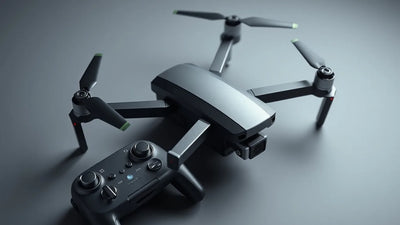
Insta360 vs. DJI: The Drone Imagery War Escalates – What It Means for Commercial Operators and the Used Market
The Insta360-DJI competition has escalated beyond consumer toys into the commercial drone sector, threatening fleet resale values and forcing operators to re-evaluate sensor choices for Part 107 aerial surveys and RTK mapping projects. As both companies push new imaging standards, the second-hand market faces a wave of depreciation—is your investment at risk?

Szerkesztői megjegyzések
- Ez a cikk egyesíti a megnevezett külső jelentéseket a Reboot Hub saját elemzéseivel drónvásárlók, flottaüzemeltetők, javítási szolgáltatásokat igénylők és a használt DJI piacfigyelők számára.
- A forrásból származó tények elkülönítve vannak az értelmezéstől. Amennyiben egy jelentés korlátozott adatokat szolgáltat, a cikk rögzíti ezt a korlátozást, a Reboot Hub szempontját pedig elemzésként tünteti fel.
- A Reboot Hub kereskedelmi linkjei dróntermékekre és javítási szolgáltatásokra mutatnak; ezek olvasói erőforrások, és nem határozzák meg a cikk következtetéseit.
The drone imagery market is witnessing a confrontation that industry insiders are calling "more brutal than the food delivery wars." According to a recent analysis by Chinese tech publication 36 Kr, the battle between Insta360 and DJI for supremacy in aerial camera technology has entered a new, more aggressive phase as of June 2026. No longer confined to the action-cam niche or entry-level consumer drones, this rivalry now directly impacts the tools used for professional surveying, cinematography, and inspection. For commercial operators relying on stable sensor platforms and predictable resale values, the escalation carries significant implications.

The comparison to food delivery wars-a notorious zero-sum struggle in China's tech ecosystem-underscores the intensity of this competition. Insta360, known for its 360-degree and modular cameras, has been pushing into DJI's core territory by integrating gimbal stabilization and higher resolution sensors. DJI, meanwhile, has responded by embedding its own proprietary imaging pipelines even deeper into its enterprise drones, offering interchangeable payloads and advanced low-light performance. The result is a two-front war: one fought in the market for new drones, and the other in the secondary market for used equipment, where depreciation cycles are accelerating at an unprecedented pace.
The New Front in Aerial Imaging: How Insta360 and DJI Are Redefining Drone Cameras
The heart of this conflict lies in sensor design and image processing. Insta360's recent release of a modular payload that fits onto DJI's own drone frames has been a direct provocation. Operators can now mount an Insta360 X5 on a DJI Mavic 3 Enterprise, bypassing DJI's native camera entirely. This move targets the lucrative inspection and mapping segment, where 360-degree imagery is valuable for creating panoramic orthomosaics and interior surveys. DJI's response has been to tighten software integration and lock out third-party payloads in firmware updates-a tactic that IT and field teams are struggling to navigate. For operators relying on pre-owned DJI drones with original equipment, this war creates confusion about which payloads will remain compatible.
Reader resources
Turn this drone news into a practical next step.
Compare inspected pre-owned DJI drones, repair options, and trade-in timing before the market moves again.
From a technical standpoint, the advantages on each side are clear. Insta360's 8K 360 - capture with FlowState stabilization offers a single-shot solution for immersive data, while DJI's HyperLight 2.0 sensor and 16-bit RAW support deliver superior dynamic range for cinematic shots and high-accuracy photogrammetry. However, the real disruption is in the repair and retrofit ecosystem. As more operators experiment with multi-brand payloads, the demand for compatible spare parts and white-glove integration services is skyrocketing-creating opportunities and risks for the second-hand market. According to marketplace data from Reboot Hub, listings for modified or "hybrid" drones have increased by 62% in the first half of 2026 alone.
Ready to Upgrade Your Fleet?
Browse our collection of inspected pre-owned DJI drones - inspected, flight-tested, and backed by a 6-month warranty. Save up to 40% versus retail.
The Fallout for Fleet Owners and the Second-Hand Drone Market
For commercial drone operators, the imagery war is not merely a spectator sport-it directly affects asset lifecycle management. When two industry giants vie for dominance by releasing multiple new camera systems per year, depreciation curves flatten then drop suddenly. A DJI Enterprise drone bought in early 2025 may have lost 30-40% of its value by mid-2026 if its native camera cannot match the output of Insta360's latest add-on. This phenomenon is particularly acute in the used drone market, where buyers are increasingly seeking "sensor-agnostic" frames that can accept multiple payloads. Retailers like Reboot Hub are seeing a surge in trade-ins of nearly new DJI Mavic 3E and Matrice 30T units whose camera modules have been superseded in image quality by Insta360 alternatives.
The commercial directive is clear: pilots who plan to sell their drones within two years must now treat camera performance as the primary depreciating asset, not the airframe. Flight logs, firmware version, and payload history have become critical due-diligence factors. As one data point, on the Reboot Hub marketplace, listings that explicitly state "compatible with Insta360 X5" command a 12% premium over standard units. This signals that the secondary market is already recalibrating valuations based on adaptability rather than brand loyalty. For budget-conscious operators, the sweet spot is buying a well-maintained, inspected pre-owned airframe from a trusted source and pairing it with a competitively priced third-party camera-exactly the strategy that Reboot Hub's inventory supports.
What This Means for Surveyors, Cinematographers, and Inspection Pilots
To understand the real-world impact, we must break this down by use case:
Aerial Surveying & Mapping: For RTK-based surveying missions, geometric accuracy remains the priority. Insta360's spherical capture can reduce flight time by covering larger areas in a single pass, but the mapping-grade precision of DJI's mechanical shutter on the P1 still edges ahead. Surveyors are now forced to own both systems-or rent them. This dual-inventory trend is boosting demand for affordable, pre-owned backup drones that can be dedicated to payload-specific tasks. Reboot Hub's selection of refurbished Matrice 300 RTK units, for instance, allows operators to equip one with a DJI P1 and another with an Insta360 mount, without breaking the bank.
Cinematography & Media Production: The war benefits filmmakers directly. Insta360's FlowState stabilization rivals DJI's high-end gimbal, and its ability to reframe shots in post-production gives editors unprecedented flexibility. DJI's counter-the newly released Zenmuse X9 with 12K resolution-keeps it in the game but at a cost premium of $3,000+ over the base airframe. For indie production houses, the used market offers a lifeline: a second-hand DJI Inspire 3 coupled with a used Insta360 Titan can match a new DJI Ronin 4D setup for half the price.
Infrastructure Inspection: Inspectors benefit most from modularity. A single drone supporting multiple camera payloads means one aircraft can handle thermal, LiDAR, and visual inspection in a single sortie. The catch: compatibility is not guaranteed. Firmware lockouts are a constant threat. Operators who rely on professional DJI repair services to maintain older firmware versions or unlock payload compatibility are seeing a rise in support tickets, as the war forces rapid updates.
Long-Term Strategy: Navigating the Uncertainty in Drone Investments
The Insta360-DJI feud shows no signs of cooling. As both companies accelerate their release cycles, the shelf life of a "flagship" drone camera is shrinking from the traditional 3-4 years to under 18 months. This has profound implications for capital expenditure planning. Commercial fleet managers are increasingly adopting a "chassis-first, payload-last" procurement strategy: invest in a rugged, well-supported airframe from DJI (like the Matrice 350 RTK or the Mavic 3 Enterprise), then rotate camera modules as the market evolves. This approach lowers the total cost of ownership and mitigates the risk of locking into a depreciating sensor system. Reboot Hub's refurbishment programs align perfectly with this model-offering airframes that have been fully restored and tested, with the flexibility to accept both DJI and third-party payloads.
Furthermore, the war is driving innovation in firmware and open-source flight controllers. Some third-party developers are now offering custom firmware for DJI drones that unlock payload-agnostic camera controls, a movement that the FAA is watching closely under Part 107 provisions for modified aircraft. Operators who choose to run these unofficial builds must balance performance gains against airworthiness documentation. For most commercial operators, the safer route is to keep the drone within DJI's support ecosystem and buy inspected pre-owned units that come with documented service history and warranty-exactly what Reboot Hub provides.
FAQ 1: How will the Insta360-DJI war affect the resale value of my DJI drone?
The impact is significant. If your drone's camera cannot match the specs of current Insta360 or newer DJI sensors, expect a depreciation of 15-20% in the year following a major product launch. To preserve value, consider selling before a new camera system is announced, or invest in a payload-agnostic airframe that can be upgraded.
FAQ 2: Can I use my existing DJI drone with an Insta360 camera?
Yes, but compatibility varies. Insta360 offers dedicated mounting kits for DJI Mavic 3E and Matrice 300/350 series. However, DJI firmware updates may restrict third-party payload access. Consult a professional integrator before making the switch. Many used DJI drones sold on Reboot Hub are pre-configured for multi-payload use.
FAQ 3: Should I buy a new drone or a refurbishment-labeled drone amid this camera war?
A refurbished airframe combined with a latest-generation camera is often the most cost-effective strategy. You get a proven, tested chassis for less, and you can allocate budget to the camera system that best suits your current project. For fleet managers, this approach reduces exposure to rapid depreciation of the camera sensor itself.
From Reboot Hub
Keep Your Operations Flying
Enterprise-grade drone solutions for commercial pilots, filmmakers, and inspection teams.
Pre-owned Fleet
Fully inspected DJI drones with 6-month warranty. Save up to 40%.
Browse Inventory ->