Amazon MK30 wire strike renews delivery drone safety scrutiny
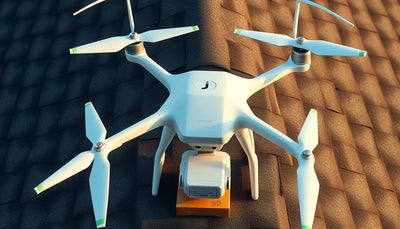
An Amazon Prime Air MK30 delivery drone clipped an overhead wire on 20 November 2026, according to SUAS News. The incident adds another data point to the reliability debate around autonomous delivery and raises practical questions for commercial operators and fleet buyers.

Quick answer
On 20 November 2026, an Amazon Prime Air MK30 delivery drone clipped an overhead wire, as reported by SUAS News.
- The incident involved an MK30 delivery drone and an overhead wire contact on 20 November 2026.
- The report comes from SUAS News, a drone industry publication.
- No injuries or additional operational details were confirmed in the source data.
- The event adds to ongoing scrutiny of autonomous delivery drone reliability.
Evidence: SUAS News
Market context
Turn market news into a buy, repair, or trade-in decision.
Compare pre-owned availability, resale timing, and repair economics before the market moves again.

An Amazon Prime Air MK30 delivery drone clipped an overhead wire on 20 November 2026, according to a report published by SUAS News. The incident, framed by the outlet as another in a pattern of MK30 mishaps, has not yet been accompanied by confirmed injury or detailed operational findings in the available source material.
For commercial drone operators, fleet managers, and buyers watching the autonomous delivery segment, the reported wire strike is a reminder that low-altitude urban and suburban flight remains sensitive to infrastructure that is difficult to map consistently. Even when a single event lacks full context, the market reads these reports as signals about reliability, maintenance burden, and regulatory appetite.
What the source actually reports
SUAS News reported that an Amazon Prime Air MK30 clipped an overhead wire on 20 November 2026. The publication presented the event as part of a broader concern about how many incidents occur before a more serious outcome. The source did not provide confirmed details on location, flight phase, payload state, weather, or post-incident inspection findings.
Because the available reporting is limited, Reboot Hub is not treating the wire strike as a confirmed systemic failure. Instead, the useful commercial read is narrower: autonomous delivery operations continue to encounter real-world obstacles that are mundane in isolation but consequential when repeated across a fleet. Overhead wires, in particular, are a known challenge for low-altitude route planning and sensor-based obstacle detection.
Why wire strikes matter for fleet economics
A wire strike on a delivery drone is not simply an isolated navigation error. It carries direct repair cost, potential airframe write-off, route suspension risk, and insurance implications. For any operator running repetitive low-altitude routes, the frequency of near-miss and contact events shapes maintenance reserves, spare parts planning, and whether a given airframe remains economically viable over hundreds of cycles.
The MK30 is a purpose-built delivery platform, but the operational lesson transfers to commercial drone users more broadly. Thin overhead lines are among the hardest objects for both human pilots and automated systems to detect reliably, especially in varying light and against cluttered backgrounds. Fleet managers evaluating route risk should treat wire mapping and obstacle database currency as a core cost line, not a secondary software feature.
For buyers in the pre-owned DJI market, the reported Amazon incident is not a direct product comparison. DJI enterprise and consumer platforms operate under different mission profiles and regulatory frameworks. What this means for drone owners and the market is that publicized failures in high-profile autonomous fleets can shift buyer sentiment toward platforms with mature obstacle sensing, easier repairability, and accessible OEM spare parts. Reboot Hub analysis suggests that operators who prioritize serviceability and transparent maintenance history are better positioned when industry confidence wobbles. For those evaluating inspected pre-owned DJI drones or genuine OEM spare parts, the Drone Wiki offers a practical reference for understanding platform support and repair considerations.
What this means for drone owners and the market
The reported MK30 wire strike is unlikely to change near-term drone demand on its own, but it reinforces a pattern that procurement teams already track. Autonomous delivery remains capital-intensive, and each publicized incident adds pressure on operators to demonstrate route safety, redundant sensing, and rapid incident response. Enterprise buyers may respond by slowing expansion until reliability data improves or by demanding clearer maintenance and inspection protocols from vendors.
For independent operators and small fleet owners, the practical takeaway is to review low-altitude route planning assumptions. Overhead wires, signage, and temporary infrastructure should be treated as dynamic hazards rather than fixed map features. A buyer or pilot evaluating a drone for commercial work should ask how the platform handles thin-object detection, what replacement parts cost, and how quickly a damaged airframe can return to service. These questions matter more than headline range or payload figures when an incident occurs.
Reboot Hub analysis: In the pre-owned market, incidents like this can have a subtle effect. When new commercial platforms face public reliability questions, some buyers shift attention to established platforms with known repair paths and a healthy supply of OEM-pulled parts. That does not mean used DJI drones become delivery replacements; it means the broader market conversation tilts toward serviceability and predictable operating cost. Sellers who can document maintenance history and genuine part usage are likely to hold value better during periods of negative industry news. For owners evaluating service and lifecycle risk, Drone Wiki explains the relevant repair, parts, resale, or operational path.
What operators should watch next
The most important next step is whether any regulator or operator releases additional detail on the 20 November event. If the wire strike is confirmed as a sensor or routing failure, that would carry different implications than a localized environmental factor or manual flight decision. Until then, the source-limited nature of the report means fleet managers should avoid overreacting to a single incident.
Operators should also watch how Amazon Prime Air communicates about MK30 reliability in the coming weeks. A pattern of public incident reports without transparent root-cause analysis tends to increase scrutiny from both regulators and commercial insurance providers. For any drone buyer, that scrutiny eventually shows up in underwriting questions, route approval timelines, and required maintenance documentation.
In the meantime, the sensible operator response is not to abandon interest in autonomous delivery or low-altitude logistics. It is to treat infrastructure collision risk as a first-order operational variable. Review route surveys, update obstacle databases, and ensure that your maintenance workflow can handle a damaged arm, propeller, or sensor module without grounding the fleet for weeks. The platforms that remain economical are the ones that can absorb a bad day and return to service quickly.
FAQ
Frequently asked questions
What happened to the Amazon MK30 drone?
According to SUAS News, an Amazon Prime Air MK30 delivery drone clipped an overhead wire on 20 November 2026. The source did not confirm injuries or provide detailed operational findings.
Does this incident affect DJI drone buyers?
Not directly. The MK30 is a purpose-built delivery platform, not a DJI product. However, publicized failures in autonomous fleets can influence broader buyer sentiment toward serviceability, repair access, and platform maturity.
What should a fleet operator do after this report?
Review low-altitude route planning for thin-object hazards such as overhead wires, confirm that obstacle data is current, and assess how quickly damaged airframes can be repaired using available spare parts.
Which sources support this update?
The visible evidence links identify SUAS News; each source is used only for the claim it directly supports.
What remains subject to change?
Retail pricing, availability, product bundles and regulatory timelines can change. Readers should verify the latest terms with the named retailer, manufacturer or regulator before acting.
How should buyers or operators use this analysis?
Use the verified facts as a starting point, then compare mission fit, lifecycle support, maintenance needs and current procurement terms before making a purchase or fleet decision.
Konzultált források
- SUAS News - primary source
A közzététel időpontjában további hivatalos dokumentáció nem állt rendelkezésre.
A Reboot Hub szerkesztősége vásárlási, javítási, viszonteladási és üzemeltetési elemzéseket nyújt dróntulajdonosok számára. Ha hibát észlel, kérjük, jelezze nekünk a szerkesztői irányelvünknek megfelelően a javítás érdekében.