Amazon MK30 Drone Lands on Garage Roof During Shampoo Delivery
An 83-pound Amazon MK30 delivery drone reportedly ended up on a Michigan garage roof after a shampoo drop. The incident sharpens questions about whether low-value residential deliveries justify the operational risk, insurance exposure, and public perception costs facing commercial drone logistics programs.

Quick answer
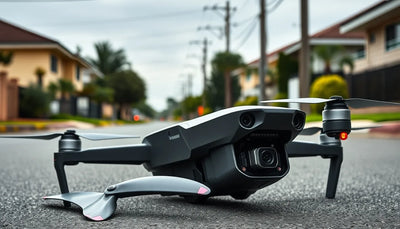
An 83-pound Amazon MK30 delivery drone reportedly ended up on a Michigan garage roof after a shampoo delivery, according to DroneXL.co.
- The reported incident involved a residential shampoo delivery in Michigan
- The MK30 aircraft weighs approximately 83 pounds
- The source argues low-value deliveries may not justify current operational risk
- The event adds to scrutiny of commercial drone logistics safety and insurance exposure
Evidence: DroneXL.co · FAA UAS official guidance
Market context
Turn market news into a buy, repair, or trade-in decision.
Compare pre-owned availability, resale timing, and repair economics before the market moves again.

DroneXL.co reported on November 22, 2026, that an 83-pound Amazon MK30 delivery drone ended up on a garage roof in Michigan after a shampoo delivery. The report frames the incident as a pointed question about whether the operational risk of residential drone delivery is justified when the cargo itself is a low-value household item. No official confirmation from Amazon or a regulatory agency is included in the source material, so the details should be read as source-limited reporting at this stage.
The report's central argument is blunt: the less a delivery matters, the safer the drone must be. A shampoo bottle does not justify a heavy aircraft coming down on a residential structure, even if no injuries are reported in the available account. For commercial operators, fleet managers, and anyone watching the logistics drone market, that framing matters more than the individual incident itself.
The reported incident and why weight changes the risk equation
According to DroneXL.co, the aircraft involved was an Amazon MK30 weighing roughly 83 pounds. That is a substantial mass to have come to rest on a residential garage roof, regardless of whether the landing was controlled, uncontrolled, or the result of a failed delivery attempt. The source does not provide a detailed sequence of events, so Reboot Hub is not treating this as a confirmed crash, malfunction, or emergency landing. What is reportable is that the aircraft reportedly ended up on a roof during a shampoo delivery in Michigan.
The operational implication is straightforward. Heavier delivery drones carry more kinetic energy, more potential for property damage, and more insurance complexity than the small camera drones most commercial pilots operate. A 250-gram aircraft and an 83-pound aircraft present fundamentally different risk profiles. For logistics operators, every gram of aircraft weight translates into a different tier of liability exposure, maintenance burden, and public perception risk.
What this means for drone owners and the market
The commercial drone market has spent years building a safety narrative around small, lightweight, low-impact aircraft. Incidents involving larger delivery platforms complicate that narrative, even when the aircraft belongs to a different segment of the industry. A hobbyist or commercial photographer flying a sub-2-kilogram drone is not operationally comparable to an 83-pound logistics aircraft, but the public and many policymakers do not always make that distinction. Negative coverage of delivery drones can bleed into broader regulatory attitudes toward all unmanned aircraft.
For pre-owned DJI drone buyers and operators, the practical takeaway is that public incidents involving enterprise logistics platforms rarely affect the value or availability of consumer and prosumer camera drones directly. What they can affect is the regulatory environment, insurance pricing, and local acceptance of drone operations generally. Fleet managers should monitor how insurers respond to delivery drone incidents over the next several quarters, because underwriting models for commercial drone policies tend to move in response to high-profile events. Operators who want to understand how repair, parts, and ownership costs fit into the broader market picture can review the Drone Wiki for context on maintenance and fleet planning. For owners evaluating service and lifecycle risk, Drone Wiki explains the relevant repair, parts, resale, or operational path.
The source's core argument, that low-value cargo does not justify elevated risk, has commercial consequences beyond Amazon. If logistics operators conclude that residential delivery of inexpensive consumer goods carries unacceptable insurance and reputational costs, they may narrow their service areas, raise minimum order values, or shift toward centralized drop points. That would reshape the economics of drone delivery and reduce the volume of residential flights, which in turn affects demand for delivery drone hardware, spare parts, and maintenance services.
Insurance, liability, and the cost of public perception
Reboot Hub analysis: An 83-pound aircraft on a residential roof is an insurance event waiting to be priced. Even without reported injuries, property damage claims, inspection costs, and the administrative burden of resolving an incident like this add up quickly. DroneXL.co's opinion piece argues that the risk-reward calculation for a shampoo delivery is difficult to defend. Reboot Hub's analysis is that insurers and enterprise risk managers are likely to reach a similar conclusion, particularly if similar incidents accumulate.
For commercial operators outside the logistics segment, the lesson is about aircraft selection and mission planning. A drone that is appropriate for one job may be wildly inappropriate for another, not because of capability, but because of consequence. Flying an 83-pound aircraft over occupied residential structures for routine consumer goods delivery is a different risk decision than flying a small inspection drone over an empty industrial site. The source does not provide data on Amazon's incident rate or safety record, so no comparative safety claims should be inferred.
What operators and buyers should watch next
The most useful response to this report is not alarm, but calibration. Drone delivery is still a young industry, and incidents like the one described by DroneXL.co are part of the learning curve that regulators, insurers, and operators will use to set future standards. What matters commercially is whether the industry can demonstrate that heavy delivery platforms can operate over residential areas without generating a steady stream of property damage reports.
Buyers evaluating pre-owned DJI aircraft for commercial work should not read this incident as a reason to avoid drones altogether. It is a reason to be precise about mission risk, aircraft weight, and operating environment. A Matrice-class platform flown over a construction site has a different risk profile than a Mini-class aircraft flown over a park, and insurance costs should reflect that difference. The pre-owned market for DJI hardware is driven by capability, condition, and parts availability, not by Amazon's delivery drone performance. But the regulatory and insurance environment that surrounds all drone operations can shift in response to high-profile incidents, and that is worth watching.
For fleet managers, the near-term action item is to review mission profiles and ask whether any routine operation involves more aircraft mass, more population density, or more property exposure than the job actually requires. If the answer is yes, adjusting the mission plan or the aircraft selection is cheaper than defending an incident afterward. The DroneXL.co report does not establish a pattern of Amazon MK30 failures, and Reboot Hub is not suggesting one. It does establish that public scrutiny of heavy delivery drones is intensifying, and that scrutiny has a way of turning into underwriting changes, local restrictions, and procurement caution.
FAQ
Frequently asked questions
What exactly did DroneXL.co report about the Amazon MK30 incident?
DroneXL.co reported that an 83-pound Amazon MK30 delivery drone ended up on a garage roof in Michigan after a shampoo delivery. The report is framed as an opinion piece arguing that low-value residential deliveries may not justify the operational risk of heavy delivery drones.
Has Amazon or a regulator confirmed the rooftop incident?
No. The available source material does not include confirmation from Amazon, the FAA, or any other official body. The report should be treated as source-limited reporting until additional verification emerges.
Should this incident change how commercial drone operators plan missions?
It should prompt a review of aircraft weight, population density, and property exposure for routine missions. Operators should ask whether any flight uses more aircraft mass than the job requires, because heavier platforms carry greater liability and insurance consequences if something goes wrong.
Which sources support this update?
The visible evidence links identify DroneXL.co and FAA UAS official guidance; each source is used only for the claim it directly supports.
What remains subject to change?
Retail pricing, availability, product bundles and regulatory timelines can change. Readers should verify the latest terms with the named retailer, manufacturer or regulator before acting.
How should buyers or operators use this analysis?
Use the verified facts as a starting point, then compare mission fit, lifecycle support, maintenance needs and current procurement terms before making a purchase or fleet decision.
Konzultált források
- DroneXL.co - primary source
- FAA UAS official guidance - official regulator source
A Reboot Hub szerkesztősége vásárlási, javítási, viszonteladási és üzemeltetési elemzéseket nyújt dróntulajdonosok számára. Ha hibát észlel, kérjük, jelezze nekünk a szerkesztői irányelvünknek megfelelően a javítás érdekében.