Amazon Clears DJI Mini 4K at Record Low – What Buyers Should Know
Amazon is selling the DJI Mini 4K at its lowest price ever, with no FAA registration needed. For buyers, fleet operators, and the pre-owned market, this clearance signals shifting demand and pricing. Here’s what it means.

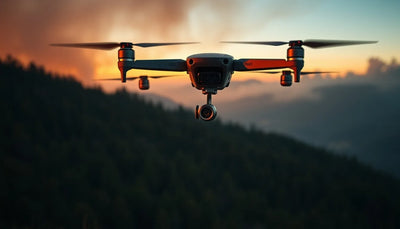
Amazon has begun clearing out stock of the DJI Mini 4K at what the company calls its record low price, according to a report from Gizmodo. The sub-250-gram drone, which requires no FAA registration for recreational operation, is now being offered at a price point that has not been seen before in the consumer drone market. For commercial drone buyers, fleet operators, and those shopping the pre-owned DJI market, this clearance is more than a temporary sale—it signals a shift in how entry-level 4K camera drones are valued and what that means for the broader secondary market.
The DJI Mini 4K is designed as an entry-level aerial photography platform that combines 4K video recording with a lightweight airframe that stays under the FAA’s 250-gram threshold for mandatory registration. With this clearance, Amazon is likely managing inventory ahead of newer product cycles, but the effect on pricing expectations—both new and pre-owned—is immediate. Below we unpack the operational and commercial implications for buyers, fleet managers, and repair customers.
The clearance event and what the source reveals

The source article from Gizmodo confirms that Amazon is actively clearing DJI Mini 4K inventory at a record low, and highlights that the drone does not require FAA registration. While exact figures are not provided in the source summary, the phrase “record low” suggests the price has dropped below any previous discount for this model. For context, the DJI Mini 4K originally launched with an MSRP around the $300–$400 range, although we have no verified spec context for that figure.
Market context
Turn market news into a buy, repair, or trade-in decision.
Compare pre-owned availability, resale timing, and repair economics before the market moves again.
The absence of FAA registration requirements is a meaningful detail for both new buyers and commercial operators. For fleet owners, adding a sub-250-gram drone means lower administrative overhead—no need to register each unit individually under Part 48, though commercial operations still require a Part 107 remote pilot certificate. This makes the Mini 4K especially appealing for training, light inspections, or as a secondary aircraft that can be deployed quickly without paperwork drag.
From a market trends perspective, deep clearance pricing on a current-generation entry-level drone often depresses the value of older pre-owned models such as the DJI Mini 2 or original Mini 3. Buyers who might have considered a used Mini 2 for around $200 may now find a new Mini 4K for a similar price. That creates pressure on pre-owned sellers to price competitively, but also opportunity for buyers seeking low-cost entry into 4K aerial video.
What this means for drone buyers

For individual and commercial buyers, the immediate question is whether to purchase the DJI Mini 4K at its record low or consider other options. If the clearance price is low enough, purchasing new may eliminate concerns about battery wear, unknown flight history, and potential need for repairs that come with pre-owned units. The no-FAA-registration benefit is real for recreational use and can simplify fleet logistics for part-time operators.
However, commercial buyers should weigh the trade-offs. The Mini 4K lacks obstacle sensing in all directions, has a fixed camera limited to 4K at 30fps, and uses a smaller sensor compared to higher-tier models like the Mini 4 Pro or Air 3. For jobs requiring precise indoor flight or robust wind resistance, a used Mini 3 Pro might offer better capabilities at a similar outlay. Fleet managers considering multiple units should also factor in the availability of genuine OEM spare parts and professional DJI repair services, which become crucial over a fleet's lifespan.
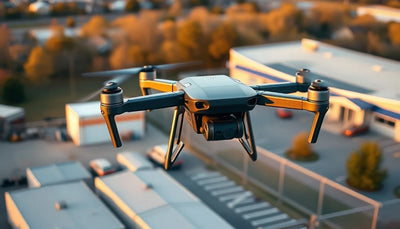
A practical step after reading this: evaluate your next flight mission set. If you need a low-risk, light-carry camera for simple roof inspections, real estate exteriors, or new-pilot training, the Mini 4K at clearance price is hard to beat. If you anticipate mission growth, consider applying the savings toward a used higher-end model from reputable sources that offer inspected pre-owned DJI drones. For those with existing DJI gear, the drone trade-in guide from Reboot Hub can help you determine if trading up is financially smarter than adding another entry-level unit.
Impact on the pre-owned DJI market and repair ecosystem

When a major retailer like Amazon clears a popular current model, the secondary market takes an immediate hit. Pre-owned DJI Mini 4K units will likely see resale values fall below $200, making them less attractive for sellers but a bargain for budget-conscious buyers. More importantly, older Mini models—Mini 2, Mini SE, even the original Mini 3—face downward pricing pressure because the new unit’s price approaches their used price.
For repair shops and parts distributors, this clearance could drive an increase in demand for second-hand Mini 4K units as donors for genuine OEM spare parts. Because the Mini 4K shares many components with the Mini 3 series, repair kits and arm assemblies may become more available in the pre-owned parts stream. Operators who choose to fix a damaged Mini 4K rather than replace it will benefit from a growing pool of independently inspected pre-owned parts and professional DJI repair services that use only OEM-pulled components.
One operator-facing answer to the question “what should I do differently?”: If you own a pre-owned DJI Mini 3 or Mini 4K and are considering selling, act now—before the clearance fully saturates the market and depresses prices further. If you are a buyer, consider that a pre-owned Mini 4K may soon be available for significantly less than the clearance new price, but factor in potential battery degradation and lack of warranty. Reboot Hub’s inspected pre-owned inventory offers an intermediate path with documented condition and support.
Long-term considerations for operators and service planning

Low-priced new drones can change how operators think about lifecycle costs. The DJI Mini 4K at record low may tempt some fleet managers to buy multiples as throwaway assets for short-term projects. This approach has hidden costs: each unit eventually needs battery replacements, propellers, and occasional camera repairs. Without a channel for professional DJI repair, those costs can erode the up-front savings.
On the other hand, if the clearance price is exceptionally low, it might make more sense to use the Mini 4K as a primary teaching tool and invest in a single higher-end pre-owned drone for critical missions. The availability of genuine OEM spare parts for the Mini 4K remains strong because the model is still sold by DJI through many regional distributors, so repair turnarounds should remain reasonable. Fleet operators should also keep an eye on inventory: Amazon’s clearance may hint at a replacement model coming soon, which could affect the future availability of OEM parts for older Mini lines.
Commercial repair customers should note that as the installed base of Mini 4K units grows, the market for pre-owned parts will expand, making component-level repair more cost-effective. Choosing a repair service that uses OEM-pulled parts ensures reliability without paying full retail for new components. That’s especially relevant for the Mini 4K’s integrated gimbal camera, which is the most expensive single module to replace.
Is the DJI Mini 4K still a good buy in 2026?
Yes, at a record low price and with no FAA registration needed for recreational use, the Mini 4K remains a capable entry-level aerial camera. However, commercial operators should confirm their missions don’t require higher resolution or advanced obstacle avoidance.
Should I buy new or pre-owned given this clearance?
If the clearance price is genuinely a record low, new offers warranty and zero flight time. Pre-owned may be cheaper but carries battery wear and hidden damage risk. For peace of mind, consider inspected pre-owned DJI drones from a reputable seller with a condition report.
Does the Amazon clearance signal that a replacement model is coming?
Possibly. Clearance pricing often precedes a product refresh. While DJI has not announced a successor, buyers should consider that future parts availability for the Mini 4K may shift if production winds down. Stock up on genuine OEM spare parts if you plan long-term fleet use.